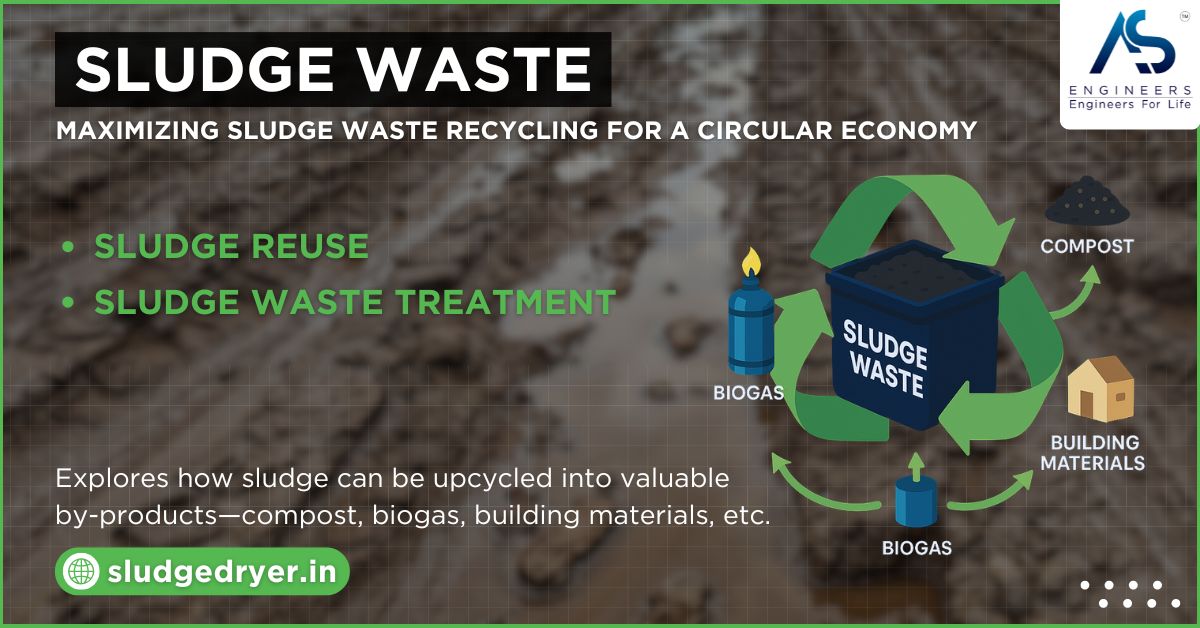
Sludge waste recycling means converting treated sludge into a useful or easier-to-manage output instead of sending wet, heavy sludge directly for disposal. In practical plant operation, this usually requires sludge characterization, thickening, dewatering, stabilization, drying, pollution-control handling, testing, and approval for the final use.
The main recycling routes are alternative fuel, cement or brick manufacturing, soil amendment after testing, biogas generation, nutrient recovery, and safer volume-reduced disposal. A sludge dryer does not automatically make sludge recyclable. It prepares sludge for recycling by reducing moisture, improving handling, lowering transport weight, and making the material more stable for the next step.
What Is Sludge Waste Recycling?
Sludge waste recycling is the controlled reuse, recovery, or valorization of sludge generated from wastewater treatment, effluent treatment, sewage treatment, or industrial process treatment.
In simple terms, the plant is asking one question:
Can this sludge be converted from a disposal burden into a controlled resource?
The answer depends on sludge quality, not only on the treatment machine. Before deciding the reuse route, the plant must know:
- Source of sludge: STP, ETP, CETP, ZLD, paper mill, chemical plant, textile plant, food plant, refinery, paint plant, or livestock facility
- Moisture content before and after dewatering
- Organic content and calorific value
- Heavy metals and hazardous constituents
- Pathogen load for sewage or biological sludge
- Odour and stability
- Local disposal or reuse rules
- Acceptance by cement plant, brick maker, composting operator, TSDF, or other end user
For a basic foundation, first read what sludge is and how its source affects treatment. Sludge from a municipal STP and sludge from a chemical ETP should not be treated as the same material.
Why Wet Sludge Is Difficult to Recycle
Wet sludge is costly because water dominates the mass. It is bulky, difficult to store, unpleasant to handle, and expensive to transport. It can also create odour, leachate, microbial risk, and housekeeping problems.
In many plants, I see recycling discussions start from the end use: “Can we use this as fuel?” or “Can this go to agriculture?” That is the wrong starting point. The correct starting point is the sludge report.
A practical sludge recycling review starts with:
| Input to Check | Why It Matters |
|---|---|
| Moisture content | Decides dewatering and drying load |
| Volatile solids / organic matter | Indicates biogas or fuel potential |
| Ash content | Important for cement, brick, and combustion routes |
| Heavy metals | Can block agricultural or material reuse |
| Pathogens | Critical for sewage sludge and biosolids |
| Calorific value | Decides whether sludge has fuel value |
| Chloride, sulphur, oil, solvents | Important for emissions, corrosion, and end-use limits |
| Particle size and stickiness | Affects dryer feeding and discharge |
| Final moisture target | Decides dryer sizing and energy requirement |
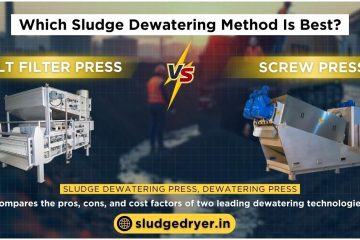
Moisture reduction is the first commercial turning point. That is why sludge dewatering and sludge drying sit at the centre of any serious recycling plan. For mechanical moisture reduction before drying, see why sludge dewatering is key to efficient waste management.
Sludge Waste Recycling Routes and Where Drying Fits
Not every sludge is suitable for every reuse route. Some sludge can become fuel. Some can support brick or cement applications. Some can become compost or soil amendment only after strict treatment and testing. Some should remain in a controlled disposal route.
| Recycling Route | Usually Suitable For | Main Checks Needed | Role of Sludge Drying |
|---|---|---|---|
| Alternative fuel | High-organic sludge, some industrial sludge, dried biosolids | Calorific value, ash, chlorine, sulphur, emissions acceptance | Reduces moisture so fuel value improves |
| Cement kiln co-processing | Dried sludge with acceptable ash and contaminants | Cement plant acceptance, ash chemistry, heavy metals, feeding form | Converts wet sludge into manageable feed |
| Brick manufacturing | Certain dried sludge and ash-based residues | Leaching, strength, firing behaviour, odour, heavy metals | Produces more consistent dry material |
| Soil amendment / fertilizer | Treated sewage sludge, livestock sludge, some biosolids | Pathogens, heavy metals, nutrient value, local approval | Improves handling and stability after hygienic treatment |
| Biogas | Organic sludge before excessive drying | Volatile solids, digestion potential, retention time | Drying usually comes after digestion, if required |
| Safer disposal | Hazardous or unsuitable sludge | Hazard classification, TSDF norms, leachability | Reduces volume and transport load |
For direct comparison of final routes, see sludge land application vs incineration. For treatment-chain planning, see top sludge treatment methods and their applications.
The Correct Sludge Recycling Sequence
A reliable sludge waste recycling project should follow a staged decision path.
Characterize the Sludge First
Do not size a dryer or select a reuse route only from daily tonnage. Collect representative samples and test moisture, solids, ash, volatile matter, calorific value, pH, heavy metals, oil and grease, hazardous constituents, and pathogen indicators where relevant.
For STP sludge, the focus is usually stabilization, pathogen control, odour, nutrient value, and safe reuse. For industrial ETP sludge, the focus shifts to hazardous characteristics, chemical composition, TSDF cost, drying behaviour, and whether the dry output is accepted by a permitted user.
Relevant pages:
- STP sludge and sewage treatment guide
- industrial sludge disposal guide
- chemical sludge treatment and reuse
Reduce Free Water by Thickening and Dewatering
Thickening and mechanical dewatering reduce water before thermal drying. This stage usually includes gravity thickening, screw press, filter press, belt filter press, centrifuge, or other equipment depending on the sludge.
Thermal drying should not be used as a substitute for avoidable dewatering. If sludge enters a dryer with unnecessary free water, the plant pays to evaporate water that could have been mechanically removed first.
Useful references:
Stabilize or Treat the Sludge According to End Use
Sludge may require stabilization before reuse. Options include anaerobic digestion, aerobic digestion, lime stabilization, composting, thermal treatment, or other process-specific steps.
For sewage and biological sludge, pathogen reduction is critical before any land-related reuse. For industrial sludge, stabilization alone is not enough if the sludge contains hazardous constituents.
This is where many recycling proposals become risky. Dry sludge is not automatically safe sludge. Drying reduces moisture and improves handling, but the final reuse route still depends on chemical and biological suitability.
Use Sludge Drying to Prepare the Material
Drying helps convert wet sludge cake into a more stable, reduced-volume, easier-to-handle material. In AS Engineers’ paddle dryer/sludge dryer system, indirect heat transfer through hollow shafts and jacketed surfaces is used to evaporate moisture while paddles mix, shear, and move the material through the dryer. The AS Engineers catalog also shows connected systems for feeding, heating, scavenging, pollution control, solvent management, and product handling.
For plant teams comparing dryer options, start with sludge dryer guide: how to select, size and integrate the right system and thermal sludge drying system guide.
Test the Dried Output Before Claiming Recycling
A dried output should be tested before being promoted as fuel, fertilizer, brick input, cement feed, or saleable material. The end user may need calorific value, ash chemistry, moisture range, bulk density, leachability, heavy metals, particle size, odour condition, and handling behaviour.
The safest language is:
- “Can support recycling after testing”
- “Can prepare sludge for possible reuse”
- “Can reduce volume and improve handling”
- “Final route depends on sludge analysis and local approval”
Avoid unsafe claims such as:
- “All sludge becomes fertilizer”
- “Drying makes hazardous sludge safe”
- “Guaranteed compliance”
- “Guaranteed sale value”
- “Any ETP sludge can become fuel”
How Paddle Drying Supports Sludge Waste Recycling
A paddle dryer is useful when sludge is sticky, pasty, semi-solid, or difficult to dry by simple open-bed methods. It is especially relevant where space is limited, odour control is important, moisture targets are strict, or disposal cost depends heavily on sludge weight.
AS Engineers’ paddle dryer design supports slurries, pastes, cakes, granules, and powders, with options such as steam, thermal oil, atmospheric/vacuum/pressurized operation, and material-of-construction selection based on requirement. These product details are source-supported in AS Engineers’ official material.
A sludge recycling project may use paddle drying when:
- Dewatered cake is still too wet for transport or reuse
- Cement or brick user needs drier, more consistent material
- Fuel route needs lower moisture for useful calorific value
- Storage area is limited
- Wet sludge creates hygiene and odour issues
- Plant wants a contained drying system instead of open drying
- Rainy-season drying beds are unreliable
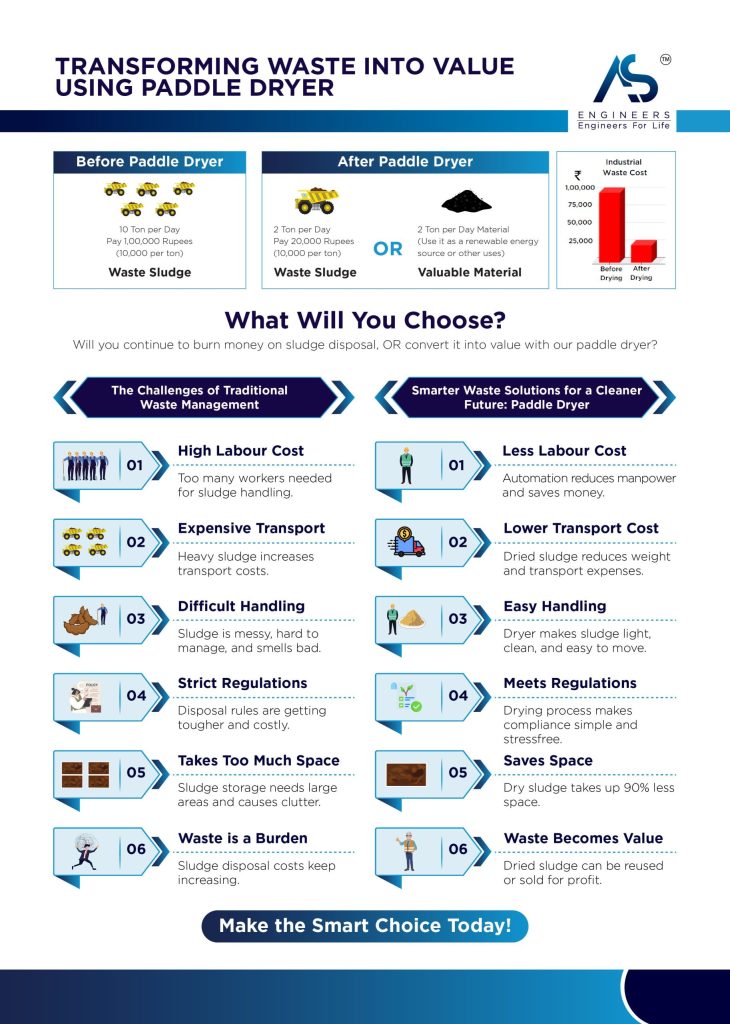
- TSDF or transport cost is driven by wet sludge weight
For process detail, see sludge treatment with conductive paddle dryers and how to choose a sludge paddle dryer.
Sludge Recycling by Industry
STP and Municipal Sludge
Municipal sludge contains organic matter and nutrients, but it can also contain pathogens, heavy metals, microplastics, and contaminants from mixed sewage inflow. It may support biosolids, composting, energy recovery, or land-related use only when properly treated and approved.
For municipal operators, the decision sequence should be:
- Stabilize sludge.
- Dewater sludge.
- Dry sludge where volume, odour, storage, or end-use moisture requires it.
- Test for pathogens and heavy metals.
- Confirm permitted end-use route.
Read more on municipal sludge and biosolids as valuable resources.
ETP and Industrial Sludge
Industrial sludge is more variable and often more sensitive from a compliance and disposal perspective. Chemical, textile, pharma, paint, metal finishing, food, paper, and refinery sludge can behave very differently.
For industrial sludge waste recycling, the key question is not only “Can we dry it?” The bigger question is:
What will the dried sludge legally and safely become?
Possible routes include TSDF volume reduction, cement co-processing, brick or construction material use, fuel recovery, or internal handling improvement. But hazardous constituents, odour, solvents, chloride, sulphur, oil, heavy metals, and ash chemistry can restrict reuse.
Relevant pages:
- ETP sludge challenges and disposal solutions
- paint sludge management
- petroleum sludge treatment and disposal
- methods to reduce hazardous waste weight
CETP and Cluster Sludge
CETP sludge usually combines effluent from several industries. That makes recycling difficult because sludge quality may change depending on member industries, season, chemical dosing, and influent quality.
For CETP sludge, drying can reduce moisture and improve handling, but consistent sampling and user acceptance are critical. Before choosing a dryer, the CETP team should define whether the final route is TSDF reduction, cement co-processing, brick route, or another approved outlet.
Read CETP key concepts and ETP vs CETP comparison.
ZLD Sludge
ZLD sludge and salts can be highly concentrated. Some streams may be recoverable, while others require controlled disposal. Drying may support better handling, bagging, and disposal logistics, but reuse depends heavily on composition.
Read zero liquid discharge guide and ZLD sludge.
Sludge to Fuel: When It Works and When It Fails
Sludge can work as an alternative fuel only when the dried material has enough calorific value and acceptable ash, moisture, chlorine, sulphur, and contaminant levels. High-moisture sludge has poor fuel value because much of the energy is wasted evaporating water.
Drying improves the fuel route by:
- Lowering moisture
- Improving storage and feeding
- Increasing effective calorific value
- Reducing transport weight
- Making co-processing easier to evaluate
But the fuel route fails when ash is too high, moisture remains too high, contaminants exceed limits, or the end user does not accept the material.
For related planning, read sludge in boilers and paddle dryer for waste-to-energy.
Sludge to Agriculture: Use Caution
Treated sewage sludge and livestock sludge may contain nutrients and organic matter, but land use requires careful treatment, testing, and approval. Heavy metals, pathogens, pharmaceutical residues, industrial contamination, and public acceptance can restrict this route.
A safe agricultural route needs:
- Stable organic matter
- Low pathogen risk
- Acceptable heavy metal levels
- Controlled application rate
- Odour control
- Local approval
- Clear documentation
Do not recommend agricultural use for industrial sludge unless lab results and regulatory approval support it.
Sludge to Bricks, Cement, and Construction Materials
Dried sludge can sometimes be used in brick production, cement manufacturing, or other construction material applications. This route is attractive because it can reduce disposal burden and substitute part of raw material or fuel demand.
However, the final material must be tested for strength, leaching, emissions, firing behaviour, ash chemistry, odour, and long-term safety. Drying helps by making the sludge easier to dose, mix, transport, and store.
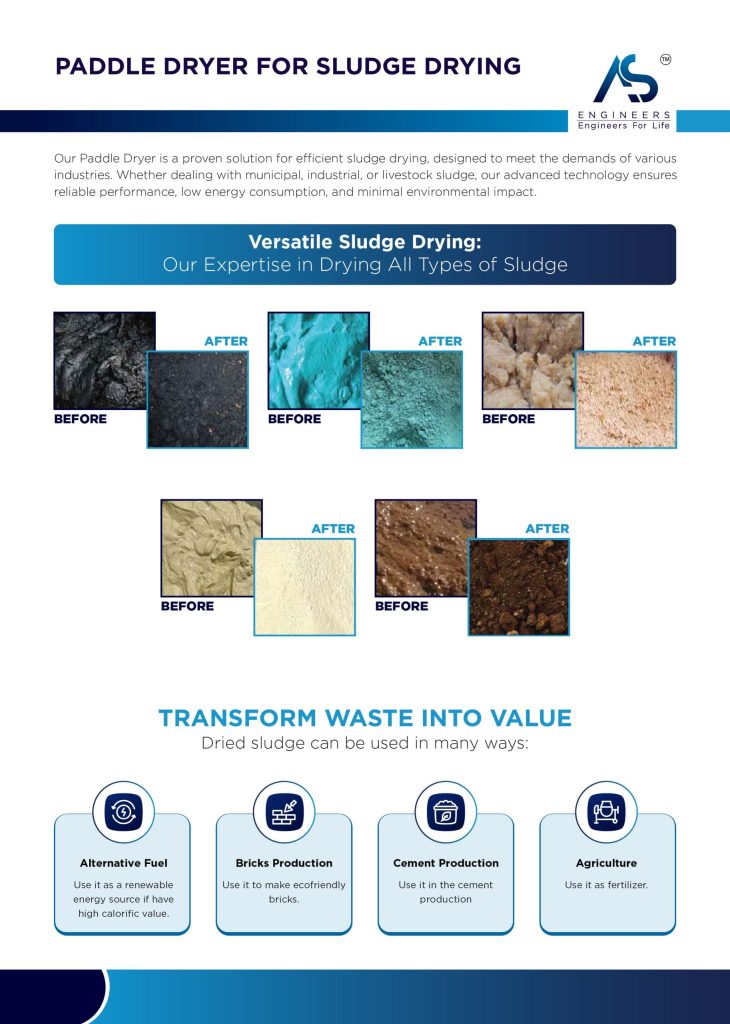
AS Engineers’ official material lists dried sludge end-use possibilities including alternative fuel, cement production, agriculture, and bricks production. The safe editorial position is that these are possible pathways, not automatic outcomes.
What Plant Teams Should Share Before Asking for a Sludge Dryer Quote
For a practical review, share these details before asking for a sludge dryer selection or RFQ:
| RFQ Input | Details to Provide |
|---|---|
| Sludge source | STP, ETP, CETP, ZLD, process sludge, biological sludge, chemical sludge |
| Daily sludge quantity | kg/day or TPD before and after dewatering |
| Feed moisture | Lab-tested moisture percentage |
| Final moisture target | Required outlet moisture or dryness |
| Sludge behaviour | Sticky, pasty, fibrous, oily, abrasive, corrosive, granular |
| Chemical analysis | pH, chloride, sulphur, heavy metals, solvents, oil and grease |
| Reuse target | Fuel, cement, brick, fertilizer, compost, TSDF reduction, internal handling |
| Heating medium | Steam, thermic fluid, hot water, electrical, available fuel |
| Site constraints | Space, utilities, ventilation, odour, monsoon exposure, discharge height |
| Pollution-control need | Cyclone, scrubber, bag filter, condenser, ID fan, chimney |
| Downstream handling | Screw conveyor, bagging, silo, truck loading, sealed transfer |
| Operating hours | Batch/continuous duty, shifts per day |
| Documentation | Lab reports, disposal cost, end-user specifications, local consent conditions |
At AS Engineers, we review the sludge duty before suggesting dryer configuration. The same dryer body cannot be blindly selected for sewage sludge, paint sludge, refinery sludge, chemical sludge, and paper sludge. Feed behaviour, vapour handling, MOC, heating medium, and final reuse route decide the design.
For equipment-level selection, use sludge dryer machine applications and scope and paddle dryer manufacturer in India.
Common Mistakes in Sludge Waste Recycling Projects
Treating All Sludge as Recyclable
Some sludge is suitable for recycling. Some is suitable only after treatment. Some should remain in controlled disposal. Testing decides the route.
Drying Without Defining the Final Use
A plant may dry sludge to 20%, 10%, or lower moisture, but the correct target depends on whether the sludge is going to fuel, cement, bricks, composting, storage, or TSDF.
Ignoring Pollution Control
Drying may release vapour, odour, fine particles, or solvent traces depending on sludge type. A complete drying system may need cyclone, scrubber, bag filter, condenser, ID fan, chimney, and safe discharge planning.
For air handling support, AS Engineers ecosystem resources on pollution control equipment and scrubber working principle can support project teams.
Comparing Dryer Price Without Comparing Moisture Load
A dryer quote is not meaningful without feed moisture, final moisture, daily load, heating medium, operating hours, sludge behaviour, and vapour-handling requirement. A cheaper dryer can become expensive if it is undersized, difficult to clean, or unable to handle sticky sludge.
Making Compliance Claims Too Early
Drying can support better management, but compliance depends on sludge classification, local regulations, treatment record, emissions control, disposal route, and acceptance by the permitted end user.
Conclusion
Sludge waste recycling is not a single machine decision. It is a full material-management decision that starts with sludge testing and ends with a safe, accepted, and documented reuse or disposal route.
Drying is often the step that makes recycling practical because it reduces moisture, improves handling, lowers transport burden, and prepares sludge for fuel, cement, brick, agricultural, composting, or safer disposal pathways. But the final route must be selected based on sludge chemistry, biology, moisture target, end-user acceptance, and local approval.
If your plant wants to reduce wet sludge disposal load or evaluate sludge recycling, share the sludge source, daily quantity, feed moisture, final moisture target, lab analysis, current disposal method, and intended reuse route. AS Engineers can review the duty condition and suggest a sludge drying configuration based on actual plant requirements.
FAQs
Can all sludge waste be recycled?
No. Sludge recycling depends on source, moisture, hazardous constituents, pathogens, heavy metals, calorific value, ash content, and local approval. Municipal sludge, ETP sludge, CETP sludge, ZLD sludge, and refinery sludge need different evaluation.
Does sludge drying make sludge safe for reuse?
Drying reduces moisture and improves handling, but it does not automatically make sludge safe. Final reuse still depends on chemical testing, pathogen reduction where relevant, leachability, emissions risk, and regulatory acceptance.
What is the best recycling route for dried sludge?
There is no single best route. High-organic sludge may suit fuel or digestion. Treated sewage sludge may suit soil amendment under strict controls. Certain dried sludge may suit cement or brick applications. Hazardous sludge may only suit controlled disposal after volume reduction.
Why is dewatering needed before sludge drying?
Dewatering removes free water mechanically before thermal drying. This lowers the evaporation load, reduces drying energy requirement, improves dryer efficiency, and helps control project cost.
What data is needed for a sludge dryer quotation?
Share sludge source, daily quantity, feed moisture, final moisture target, sludge behaviour, lab analysis, heating medium, operating hours, site layout, pollution-control requirement, and intended end-use or disposal route.