Soil cleaning plants are systems used to treat contaminated soil so that pollutants are removed, reduced, immobilized, or separated for safer handling. In industrial projects, “plant” usually means a treatment setup such as soil washing, bioremediation, stabilization, or thermal treatment. It does not mean only botanical plants.
For AS Engineers, the most important connection is this: soil washing and some remediation processes can generate wet contaminated fines, sludge, or residue. That secondary waste stream often needs dewatering, drying, vapour handling, and approved disposal planning.
This guide explains how soil cleaning plants work, where sludge is generated, when a sludge dryer is useful, and what data a plant team should collect before asking for a dryer recommendation.
What Is a Soil Cleaning Plant?
A soil cleaning plant is a remediation system used to process soil affected by industrial contamination, petroleum spills, chemical residues, pesticides, heavy metals, or mixed pollutants. The treatment method depends on the contaminant, soil type, site risk, land use plan, and regulatory requirement.
In practical terms, a soil cleaning project must answer five questions before equipment is selected:
| Question | Why it matters |
|---|---|
| What is the contaminant? | Heavy metals, petroleum hydrocarbons, solvents, pesticides, and mixed waste behave differently. |
| Where is the contamination? | Surface soil, deep soil, groundwater, sediment, and stockpiled soil need different treatment plans. |
| What is the soil type? | Sand, silt, clay, organic matter, and moisture affect washing, separation, and drying. |
| What is the cleanup target? | Soil cannot be declared suitable without sampling, lab testing, and authority-approved criteria. |
| What happens to the residue? | Soil washing fines, sludge, filter cake, biomass, or concentrated waste need a safe final route. |
A soil cleaning plant should not be selected only by equipment price. The real decision depends on contaminant behavior, soil particle size, moisture, handling difficulty, vapour risk, and final disposal route.
Main Soil Cleaning Methods
Different soil cleaning methods solve different problems. In many projects, one method is not enough. A combined approach may be needed.
| Method | Basic working principle | Better fit | Key limitation |
|---|---|---|---|
| Soil washing | Excavated soil is washed and separated by particle size or contaminant behavior. | Heavy metals, hydrocarbons, pesticides, contaminated fines. | Creates contaminated wash water, fines, or sludge that need further treatment. |
| Bioremediation | Microorganisms degrade suitable organic contaminants. | Petroleum hydrocarbons and some biodegradable organic pollutants. | Slower, site-condition dependent, not suitable for all contaminants. |
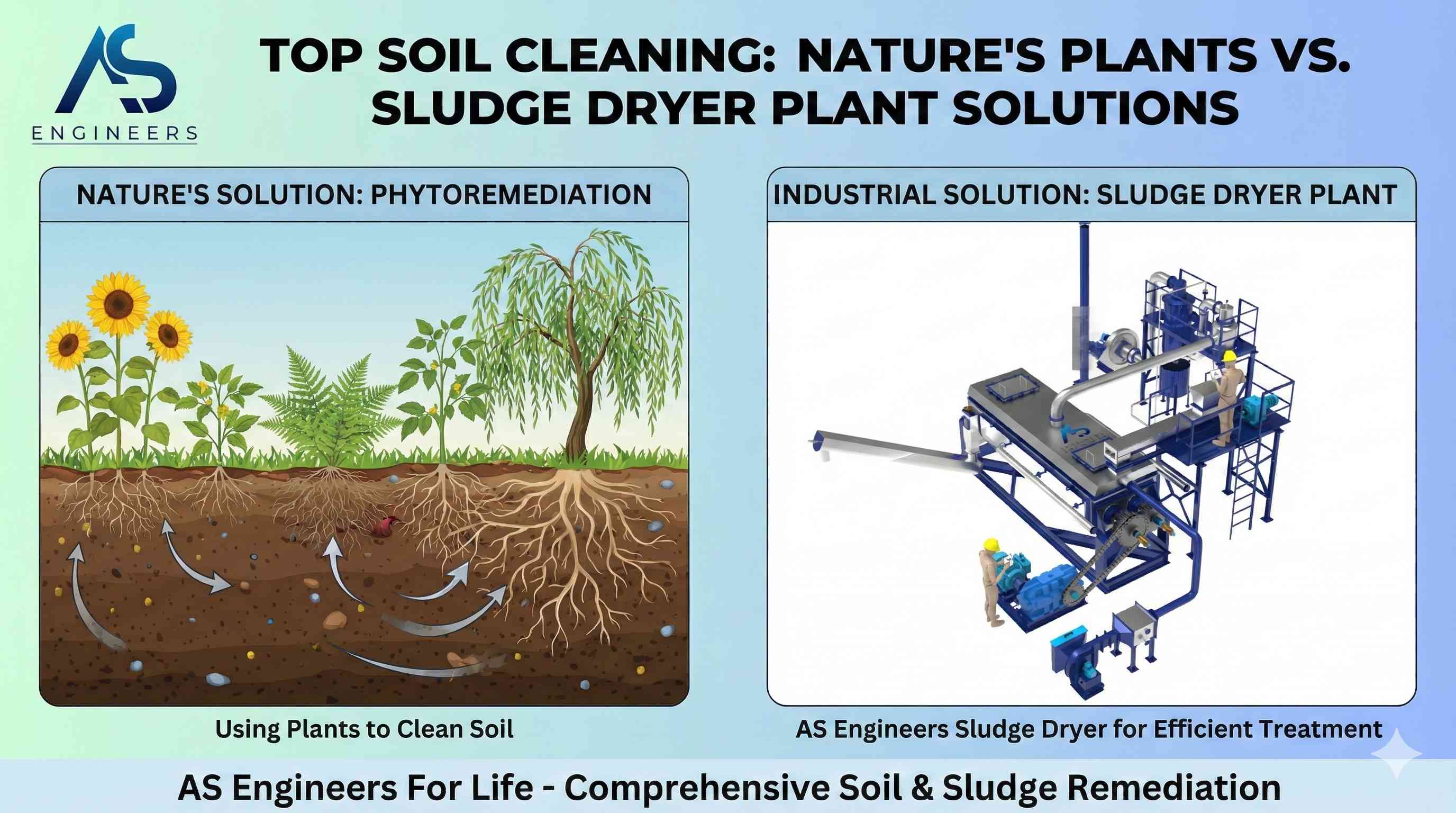
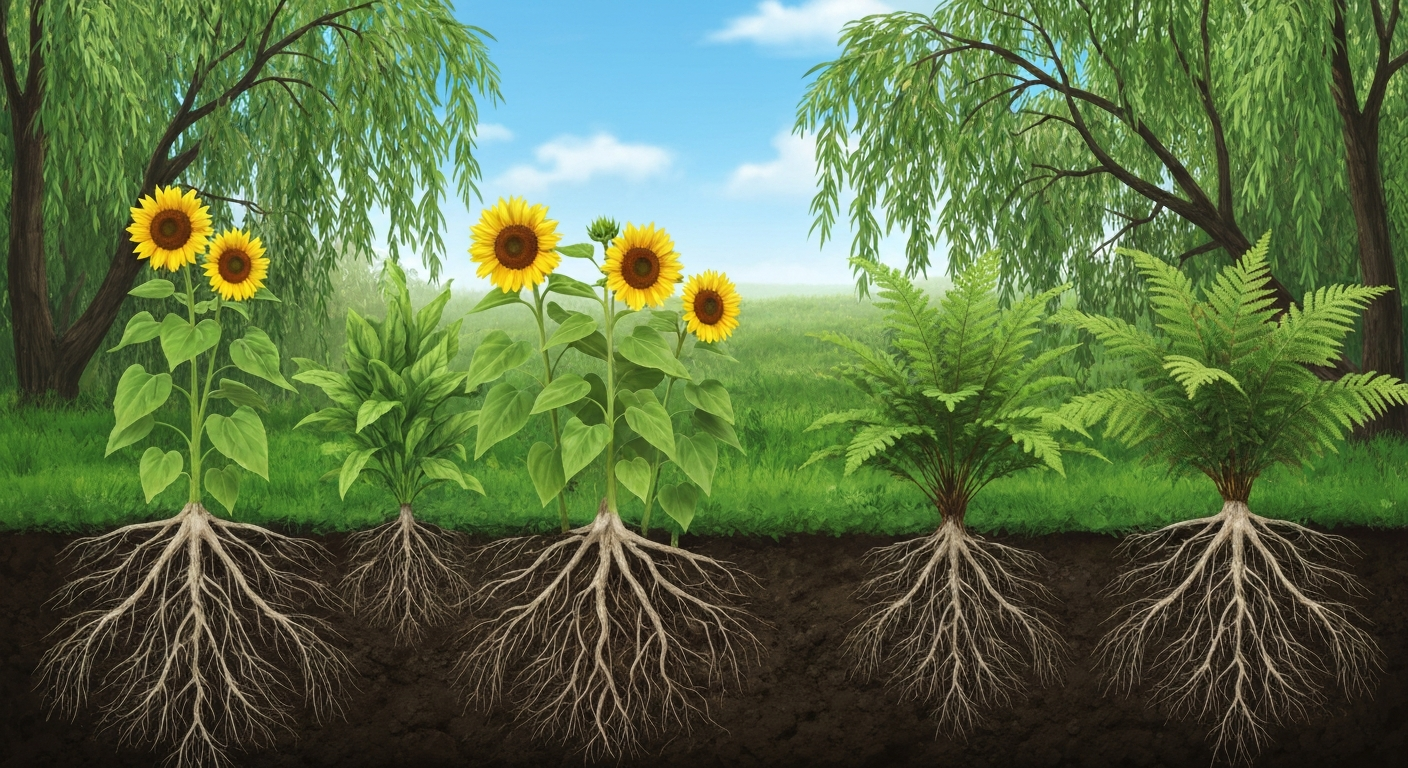
| Phytoremediation | Plants extract, stabilize, degrade, or contain contaminants. | Low to moderate contamination, long-term land restoration. | Needs time, space, plant selection, and safe biomass disposal. |
| Thermal desorption | Heat removes volatile or semi-volatile contaminants from soil. | Petroleum, VOCs, some semi-volatile compounds, selected thermal applications. | Energy intensive and requires off-gas control. |
| Stabilization or solidification | Binders immobilize contaminants to reduce mobility. | Heavy metals or contaminated soil where removal is not practical. | Does not remove contaminants, future land use must be assessed carefully. |
| Chemical extraction or flushing | Chemicals help mobilize contaminants for recovery and treatment. | Selected metals and chemicals when lab testing supports it. | Wash solution must be collected and treated safely. |
For a deeper sludge-side planning view, see the sludge treatment plant guide and industrial sludge disposal guide.
How a Soil Cleaning Plant Works
A soil cleaning plant usually follows a staged process. The exact layout changes from site to site, but the decision logic is similar.
Site assessment and sampling
The first step is not equipment selection. It is site assessment. The project team must identify the contamination source, affected area, depth, soil type, groundwater risk, and receptors such as workers, nearby residents, drains, water bodies, or future land users.
Soil samples should be tested by a competent laboratory for the contaminants of concern. Without lab data, the plant design is only guesswork.
Excavation or in-situ planning
Some methods treat soil in place. Others require excavation. Soil washing is typically an ex-situ method, meaning soil is excavated and processed in a treatment system.
The decision depends on contamination depth, site access, available space, treatment time, and the risk of spreading contamination during excavation.
Screening and size separation
Large debris, stones, roots, plastics, and oversize materials are separated first. Soil washing depends heavily on particle size behavior because many contaminants concentrate in fine particles such as silt and clay.
This is where the project may start generating a contaminated fine fraction.
Washing, scrubbing, or treatment
The soil may be washed with water or a designed wash solution. Scrubbing, attrition, hydrocyclones, classifiers, and settling systems may be used depending on the plant design.
The cleaner coarse fraction may be evaluated for reuse or backfilling only after testing. The contaminated fine fraction usually becomes sludge, slurry, or wet filter cake.
Residue and sludge handling
This is the most important section for sludge dryer selection. Soil cleaning does not make contamination disappear. It transfers or concentrates it into a smaller stream that must be handled correctly.
Typical residue streams include:
| Residue stream | Handling issue |
|---|---|
| Contaminated fines | High moisture, sticky behavior, difficult transport. |
| Soil washing sludge | May need thickening, dewatering, drying, and approved disposal. |
| Wash water sludge | Requires water treatment and solids handling. |
| Filter cake | Lower water than slurry but still heavy and difficult to store. |
| Contaminated biomass | Generated from phytoremediation and may need hazardous waste handling. |
| Thermal residue | Needs testing before reuse or disposal decision. |
Before selecting a drying system, review the sludge dewatering techniques guide because drying performance depends strongly on the moisture and consistency after dewatering.
Where Sludge Dryers Fit in Soil Cleaning Plants
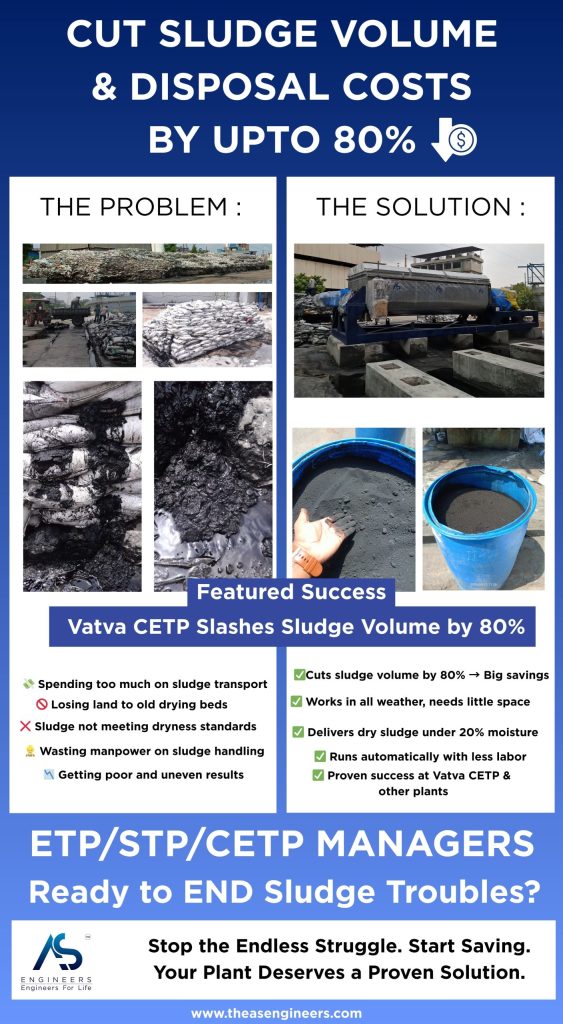
A sludge dryer is not the soil cleaning plant itself. It is a residue-management system used after soil washing, wastewater treatment, or dewatering when the remaining sludge is still too wet, heavy, sticky, or costly to transport.
A dryer can help when the project has these conditions:
| Site condition | Why drying may help |
|---|---|
| Soil washing creates wet sludge or slurry | Drying reduces moisture and improves handling. |
| Filter cake is still heavy | Lower moisture can reduce transport burden. |
| Storage area is limited | Dried solids usually require less storage volume. |
| Disposal cost depends on weight | Moisture reduction can reduce dispatch weight. |
| Residue is sticky or difficult to load | A drier output can be easier to move and package. |
| Approved final route needs lower moisture | Some disposal, co-processing, or further treatment routes require moisture control. |
For thermal planning, use the thermal sludge drying system guide.

Why Paddle Dryers Are Considered for Soil Washing Sludge
Soil washing sludge can be sticky, abrasive, chemically variable, and difficult to handle. A paddle dryer may be considered when the residue behaves like sludge, wet cake, paste, or fine solids.
In an indirect paddle dryer, heat is transferred through heated surfaces instead of directly blasting hot gas through the material. AS Engineers’ paddle dryer design references hollow shafts, jacket heating, wedge-shaped paddles, dual counter-rotating shafts, plug flow behavior, and enclosed vapour handling options. These features are useful when plant teams need controlled drying and contained handling.
A paddle dryer can support soil cleaning residue handling by:
| Paddle dryer feature | Practical benefit |
|---|---|
| Indirect heating | Reduces direct contact between hot gas and contaminated material. |
| Hollow shaft and jacket heat transfer | Helps transfer heat through large heated surfaces. |
| Wedge-shaped paddles | Mixes and breaks sticky feed during drying. |
| Enclosed drying chamber | Helps contain vapour, odour, and fines better than open drying. |
| Low off-gas volume | Can reduce load on downstream vapour treatment compared with high-airflow drying. |
| Product discharge options | Dried residue can move to screw conveyor, bagging, silo, or truck handling systems. |
For equipment layout planning, see the paddle dryer configuration guide.
Soil Cleaning Plant Process Flow With Sludge Dryer
A practical process flow may look like this:
- Contaminated soil is excavated or collected.
- Oversize material is screened.
- Soil enters washing, scrubbing, or separation equipment.
- Cleaned coarse fraction is tested before reuse decision.
- Fine contaminated fraction goes to settling, thickening, filtration, or dewatering.
- Wet sludge or filter cake is reviewed for drying.
- Sludge dryer removes moisture under controlled conditions.
- Vapour, fines, and odour are routed to suitable pollution-control equipment.
- Dried residue is sampled, packed, stored, transported, or sent to an approved route.
The dryer does not replace environmental testing. It improves moisture control and handling of the residue stream.
Soil Contaminants and Treatment Planning
The same soil cleaning plant will not work for every contamination profile. The project should start with contaminant testing and method selection.
| Contaminant type | Common sources | Treatment notes |
|---|---|---|
| Heavy metals | Chemical industries, plating, batteries, mining, pigments. | Cannot be biologically destroyed. Often needs separation, stabilization, extraction, or controlled disposal. |
| Petroleum hydrocarbons | Refineries, fuel stations, storage tanks, spills. | Bioremediation, thermal treatment, soil washing, or combined methods may be evaluated. |
| Pesticides and agrochemical residues | Agrochemical storage, manufacturing, formulation, contaminated land. | Soil washing, thermal treatment, stabilization, or disposal route depends on chemistry. |
| Solvents and VOCs | Chemical plants, degreasing operations, leakage, industrial land. | Vapour control and air treatment become important. |
| Mixed industrial contamination | Old industrial sites, dump areas, TSDF-adjacent land, legacy waste. | Needs detailed site investigation and often combined treatment. |
For agrochemical residue and related wet waste handling, see the agrochemical waste drying equipment guide.

Fit and No-Fit Guidance for Sludge Drying
A sludge dryer may be a good fit when:
| Good fit condition | Reason |
|---|---|
| Soil washing creates wet fine sludge | Dryer can reduce moisture after dewatering. |
| Sludge is already mechanically dewatered | Dryer works better after free water is reduced. |
| Transport or TSDF cost is high due to water weight | Lower moisture can improve dispatch economics. |
| The site has a defined disposal or reuse evaluation route | Dryer output can be designed around final handling. |
| Vapour handling can be planned | Safer than open drying when odour or volatile risk exists. |
A sludge dryer may not be the first solution when:
| No-fit or caution condition | Reason |
|---|---|
| Contaminants are highly volatile without vapour treatment planning | Off-gas control must be engineered first. |
| Sludge chemistry is unknown | MOC, temperature, and vapour route cannot be selected safely. |
| Material contains explosive, reactive, or incompatible substances | Requires specialist process safety review. |
| Sludge is mostly free water | Thickening or mechanical dewatering should come first. |
| Final disposal route is not defined | Drying alone does not solve regulatory acceptance. |
For hazardous waste handling context, review the CPCB hazardous waste disposal guide and TSDF site standards guide.
RFQ Checklist for Soil Washing Sludge Dryer Selection
When I review a sludge dryer requirement, I do not start with dryer size alone. I first ask for the sludge source, feed moisture, contamination type, dewatering status, final moisture target, heating medium, vapour handling requirement, and disposal route.
For a soil cleaning or soil washing project, share these details before asking for a dryer quotation:
| RFQ input | What to provide |
|---|---|
| Soil cleaning method | Soil washing, chemical extraction, bioremediation residue, thermal residue, or mixed process. |
| Sludge source | Settling tank sludge, filter press cake, centrifuge cake, hydrocyclone fines, or wash water solids. |
| Feed quantity | kg/hr, ton/day, or batch quantity. |
| Feed moisture | Initial moisture percentage after dewatering. |
| Final moisture target | Required moisture after drying, if known. |
| Contaminants | Heavy metals, hydrocarbons, pesticides, solvents, mixed contaminants. |
| pH and corrosivity | Important for MOC selection. |
| Particle behavior | Sticky, abrasive, clay-rich, sandy, oily, fibrous, or granular. |
| Heating medium | Steam, thermic fluid, hot water, electricity, or site fuel option. |
| Vapour route | Condenser, scrubber, bag filter, cyclone, chimney, or other treatment. |
| MOC preference | CS, SS304, SS316, duplex, alloy, or to be selected after review. |
| Final route | TSDF, co-processing, landfill, further treatment, or reuse evaluation after testing. |
| Site constraints | Space, utilities, power, civil foundation, crane access, operator skill. |
For price planning, see the industrial sludge dryer machine price guide.
Common Mistakes in Soil Cleaning Plant Planning
Treating soil washing as a zero-waste process
Soil washing can reduce the volume of contaminated soil, but it often concentrates contaminants into fines, sludge, wash water, or filter cake. That residue needs a plan.
Selecting the dryer before dewatering
Drying free water directly is usually inefficient. Thickening, settling, centrifuging, screw pressing, or filter pressing should be evaluated before thermal drying.
Ignoring vapour and odour
If the residue contains hydrocarbons, solvents, ammonia, sulphides, or other volatile compounds, vapour handling must be planned before the dryer is finalized.
Assuming dried material is automatically safe
Drying removes moisture. It does not automatically neutralize contaminants. Final acceptance depends on laboratory testing and the approved disposal or reuse route.
Using generic MOC
Soil washing sludge may be acidic, alkaline, chloride-rich, abrasive, oily, or chemically mixed. MOC selection should be based on actual analysis.
Missing the residue mass balance
Every soil cleaning plant should define how much clean soil, oversize, fines, wash water sludge, filter cake, vapour, and dried residue will be generated.
Role of AS Engineers in Sludge Handling After Soil Cleaning
AS Engineers can support the sludge drying side of soil cleaning and soil washing projects where wet residue, sludge, or filter cake needs controlled moisture reduction.
The AS Engineers team can review:
- Feed moisture and final moisture target
- Sludge consistency and particle behavior
- Heating medium availability
- Vapour handling requirement
- MOC and corrosion risk
- Product discharge method
- Site layout and utility constraints
- Trial requirement for difficult material
AS Engineers’ paddle dryer portfolio is relevant when the material behaves like sludge, paste, wet cake, fine solids, or sticky residue. For direct product capability, see paddle dryer manufacturer in India.
Safety and Compliance Notes
Contaminated soil and soil cleaning residue should be handled as a controlled environmental project, not as ordinary earthwork.
Before selecting any treatment or drying equipment:
- Conduct site assessment and laboratory testing.
- Identify contaminants and exposure routes.
- Use trained personnel and suitable PPE.
- Prevent contaminated dust, runoff, and leachate movement.
- Define the final disposal or reuse route before processing.
- Confirm whether residue is hazardous, non-hazardous, or requires special handling.
- Use approved transport, storage, and disposal systems.
- Document sampling, treatment, monitoring, and final acceptance.
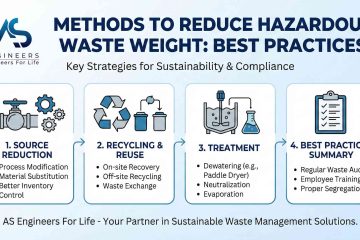
For cost and weight reduction strategy, see methods to reduce hazardous waste weight.
FAQs
What are soil cleaning plants?
Soil cleaning plants are treatment systems used to remediate contaminated soil. They may use soil washing, bioremediation, phytoremediation, thermal treatment, stabilization, or chemical extraction depending on the contaminant, soil type, and cleanup target.
Does soil washing create sludge?
Yes. Soil washing can separate contaminated fine particles, wash water solids, and wet sludge from the cleaner soil fraction. This sludge may require thickening, dewatering, drying, testing, and approved disposal or further treatment.
Can a sludge dryer clean contaminated soil?
No. A sludge dryer does not clean soil by itself. It removes moisture from wet sludge, filter cake, or residue generated during soil cleaning. Contaminant removal or immobilization must be handled by the selected remediation process and verified by testing.
When is a paddle dryer useful in soil remediation?
A paddle dryer may be useful when soil washing or related treatment creates sticky, wet, fine, or dewatered sludge that needs controlled moisture reduction before storage, transport, disposal, or further handling.
Can dried soil cleaning sludge be reused?
Only after proper testing and approval. Drying reduces moisture, but it does not automatically make contaminated residue safe for reuse. Final reuse, co-processing, landfill, or TSDF routing depends on contaminant levels and applicable rules.
Conclusion
Soil cleaning plants are not just about removing polluted soil. They are about managing the complete remediation chain, including excavation, washing or treatment, residue separation, sludge handling, vapour control, testing, and final disposal.
For industrial buyers, the most important point is simple: soil washing can reduce contaminated soil volume, but it can also create wet contaminated sludge that needs a proper handling plan.
A sludge dryer or paddle dryer becomes useful when that residue is already dewatered but still too wet, heavy, sticky, or difficult to transport. Before selecting a dryer, share the sludge source, feed moisture, contaminants, final moisture target, heating medium, vapour route, and final disposal plan.
If your soil cleaning or soil washing project is generating wet sludge, filter cake, or contaminated fines, AS Engineers can review the drying requirement and suggest a practical configuration based on your actual material data.