Choosing the right sludge drying technology for your wastewater treatment plant can be a major decision. You need a solution that is efficient, cost-effective, and fits within your available space. Two popular options are the paddle dryer and solar drying beds. While both achieve the goal of moisture reduction, they differ greatly in their operational principles and, most importantly, their area requirement. This guide will help you understand these differences so you can make an informed choice for your facility.
Table of contents
- Key Highlights
- Overview of Sludge Drying Technologies in India
- Paddle Dryers for Sludge Drying – Technology Fundamentals
- Solar Bed Drying of Sludge – Principles and Process
- Area Requirement Comparison: Paddle Dryer vs Solar Drying Bed
- Space-Saving Advantages of Paddle Dryers
- Solar Bed Systems: Factors Driving Higher Land Requirement
- Contextual Suitability: Choosing the Right Dryer for Limited Land
- Real-World Examples: Area Usage in Indian Projects
- Additional Considerations Beyond Area Requirement
- Frequently Asked Questions
- Conclusion
Key Highlights
- This guide contrasts the significant difference in area requirement between a paddle dryer and solar drying for sludge treatment.
- Paddle dryer technology offers high efficiency and a compact design, making it ideal for facilities with limited space.
- Solar drying beds are heavily dependent on climate and site conditions, which affects their large area requirement.
- We explore the operational and energy efficiency of both sludge drying methods in wastewater treatment.
- The environmental impact of each technology is a key factor in selecting the right solution for your needs.
Overview of Sludge Drying Technologies in India
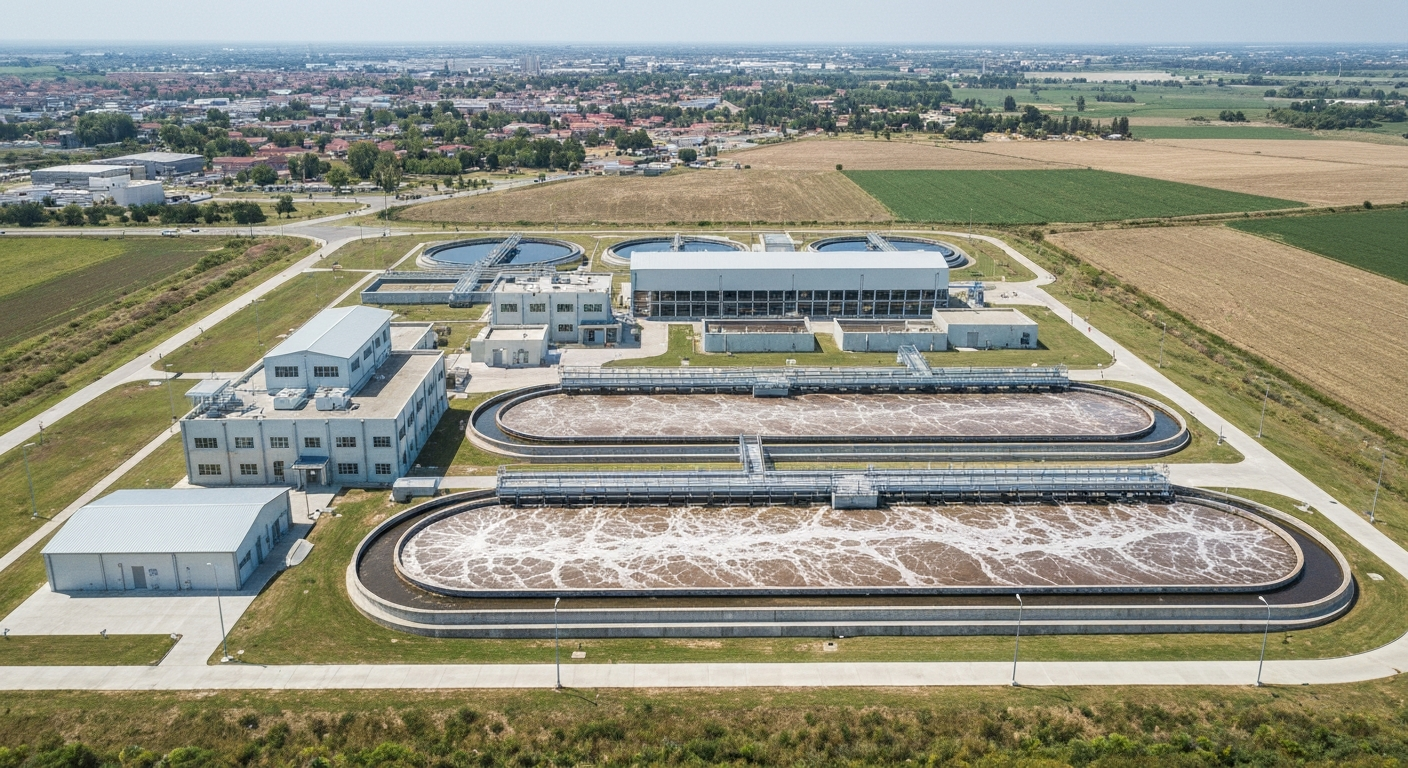
In India, effective sludge management is becoming a critical priority for industrial and municipal wastewater treatment facilities. The goal is to reduce sludge volume, lower disposal costs, and minimize environmental impact. The drying process is a key step in achieving this.
Various sludge drying technologies are available, each with its own set of advantages. From traditional solar beds that use natural energy to advanced mechanical systems like paddle dryers, the choice often depends on factors like capacity, budget, and available land. Let’s explore how these technologies work and which might be best for you.
Rising Demand for Efficient Sludge Management
As industries and cities grow, the volume of industrial sludge produced from wastewater treatment also increases. This creates a significant challenge related to sludge management, as traditional disposal methods are becoming more expensive and environmentally restricted. High disposal costs are driving facilities to seek more efficient solutions.
The environmental impact of untreated sludge is another major concern. An effective drying process not only reduces the volume of waste but also stabilizes it, making it safer to handle and transport. This is why investing in an efficient sludge management system is no longer just an option but a necessity.
Different technologies approach this problem in unique ways. For example, a solar drying bed relies on natural evaporation over a large surface, which is why it typically requires more land. In contrast, a paddle dryer uses a compact, mechanized process, making it suitable for sites with limited space. The demand is for systems that are both effective and practical for the given facility.
Importance of Area Optimization in Treatment Facilities
For many wastewater treatment facilities, especially those in urban areas, space is a premium commodity. The area requirement for any new equipment, including a sludge drying process, is a critical factor in decision-making. Optimizing the use of available land is essential for efficient plant operation and future expansion.
When you compare technologies, the difference in installation space can be dramatic. Paddle dryers offer a very compact footprint, as the entire drying process happens within an enclosed machine. Solar beds, however, require extensive land to spread the sludge in thin layers for natural drying, making their installation space much larger.
This difference is crucial when planning a new facility or upgrading an existing one. Complying with environmental regulations while managing operational costs often comes down to choosing a technology that fits your physical constraints. Area optimization is not just about saving space; it’s about making the entire treatment facility more viable and sustainable.
Paddle Dryers for Sludge Drying – Technology Fundamentals
Paddle dryer technology is a highly efficient method for reducing the moisture content in sludge. It operates on the principle of indirect heating, where the sludge does not come into direct contact with the heating source. This allows for precise temperature control and excellent energy efficiency.
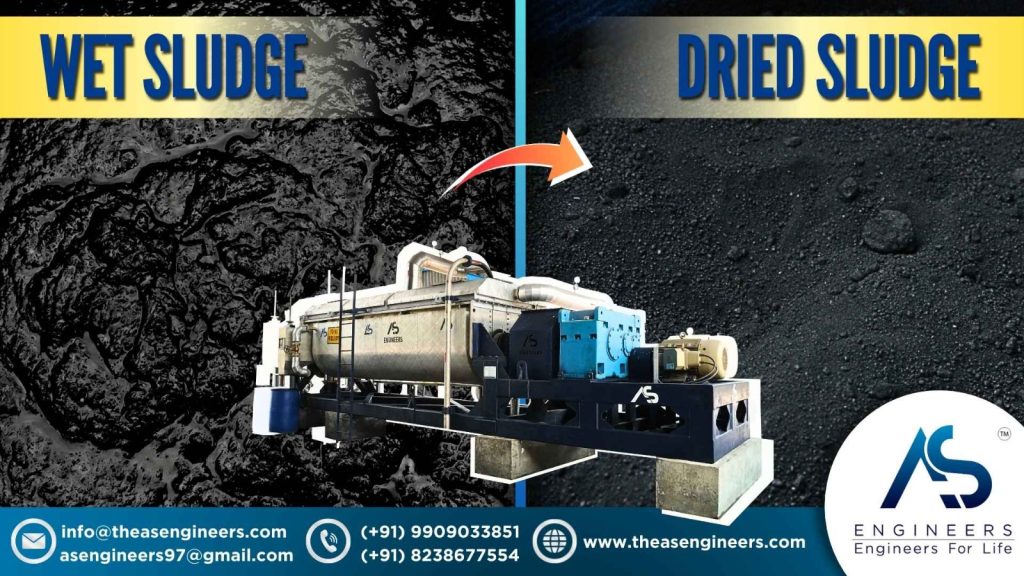
The core of this technology is its ability to achieve high heat transfer rates in a compact machine. By mechanically agitating the sludge with heated paddles, the system ensures uniform drying, transforming wet sludge into a dry, manageable product. We will now look closer at how this innovative system operates.
How Paddle Dryers Work
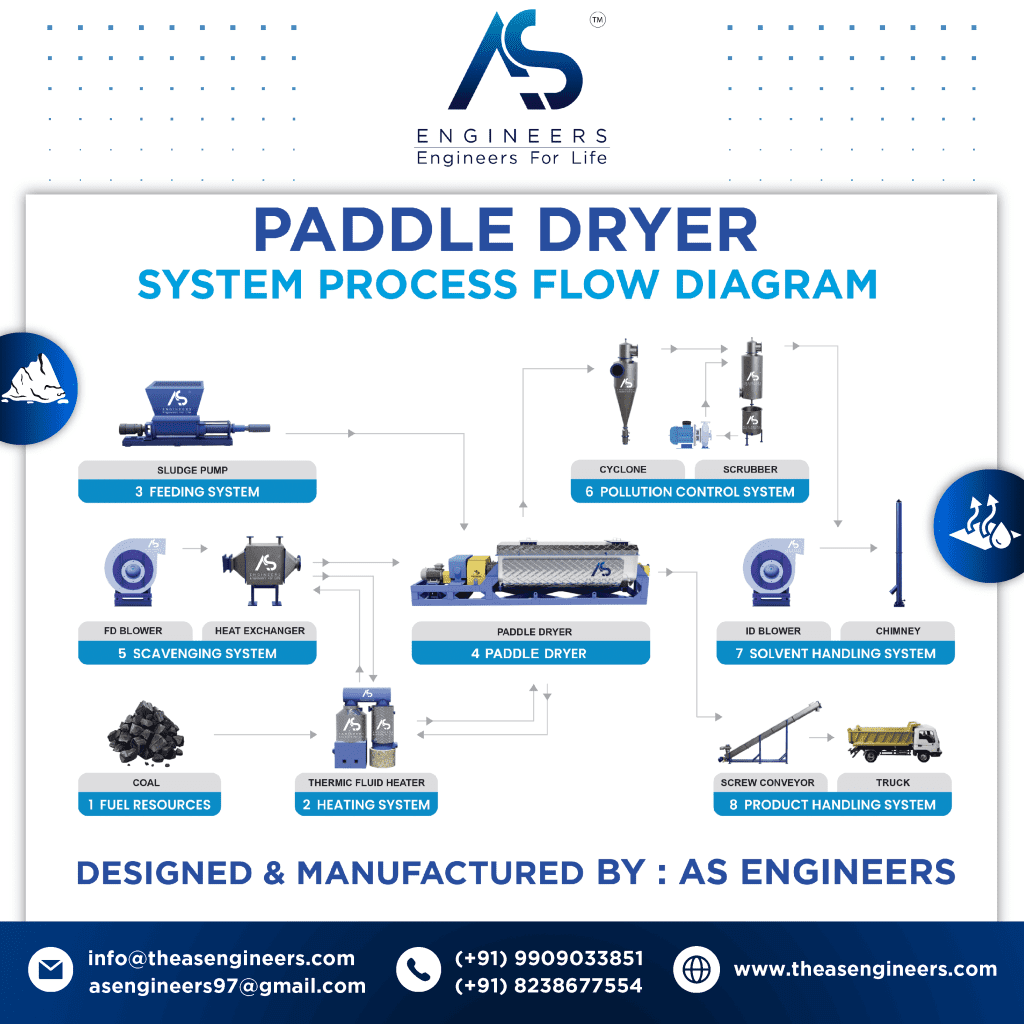
A paddle dryer works by using indirect heat transfer to evaporate water from sludge. The machine consists of a trough or vessel containing rotating shafts with hollow, wedge-shaped paddles. A heat source, typically thermal oil or steam, circulates through these hollow paddles and the outer jacket of the drying chamber.
As the wet sludge is fed into the dryer, the rotating paddles continuously mix and move the material. This agitation ensures that the sludge is constantly in contact with the hot metal surfaces, promoting efficient and uniform heat transfer. The installation space for this enclosed system is significantly smaller than what is needed for solar beds, which rely on spreading sludge over a large area.
The residence time of the sludge in the chamber can be controlled to achieve the desired final moisture content. The evaporated water is then vented from the system, leaving behind a dry, granular product. This controlled, enclosed process makes the paddle dryer a reliable and space-saving solution.

Key Technical Features of Paddle Dryers
One of the standout features of a paddle dryer is its use of a heating medium like thermal oil or steam for indirect heating. This method allows for precise temperature control, which is crucial for drying heat-sensitive materials without damaging them. The hollow paddles provide a large surface area for heat exchange, ensuring uniform drying throughout the sludge.
Advanced control systems are another key aspect. These systems monitor and regulate the process, allowing operators to adjust settings for different types of sludge and achieve consistent results. This level of control is a major advantage over less predictable methods like solar drying.
The primary space-saving advantage of using a paddle dryer is its vertical, compact design. The entire drying process is contained within a single machine, eliminating the need for vast tracts of land. This makes it an ideal choice for urban or industrial facilities where real estate is limited and expensive.
Common Applications in Indian Wastewater and Industrial Sectors
In India, paddle dryers are becoming increasingly popular across various industrial applications, particularly for treating industrial sludge from wastewater treatment plants. Their ability to handle sticky, viscous materials makes them perfect for the challenges posed by different types of sludge.
Many industries, including chemical, pharmaceutical, and food processing, use paddle dryers for sludge treatment. Because the system offers gentle handling and precise temperature control, it is ideal for sensitive materials where maintaining product quality is essential. The enclosed system also minimizes emissions, helping plants comply with environmental norms.
For facilities in India with limited space, the paddle dryer is highly recommended. Its compact footprint allows it to be installed in existing plants without requiring major expansion. This makes it a practical and efficient sludge drying technology for densely populated industrial zones and urban centers.
Solar Bed Drying of Sludge – Principles and Process
Solar drying is a natural sludge drying process that harnesses the sun’s energy to evaporate water from wastewater sludge. The sludge is spread in thin layers on specially designed solar beds, which are often housed in greenhouse-like structures to enhance the drying effect.
This method is valued for its low energy consumption and environmental sustainability. While simple in principle, the effectiveness of solar drying depends heavily on design, climate, and operational practices. Let’s examine the key elements of this traditional yet effective drying process.

Solar Bed System Design Essentials
The design of a solar bed system is critical to its drying performance. A typical system includes a greenhouse structure with a transparent roof to trap solar heat, creating a microclimate that accelerates moisture removal. The beds themselves are usually made of concrete or gravel to absorb heat and allow for drainage.
Ventilation is another essential component. Natural or forced air circulation is needed to remove the humid air from inside the structure, which is crucial for continuous evaporation. Without proper ventilation, the drying process would slow down significantly.
Estimating the required area for a solar bed involves a formula that considers the volume of sludge, its initial and final moisture content, and the local evaporation rate, which is influenced by sunlight and climate. This calculation ensures the system is sized correctly to handle the facility’s sludge output, promoting both effective drying and environmental sustainability.
Step-by-Step Sludge Solar Drying Procedure
The solar drying process for sludge follows a straightforward procedure to achieve significant moisture reduction. It begins with spreading dewatered sludge evenly across the drying beds inside the solar drying chamber or greenhouse.
Once spread, the sun’s energy heats the sludge, causing water to evaporate. The main factors affecting area requirements for solar beds are sludge volume, climate, and desired drying time. In contrast, paddle dryer area is determined by the machine’s capacity and compact design, not external weather. The humid air is then removed through ventilation systems.
To ensure uniform drying and prevent a crust from forming on the surface, the sludge must be mixed or turned regularly. This procedure is repeated until the desired moisture level is reached. The key steps include:
- Spreading dewatered sludge in a thin, uniform layer.
- Allowing solar radiation to heat the sludge and evaporate moisture.
- Ventilating the humid air out of the enclosure.
- Mixing the sludge periodically to expose wet layers.
- Harvesting the dried biosolids once the target moisture content is achieved.
Typical Use Cases in Municipal and Rural Projects
Solar beds are an excellent choice for sludge drying in municipal projects and rural wastewater treatment facilities, especially where land is abundant and available at a low cost. Their simple design and low operating expenses make them an attractive option for communities with limited budgets.
For large-scale, low-density installations, solar beds can effectively handle large volumes of sludge without incurring high energy costs. Rural areas often have the space needed to build extensive solar drying beds, making this technology a practical and sustainable solution for managing municipal sludge.
However, their dependency on weather and large footprint makes them less suitable for dense urban areas. In settings where land is plentiful and the climate is favorable, solar beds provide a reliable and economical method for sludge drying, contributing to better sanitation and environmental management in municipal and rural contexts.
Area Requirement Comparison: Paddle Dryer vs Solar Drying Bed
When comparing the area requirement for a paddle dryer versus a solar drying bed, the difference is substantial. A paddle dryer is a compact, mechanized system, while a solar bed requires a vast expanse of land to achieve the same sludge drying capacity.
Typically, a solar bed can require 10 to 20 times more space than a paddle dryer to process the same volume of sludge. This stark contrast in footprint is a primary factor for wastewater treatment plants when selecting a drying process, especially in space-constrained locations. The following sections will provide more detail on how to calculate the space needed for each.
Calculating Installation Space for Paddle Dryers
Calculating the installation space for a paddle dryer is relatively straightforward because it is determined by the dimensions of the machine itself. These dryers are designed to have a compact footprint, making them an excellent choice for wastewater treatment plants with limited area. The enclosed, vertical design means you can achieve high throughput in a small space.
Paddle dryers and solar beds differ vastly in installation space. A paddle dryer is a self-contained unit, whereas a solar bed is a large, sprawling system. The area requirement for a paddle dryer includes the machine, its feeding and discharge systems, and minimal access space for maintenance.
To put it in perspective, consider the typical area needed for drying a specific amount of sludge. The difference highlights the paddle dryer’s efficiency in land use.
| Technology | Typical Area Requirement (for 25 TPD Sludge) |
|---|---|
| Paddle Dryer | 50 – 100 square meters |
| Solar Bed | 1,000 – 2,000 square meters |
As you can see, the compact nature of the paddle dryer offers a clear advantage in an urban or crowded industrial setting.
Estimating Land Needed for Solar Beds
Estimating the land requirement for a solar bed is more complex than for a paddle dryer because it depends on several variable factors. The primary driver is the local evaporation rate, which is influenced by sunlight, temperature, humidity, and wind speed. A sunnier, drier climate will require less land than a cooler, more humid one.
Yes, there are guidelines for estimating the land area for a solar bed dryer system. The calculation starts with the daily volume of sludge and its initial and final moisture content. You need to determine how much water needs to be removed through evaporation. This amount is then divided by the average local evaporation rate (measured in kg of water per square meter per day).
The resulting figure gives you the necessary surface area of the solar bed. It’s also wise to add a contingency to account for seasonal variations in drying performance and potential increases in sludge volume. This ensures the system can operate effectively year-round.
Key Parameters Impacting Area Choices
When deciding between a paddle dryer and a solar bed, several key parameters will influence your choice, particularly concerning the area requirement. The main factors that affect area for both technologies are throughput, initial moisture content, and desired final dryness. However, other factors are unique to each drying process.
For solar beds, the climate is the most significant external factor. Sunlight intensity, rainfall, and ambient temperature directly impact the evaporation rate and, consequently, the amount of land needed. For paddle dryers, these climate variables are irrelevant, as the drying process occurs in a controlled, enclosed environment.
The energy source is another consideration. Solar beds use free solar energy, but their large footprint is the trade-off. Paddle dryers require an external energy source like thermal oil or steam but in a much smaller space. Key parameters include:
- Sludge throughput or volume
- Initial and final moisture content
- Local climate and sunlight availability (for solar beds)
- Available land at the facility
- Capital and operating budget
- Energy source availability
Capacity and Throughput Influences on Area Requirement
The capacity of sludge that needs to be dried is a fundamental factor influencing the size of both solar beds and paddle dryers. As the daily sludge volume increases, the required area for both technologies will also increase, but not proportionally.
For a solar bed, the relationship between capacity and area is fairly linear. If you double the sludge throughput, you will likely need to double the land area to maintain the same drying efficiency. This is because the drying process depends on spreading the sludge in a thin layer over a large surface.
In contrast, the area requirement for a paddle dryer does not increase as dramatically with capacity. You can opt for a larger, more powerful machine that occupies only a slightly larger footprint. This scalability makes the paddle dryer a more space-efficient option as your throughput needs grow, offering better drying efficiency per square meter.
Space-Saving Advantages of Paddle Dryers
The main space-saving advantage of paddle dryers is their incredibly compact footprint compared to other technologies like solar beds. This allows wastewater treatment plants in dense urban or industrial areas to implement an effective sludge drying solution without needing large amounts of land.
This compact design not only saves valuable real estate but also improves operational efficiency. A smaller system can be more easily integrated into existing infrastructure, streamlining the overall workflow from dewatering to resource recovery. Let’s look at how these advantages play out in different settings.
Compact Footprint for Urban Plants
For wastewater treatment plants in urban areas, where land is scarce and expensive, the paddle dryer is the more suitable drying method. Its compact, vertical design allows it to fit into tight spaces, making it an ideal solution for facilities struggling with limited installation space.
Unlike solar beds that require vast, open areas, a paddle dryer contains the entire drying process within a single, enclosed machine. This means an urban plant can process large volumes of sludge without needing to acquire additional land, which is often not a feasible option in a city.
By choosing a paddle dryer, urban plants can optimize their layout, improve operational workflow, and meet their sludge management goals effectively. This space-saving benefit is one of the most compelling reasons for its adoption in modern wastewater treatment facilities located in metropolitan regions.
Flexible Placement and Modular Expansion
The design of a paddle dryer offers excellent flexibility in its placement within treatment facilities. Since it’s a self-contained unit, it can be installed indoors or outdoors, and its compact nature allows it to be integrated into existing process lines with minimal disruption. This adaptability is a significant advantage for plants that are being upgraded or retrofitted.
Furthermore, paddle dryer systems are well-suited for modular expansion. As a facility’s sludge volume grows, additional dryer units can be added to increase capacity. This modular approach allows for phased investment and ensures that the system can scale with your needs without requiring a massive upfront land allocation.
The main factors affecting area for both systems are sludge volume and desired dryness. However, for a paddle dryer, the area is simply the machine’s footprint, which can be expanded modularly. For solar beds, the area is dictated by external factors like climate and sunlight, making expansion more complex and land-intensive. The drying chamber of a paddle dryer is what makes this flexibility possible.
Integration with Existing Infrastructure
One of the key benefits of a paddle dryer is how easily it can be integrated with the existing infrastructure of a wastewater treatment plant. Its small footprint and self-contained design mean it can be placed near dewatering equipment, such as a screw press or centrifuge, creating a seamless and efficient workflow.
This close coupling minimizes the need for extensive conveying systems to transport wet sludge, saving both space and energy. In real-world projects, this has been a decisive factor. For example, a municipal plant in a crowded city might replace an old, inefficient system with a paddle dryer in the same physical space, while a new solar bed would have been impossible to build.
By integrating a paddle dryer, a wastewater treatment plant can enhance its operational efficiency without undertaking a major and costly redesign of the entire facility. This makes it a practical solution for upgrading existing plants to meet modern sludge management standards.
Solar Bed Systems: Factors Driving Higher Land Requirement
A solar drying bed usually requires more land than a paddle dryer because its entire drying process relies on natural evaporation over a large surface area. To dry sludge effectively, it must be spread in thin layers, which inherently demands a significant amount of space.
The efficiency of this evaporation is directly tied to external factors like sunlight and climate, which are variable and cannot be controlled. This dependency means that to ensure reliable drying, especially in less-than-ideal conditions, the land requirement must be even larger. Let’s explore these factors in more detail.
Influence of Climate and Regional Sunlight
The climate has a profound impact on the area needed for solar sludge drying beds. The system’s drying performance is directly dependent on the amount of available sunlight and the local weather patterns. Regions with abundant, consistent sunshine and low rainfall will achieve much faster evaporation rates.
In these ideal climates, a smaller solar bed can process a given volume of sludge. However, in regions with frequent cloudy days, high humidity, or significant rainfall, the evaporation process slows down considerably. To compensate for this reduced efficiency, the sludge must be spread over a much larger area or kept on the beds for a longer period.
This means that a facility in a cool, wet climate would need a substantially larger solar bed than a facility in a hot, arid climate to handle the same amount of sludge. This climatic influence is a primary reason why the land requirement for solar drying can be so extensive and variable.
Evaporation Rate and Bed Sizing Guidelines
The evaporation rate is the single most important factor in determining the size of a solar bed for sludge drying. This rate measures how much water can be removed from the sludge per square meter of bed surface per day. Bed sizing guidelines are all based on this critical parameter.
Yes, there are formulas for estimating the required land area, and they all revolve around the evaporation rate. A higher rate means less area is needed for moisture removal. To properly size a solar drying system, you must first assess the local climate to determine a realistic average evaporation rate.
Key guidelines for sizing include:
- Analyzing historical weather data for solar radiation and temperature.
- Calculating the total mass of water to be evaporated from the sludge daily.
- Dividing the water mass by the local evaporation rate to get the required surface area.
- Adding a buffer of 20-30% to account for poor weather and seasonal changes.
Following these steps ensures the solar bed is large enough to perform effectively.
Formulas and Best Practices for Sizing Solar Beds
While a precise mathematical formula for sizing solar beds can get complex, a basic formula can help you estimate the land requirement. The core calculation is: Area (m²) = Total Water to Evaporate (kg/day) / Evaporation Rate (kg/m²/day). This gives you a starting point for your design.
Beyond the formula, following best practices is crucial for successful sludge drying. This includes conducting a thorough site assessment to ensure maximum sun exposure and good natural ventilation. It’s also important to design the solar bed with a proper slope for drainage and an effective system for collecting the dried biosolids.
Another best practice is to incorporate a greenhouse-style enclosure. This protects the sludge from rain and helps trap heat, increasing the internal temperature and boosting the evaporation rate. By combining a solid formula with these practical design principles, you can create a solar bed system that is both efficient and reliable for your sludge drying needs.
Contextual Suitability: Choosing the Right Dryer for Limited Land
For a wastewater treatment plant with limited space, the choice is clear: a paddle dryer is the more suitable drying method. Its compact design allows it to perform the entire drying process in a fraction of the space required by a sprawling solar bed system.
This makes the paddle dryer a practical and often necessary choice for facilities in urban or industrial areas where land is a major constraint. The decision ultimately comes down to balancing the area requirement with other factors like energy costs and operational complexity, as we will explore next.
Paddle Dryers for Constrained Spaces
Paddle dryers are the go-to solution for facilities operating in constrained spaces. Their design philosophy is centered around maximizing drying capacity within a minimal compact footprint. This is achieved by containing the entire process within an enclosed, often vertically oriented, drying chamber.
For limited space facilities in India, where industrial land is at a premium, the paddle dryer is highly recommended. It allows plants to meet their sludge treatment obligations without needing to acquire expensive new real estate. This makes it a financially and logistically sound investment.
The operational efficiency gained from a compact system is also significant. Shorter conveying distances and easier integration with other equipment lead to a smoother, more cost-effective operation. For any plant facing spatial limitations, the paddle dryer offers a powerful and practical sludge drying solution.

Solar Beds in Large-Scale, Low-Density Installations
Solar beds find their ideal application in large-scale, low-density installations where land is readily available and affordable. This is often the case for municipal projects in rural or semi-urban areas, where large tracts of land can be dedicated to sludge drying without major financial or logistical hurdles.
In these settings, the low operating cost of solar beds becomes their greatest asset. By using free solar energy, these facilities can manage large volumes of sludge in an economically sustainable way. The simplicity of the technology also means lower maintenance requirements, which is a bonus for municipalities with limited technical staff.
While not suitable for every location, solar beds are a perfect fit for sprawling, low-density sites. They offer a green and cost-effective method for sludge management, aligning well with the needs of many public works and rural wastewater treatment projects.
Decision Matrix for Site Selection
When making a decision on site selection for a drying technology, using a decision matrix can help clarify your priorities. This tool allows you to weigh different factors like area requirement, cost, and operational efficiency to see which option is the best fit for your treatment facilities.
Paddle dryers and solar beds differ significantly in installation space, which is often a primary factor in the matrix. A paddle dryer requires a small, defined area, while a solar bed needs a large, open expanse. This difference alone can rule out solar drying for many urban sites.
Consider these points for your decision matrix when comparing the two:
- Area Requirement: High for solar beds, low for paddle dryers.
- Capital Cost: Generally lower for solar beds, higher for paddle dryers.
- Operating Cost: Very low for solar beds (no fuel), higher for paddle dryers (energy source needed).
- Climate Dependency: High for solar beds, none for paddle dryers.
- Process Control: Low for solar beds, high for paddle dryers.
Real-World Examples: Area Usage in Indian Projects
Real-world examples from Indian projects clearly illustrate the vast difference in area requirement between a paddle dryer and a solar bed. In many urban wastewater treatment plants, paddle dryers have been installed in spaces as small as 100 square meters to handle significant sludge volumes.
In contrast, municipal projects in rural areas have constructed solar beds spanning several thousand square meters to achieve similar capacities. These case studies provide practical insights into how each technology fits into different physical and operational contexts, which we will examine more closely.
Case Study – Municipal Paddle Dryer Installation
Consider a municipal project in a major Indian city that needed to upgrade its sludge drying capabilities. The existing wastewater treatment plant was surrounded by development, leaving no room for expansion. The only option was to replace an outdated system within its existing footprint.
The plant chose a paddle dryer due to its incredibly small installation space. The new system was installed in an area of just 150 square meters, yet it had the capacity to process over 30 tons of sludge per day. This case highlights how paddle dryers and solar beds differ in terms of space: the paddle dryer offered a high-capacity solution in a space where a solar bed would have been impossible.
The installation led to a significant improvement in operational efficiency. The automated, enclosed system reduced labor requirements and eliminated weather-related disruptions, ensuring consistent sludge drying year-round. This project serves as a powerful example of the paddle dryer’s value in space-constrained municipal settings.
Case Study – Solar Bed in Rural Wastewater Plant
In a rural district, a new wastewater treatment plant was built with ample land available. The primary goals were low operational cost and simplicity. The project team opted for a solar bed for their sludge drying needs.
The typical area required for this solar bed was approximately 3,000 square meters to handle the plant’s 20 tons of sludge per day. This is a stark contrast to a paddle dryer, which would have needed less than 100 square meters for the same capacity. The large area was not a concern due to the low cost and availability of land in the rural location.
The solar drying process proved to be effective and extremely cost-efficient, relying entirely on natural sunlight. While the drying process was slower and more dependent on seasonal weather, it met the needs of the rural plant perfectly, demonstrating the suitability of solar beds when space and capital are not major constraints.
Lessons Learned from Comparative Studies
Comparative studies of paddle dryer and solar bed installations offer valuable lessons for any facility planning a sludge management project. The most significant takeaway is that there is no one-size-fits-all solution; the right choice depends entirely on the specific context of the site.
The key differences in area requirements are driven by the core technology: one is a compact, mechanical process, and the other is a sprawling, natural one. Studies show that while solar beds have a much lower energy cost, their massive footprint can make them impractical for many locations. Paddle dryers, while requiring a higher capital investment, offer reliability and a tiny area requirement.
Key lessons learned include:
- Area requirement is the number one differentiator between the two technologies.
- Operational efficiency in paddle dryers comes from process control and automation.
- The drying efficiency of solar beds is directly tied to climate and cannot be guaranteed.
- Total cost of ownership, including land value, must be considered.
Additional Considerations Beyond Area Requirement
When choosing between a paddle dryer and a solar bed, factors beyond area requirement are crucial. You should also consider the long-term operational efficiency, energy use, and maintenance needs of each system. The environmental impact of the entire sludge drying process is another vital consideration.
These elements will affect your total cost of ownership and the overall sustainability of your sludge management strategy. A comprehensive evaluation of these factors will ensure you select the drying process that best aligns with your facility’s operational goals and financial resources.
Energy Use and Operating Costs
Energy use and operating costs are major points of difference between a paddle dryer and solar drying. Solar drying has virtually zero energy costs for the drying process itself, as it relies on free energy from the sun. The only energy consumption comes from minimal mechanical equipment for mixing and ventilation.
A paddle dryer, on the other hand, requires a consistent energy source, such as steam or thermal oil, to heat the paddles. This results in higher direct energy consumption and associated energy costs. However, the efficiency of sludge drying is much higher and more reliable in a paddle dryer, as it is not dependent on weather.
While the paddle dryer has higher daily operating costs related to its energy source, its overall efficiency, speed, and reliability can lead to lower total costs when factors like labor, land value, and consistent throughput are considered. The choice depends on whether you prioritize low daily energy use or predictable, high-efficiency performance.
Maintenance Access and Workflow Planning
Effective workflow planning and easy maintenance access are important factors to consider when choosing between a paddle dryer and a solar bed. Solar drying systems are generally simple, but they require routine maintenance like cleaning the greenhouse cover and servicing the mixing equipment. The large area can make access and material handling part of the daily workflow challenge.
Paddle dryers are more complex mechanically, but they are designed for easier maintenance within a compact space. Routine maintenance involves checking seals, bearings, and the drive system. While the maintenance costs for parts might be higher, the labor required can be lower due to automation and easy access panels.
When planning your workflow, consider how sludge will be moved to and from the drying systems. The centralized nature of a paddle dryer can simplify logistics and improve operational efficiency compared to managing a large, spread-out solar bed operation.
Environmental Impact and Regulation Compliance
The environmental impact of your chosen sludge drying process is a critical consideration, especially with tightening environmental regulations. Both paddle dryers and solar beds help reduce the final volume of sludge, which is environmentally beneficial, but they have different operational impacts.
Solar beds are often seen as a “green” technology due to their use of solar energy. However, their large area requirement can have its own environmental footprint. Paddle dryers use more energy, but because they are enclosed systems, they offer better control over potential odors and dust emissions, which is a key aspect of compliance for many wastewater treatment plants.
The key difference in area requirements – small for paddle dryers, large for solar beds – can also have an environmental dimension, as compact industrial sites are often preferred. Ultimately, both systems can be designed and operated to meet regulatory standards, but the path to compliance will differ.
Frequently Asked Questions
What formula can I use to estimate solar bed area requirements for sludge drying?
A basic formula to estimate the area for a solar bed is: Area = Total Water to Evaporate (kg/day) ÷ Local Evaporation Rate (kg/m²/day). This calculation provides a baseline for the sludge drying process, which should then be adjusted for climate variations and other site-specific factors at your wastewater treatment facility.
Which factors most significantly impact land requirement when choosing between paddle dryer and solar bed?
The most significant factors impacting land requirement are the technology’s core drying process and the sludge volume. The solar bed’s reliance on natural evaporation over a large surface dictates a huge land requirement, while the paddle dryer’s compact, mechanical design ensures high operational efficiency in a very small footprint.
For limited space facilities in India, which sludge drying technology is recommended?
For limited space facilities in India, the paddle dryer is the recommended sludge drying technology. Its minimal area requirement and high efficiency make it a practical solution for urban and industrial wastewater treatment plants where land is a valuable and scarce resource, unlike the expansive needs of a solar bed.
What are the key differences in area requirements between paddle dryers and solar beds for sludge drying?
The key difference is scale. A paddle dryer is a compact, enclosed machine requiring a very small footprint. A solar bed for the same sludge drying capacity is a large, sprawling system that can demand 10 to 20 times more land because its drying process relies on a vast surface area.
How does the efficiency of sludge drying compare between paddle dryers and solar beds?
A paddle dryer offers high, consistent drying efficiency because it operates in a controlled environment independent of weather. The efficiency of solar beds is lower and variable, as it depends entirely on fluctuating factors like sunlight, temperature, and humidity, making the drying process less predictable.
What factors should be considered when choosing between a paddle dryer and a solar bed for sludge drying?
When choosing between a paddle dryer and a solar bed for sludge drying, consider factors like energy efficiency, drying time, operational costs, space requirements, climate suitability, and maintenance needs. These elements significantly impact the effectiveness and feasibility of your sludge drying solution.
Conclusion
In summary, choosing between paddle dryers and solar beds for sludge drying significantly hinges on area requirements and contextual suitability. Paddle dryers offer a compact footprint and flexibility, making them ideal for urban settings where space is at a premium. On the other hand, solar beds can be advantageous in low-density areas, although they require more land due to their design and reliance on climatic conditions.
Understanding these differences, along with factors such as energy use, maintenance, and environmental compliance, will guide you in making an informed decision tailored to your specific needs. If you’re looking for further insights or personalized recommendations regarding sludge drying technologies, feel free to reach out!