
Sludge dryers that cut your wet waste by up to 80%
Stop paying TSDF sites to truck water. Our twin-shaft indirect Hollow Paddle Dryers turn sticky 75%–85% ETP, ZLD, and STP cakes into free-flowing dry granules (<10% moisture) — proven on 1,500+ projects since 1997.
 GIDC Vatva, Ahmedabad Works
SS304 / SS316L / Duplex 2205
Proven Hollow Paddle Dryer & Thermal Sludge Drying Systems across Pharma, Chemical, Textile, and FMCG plants.


Stop Paying TSDF Sites to Haul 80% Water
Filter presses and centrifuges stop at 75%–82% moisture. Every ton of wet cake you dispatch on Form 10 is mostly water billed at full hazardous landfill rates.
= 4,000 kg trapped water + 1,000 kg dry solids (at 80% moisture)
- High monthly TSDF gate fee & tanker freight across 1,500 MT/yr
- Wet cake odor, leachate drip, and CPCB yard storage pressure
- Zero calorific usability for cement kiln co-processing
= 77.8% disposal weight eliminated · ~INR 75.8 Lakhs/yr saved
- Clean, free-flowing, odorless solids bagged or sent for kiln RDF
- Closed-loop vapor condensation keeps ETP premises emission-free
- Typical 10–16 month full capital payback on hazardous ETP streams
Two Hollow Shafts. Turning Together. Cleaning Each Other.
Sludge enters a cohesive 40%–60% moisture “sticky paste zone” where belt and rotary dryers foul and trip. AS Engineers’ counter-rotating intermeshing wedge paddles shear, knead, and wipe heat transfer surfaces continuously while steam or thermic oil circulates inside the shafts, blades, and jacketed trough.
Technical Specification Summary
| Parameter | AS Engineers OEM Specification |
|---|---|
| Machine Architecture | Single, Twin, or Quad-Shaft Hollow Wedge Paddle Dryer |
| Evaporation Capacity | 50 kg/hr to 3,500+ kg/hr water evaporation (1 to 80+ TPD cake) |
| Inlet → Outlet Moisture | 70%–85% filter/centrifuge cake down to 5%–15% dry granules |
| Heating Medium | Saturated Steam (up to 14 kg/cm²), Thermic Fluid (300°C), Hot Water |
| Thermal Efficiency | 1.20–1.35 kg steam per kg water evaporated (indirect conduction) |
| Contact Metallurgy | SS304, SS316, SS316L, Duplex 2205 (high-chloride ZLD), or CS |
| Off-Gas & Odor Control | Minimal sweep air; closed hood with condenser & wet scrubber |
| Manufacturing Works | 2 Units in GIDC Vatva, Ahmedabad; ASME/IBR hydro-tested |
Sludge Dryer Sizing & TSDF Savings Calculator
Model your daily wet cake load, inlet/target moisture, and current TSDF tipping cost to get instant evaporation duty and recommended AS Engineers dryer series.
From a Single Dryer to a Complete Battery-Limit Line
From dewatering discharge to CPCB-compliant bagging or boiler RDF feeding, every auxiliary system is matched in-house.
Dewatered Cake
Filter press, screw press, or centrifuge cake enters at 75%–85% wet moisture.
Metered Screw Feeder
VFD twin/shaftless screw maintains steady feed and vapor seal lock.
Hollow Paddle Dryer
Intermeshing heated wedges shear sticky cake and evaporate water cleanly.
Vapor Scrubbing
Cyclone, condenser, and wet scrubber condense vapors with zero odor.
Dry Solids Bagging
Cooled, dust-free <10% moisture solids ready for low-cost TSDF or kiln fuel.
Engineered for Every Industrial & Municipal Sludge Stream

ZLD & MEE/ATFD Industrial Sludge
Handle corrosive high-TDS brine salts and mixed effluent cakes in Duplex 2205 or SS316L builds.
Read ZLD Sludge Guide →
Chemical, Dyes & Pigment Sludge
Eliminate toxic vapor escape and moisture variability across gypsum, iron, and dye intermediate cakes.
Read Chemical Sludge Guide →
Hazardous & Pharma API Sludge
Slash Form 10 manifest tonnage billed at TSDF sites with closed-hood solvent-safe thermal drying.
Read Hazardous Sludge Guide →
ETP & Textile CETP Bio-Sludge
Self-cleaning wedge paddles shear gelatinous secondary bio-sludge smoothly without crusting or charring.
Read ETP Sludge Solutions →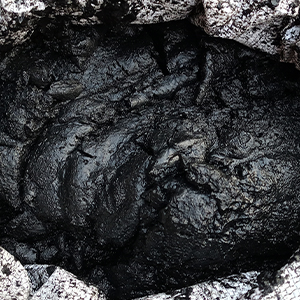
Municipal STP Sewage Sludge
Simultaneous thermal drying and pathogen stabilization for odor-free biosolids and cement co-firing.
Read Municipal STP Guide →
Distillery, Paper & Bio-Waste
Recover calorific value from wet organic cakes using waste boiler steam for RDF co-firing.
Read Bio-Sludge Resource Guide →Paddle Drying vs. Belt Dryers, Rotary Drums & Drying Beds
| Evaluation Criteria | AS Engineers Hollow Paddle Dryer | Belt / Mesh Dryer | Rotary Drum Dryer | Open Solar Drying Bed |
|---|---|---|---|---|
| Heat Transfer Mode | Indirect Conduction (Zero flue contact) | Direct Hot Air Convection | Direct Flue Gas / Hot Air | Ambient Solar & Wind |
| 40%–60% Sticky Zone | Self-cleaning wedge shear | Mesh blinding / back-mix loop needed | Lumping & shell wall scaling | Surface crusting & odor |
| Thermal Efficiency | 1.20–1.35 kg steam/kg water | 1.80–2.30 kg/kg | 1.70–2.20 kg/kg | Fails during monsoon months |
| Scrubber / Exhaust Size | Minimal (80%+ smaller APC) | High exhaust air volume | High dust & flue exhaust | Uncontrolled open-air emissions |
| Plant Footprint | Compact Indoor Skid | Medium-Large | Long horizontal drum length | Huge open land requirement |
See Your Own Sludge Dry Before You Commit Capital
Ship a 25–50 kg wet sludge drum to our GIDC Vatva, Ahmedabad test bay. We run your material on our live 25 kg/hr Hollow Paddle Dryer (paid trial — fee waived 100% upon order) and hand you dried granules plus a signed performance report.
- Exact heat transfer coefficient (U), torque profile, and bulk density test data
- Skid-mounted mobile rental paddle dryers available for on-site campaigns
- Guaranteed alloy specification (SS304 vs SS316L vs Duplex 2205)

Straight Answers from Engineers Who Build Dryers
Design formulas, CPCB manifest standards, and dryer selection frameworks written for Indian ETP/STP heads and project consultants.
Sludge Drying Bed vs Thermal Dryer
Sand bed sizing, monsoon footprint limits, and the economics of upgrading to paddle dryers.
Read Guide →CPCB Hazardous Waste & TSDF Norms
Form 3, Form 4, and Form 10 compliance rules plus how moisture reduction cuts TSDF billing.
Read Guide →ETP Effluent Treatment Plant Guide
Complete unit operations from equalization and clarifiers to filter press and thermal drying.
Read Guide →Paddle Dryer Configuration Guide
Selecting shaft count, steam vs oil heating, screw feeders, and closed vapor condensers.
Read Guide →Complete Sludge Dryers Buyer Guide
Objective comparison across indirect paddle dryers, rotary drums, and thin-film dryers.
Read Guide →TSDF Site Standards & Co-Processing
Meet landfill moisture thresholds or convert dried sludge into cement kiln co-processing fuel.
Read Guide →Request Sizing & Engineering Proposal
Share your daily wet sludge quantity, moisture %, and available steam or thermic oil utility. AS Engineers responds within 1 working day with mass balance, footprint dimensions, and commercial pricing.
AS Engineers — Manufacturing Headquarters
Parent Group: Acmefil Engineering Systems Pvt. Ltd. (Since 1997)
Unit 1: Plot No-514, Phase-II, Near Vatva Railway Station, GIDC Vatva, Ahmedabad 382445
Unit 2: Plot No-CIB-160, Phase-II, GIDC Vatva, Ahmedabad 382445
Engineering Phones: +91 99090 33851 · +91 82386 77554
Email: connect@theasengineers.com
Chat on WhatsApp Engineering Desk →