Sludge management is the planned process of collecting, testing, dewatering, drying, storing, transporting, disposing, or reusing sludge generated from wastewater treatment plants. For ETP, STP, CETP and ZLD plants, the goal is not only to “remove sludge.” The real goal is to reduce moisture, reduce volume, control odour, improve handling, document disposal, and choose the right route for the actual sludge composition.
Wet sludge is expensive because most of what the plant pays to store, lift, transport and dispose of is water. A good sludge management system starts with classification and ends with a safe, documented outlet, such as TSDF disposal, co-processing, composting, land application where permitted, incineration, or reuse after testing.
For many industrial plants, the decision point comes after mechanical dewatering. A filter press, belt press or centrifuge may produce sludge cake, but that cake may still be too wet, heavy, sticky, odorous, or costly to transport. That is where a properly selected sludge drying system can become important.
What is sludge management?
Sludge management is the complete handling plan for the semi-solid residue generated during wastewater treatment.
It includes:
- sludge collection from clarifiers, DAF units, biological treatment systems or tertiary treatment units
- sludge testing and classification
- thickening and conditioning
- mechanical dewatering
- thermal drying where required
- storage and handling
- transport and disposal
- reuse or resource recovery where legally and technically suitable
- documentation, tracking and operator training
In simple words, sludge management converts an unstable, wet waste stream into a more controlled material that can be stored, moved, disposed of, or reused with lower risk.
For a basic explanation of sludge types, read the guide on what sludge is and how it forms.
Why sludge management matters in ETP and STP plants
Sludge is often treated as a side problem, but it directly affects plant cost, housekeeping, compliance and daily operation.
A weak sludge management system can create:
| Problem | What happens at site |
|---|---|
| High wet-weight disposal cost | The plant keeps paying to transport water along with solids |
| Storage pressure | Wet sludge occupies pits, bags, trolleys or open yards |
| Odour and hygiene issues | Biological activity continues in wet sludge |
| Handling difficulty | Sticky sludge is harder to lift, convey and bag |
| Documentation gaps | Disposal receipts, test reports and movement records become incomplete |
| Reuse uncertainty | Sludge cannot be reused safely without testing and approval |
| Equipment stress | Pumps, presses, conveyors and dryers face variable feed conditions |
When I review sludge drying requirements, I do not start only with dryer capacity. I first look at sludge source, inlet moisture, daily generation, stickiness, pH, salts, oil, odour, heating medium, disposal route, available space, vapour handling and whether the plant has a consistent dewatering stage before drying.
Main sources of sludge generation
Different plants produce different sludge. A single method cannot be applied blindly to all sludge.
| Source | Common sludge type | Main concern |
|---|---|---|
| Municipal STP | Primary sludge, secondary biological sludge, digested sludge | Pathogens, odour, stabilization, beneficial use route |
| Industrial ETP | Chemical, biological, oily, saline, fibrous or mixed sludge | Hazard classification, moisture, toxicity, TSDF cost |
| CETP | Mixed sludge from multiple member industries | Variable composition and unpredictable drying behaviour |
| ZLD system | RO reject solids, salts, concentrated residues | High TDS, crystallized solids, disposal route |
| Tertiary treatment | Chemical precipitate, filter backwash sludge | Fine particles, chemicals, periodic removal |
| Food, dairy, paper, textile, pharma, chemical plants | Industry-specific process sludge | Moisture, stickiness, odour, COD/BOD, heavy metals or solvents |
For ETP-specific reading, see the effluent treatment plant guide and the page on industrial sludge disposal.
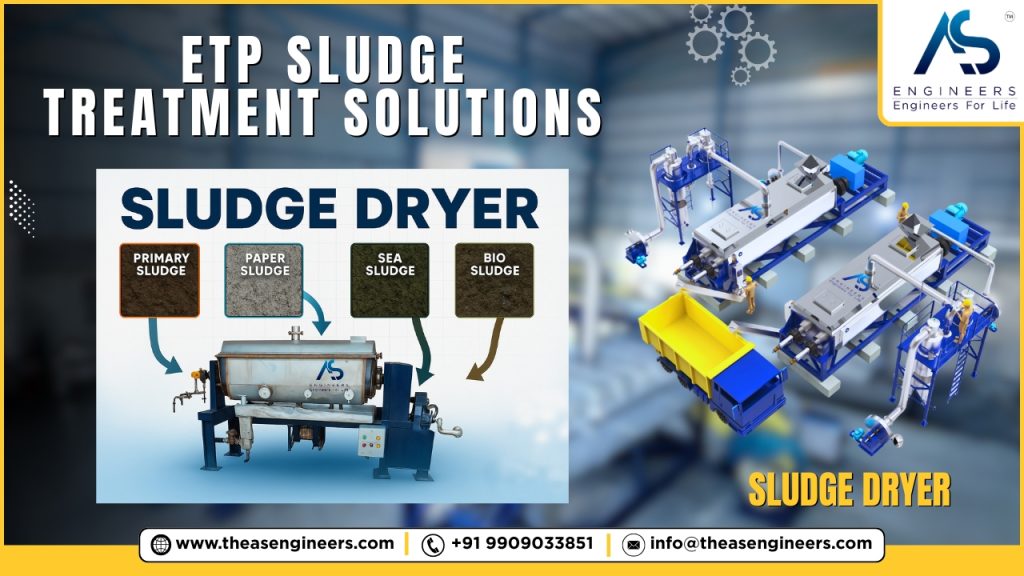
Sludge management process step by step
A strong sludge management plan should follow a controlled sequence.
| Step | Purpose | Practical plant check |
|---|---|---|
| Collection | Remove sludge from treatment units | Avoid overflow, stagnant pits and irregular withdrawal |
| Testing and classification | Understand sludge chemistry and hazard category | Test moisture, pH, heavy metals, COD, TDS, oil, ash and calorific value where needed |
| Thickening | Reduce free water before dewatering | Confirm solids consistency before feeding press or centrifuge |
| Conditioning | Improve separation behaviour | Check polymer or chemical dosing, mixing and sludge response |
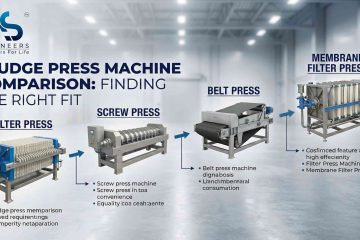
| Dewatering | Convert liquid sludge into sludge cake | Compare filter press, centrifuge, belt press or screw press |
| Drying | Remove deeper moisture from cake | Define final moisture based on disposal or reuse route |
| Storage | Hold sludge safely before movement | Use covered, leak-proof and labelled storage |
| Transport | Move sludge to approved outlet | Use authorized transporter and retain records |
| Disposal or reuse | Complete the legal and practical outlet | Confirm TSDF, co-processing, composting or reuse approval |
| Documentation | Protect the plant during audit | Maintain test reports, manifests, weighment slips and disposal receipts |
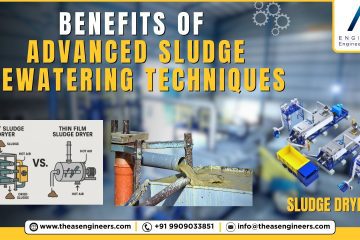
For dewatering equipment selection, use the sludge dewatering techniques guide and the sludge dewatering machine guide.
Sludge dewatering vs sludge drying
Dewatering and drying are not the same process.
| Factor | Sludge dewatering | Sludge drying |
|---|---|---|
| Main function | Mechanically removes free water | Thermally removes deeper moisture |
| Common equipment | Filter press, centrifuge, belt press, screw press | Paddle dryer, disc dryer, belt dryer, rotary dryer, solar dryer |
| Output | Sludge cake | Dried sludge or granulated/crumbly solids depending on material |
| Best use | First-stage volume reduction | Further cost, storage and handling reduction |
| Limitation | Cake may still be heavy and wet | Needs heat source, vapour handling and correct sizing |
| Buyer decision | Which press suits the sludge? | How dry must the sludge become and why? |
A plant should not install a dryer only because sludge exists. Drying makes sense when the cost of wet sludge handling, transport, disposal, odour, storage, or reuse preparation justifies the drying system.
For drying method comparison, read sludge drying methods and systems and thermal sludge drying system guide.
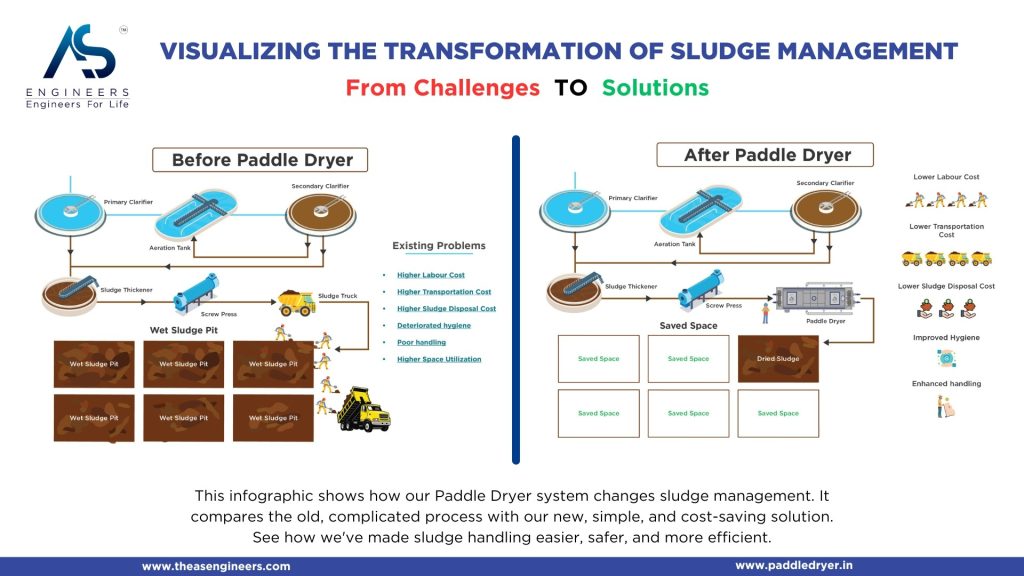
Sludge drying technologies compared
| Technology | Best fit | Strength | Limitation |
|---|---|---|---|
| Paddle dryer | Sticky, wet, industrial ETP/STP sludge, ZLD sludge, limited space | Indirect heating, enclosed design, strong mixing, controlled drying | Needs proper feed data, heating medium and vapour handling |
| Disc dryer | Continuous sludge drying where indirect heat transfer is preferred | Large heat-transfer area | Requires correct sludge behaviour and maintenance planning |
| Belt dryer | Municipal or biological sludge with controlled feed | Lower temperature drying possible | Larger footprint and feed preparation needs |
| Solar drying bed | Low-cost drying where land and climate support it | Low energy input | Weather-dependent, slow and space-intensive |
| Rotary dryer | High-throughput solids where direct or indirect drying is suitable | Handles large volumes | Higher off-gas and space requirement in many duties |
| Thin film dryer | Heat-sensitive or difficult materials in selected applications | High heat-transfer intensity | Not always the first choice for sticky bulk sludge |
For technology-specific comparisons, see paddle dryer vs solar bed and belt vs thin film sludge dryer comparison.
Where paddle dryers fit in sludge management
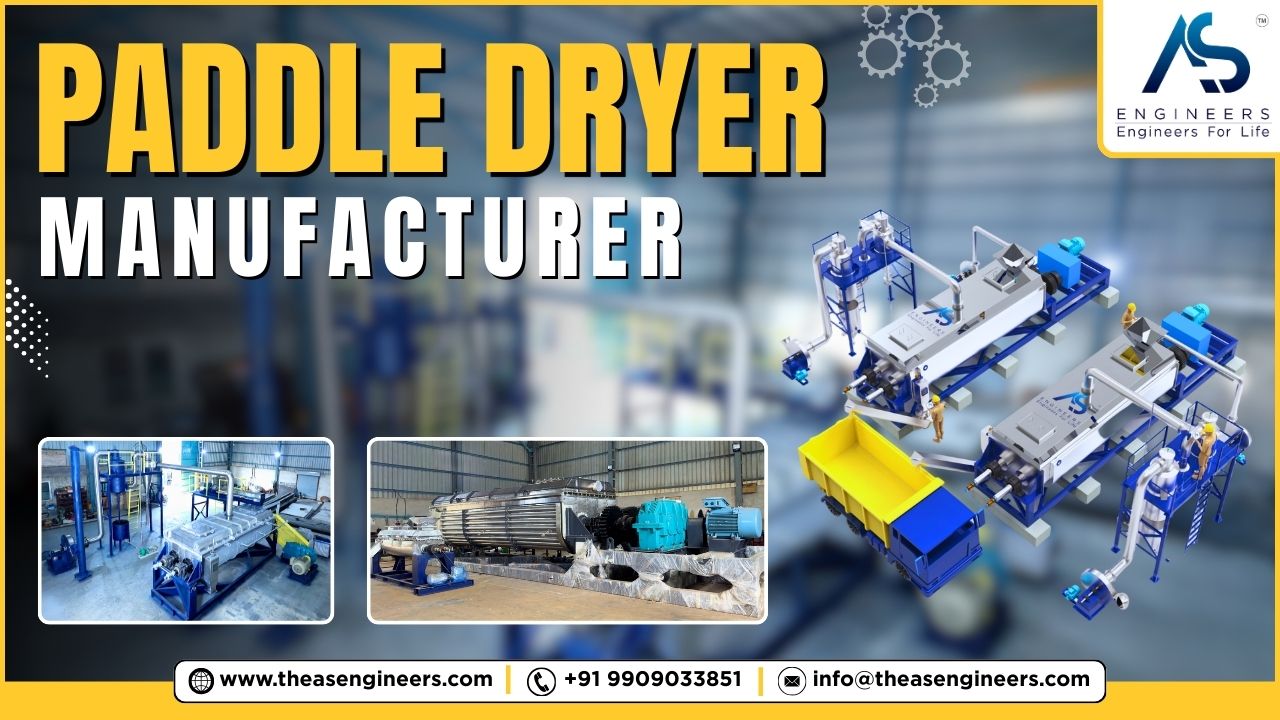
A paddle dryer is an indirect heat transfer dryer. In a sludge drying duty, heat is transferred through heated surfaces such as hollow shafts, paddles and jacketed sections. The sludge is mixed, sheared and moved through the dryer while moisture evaporates.
A paddle dryer can be a strong fit when:
- sludge is sticky, pasty or difficult to handle after dewatering
- wet sludge transport cost is high
- storage space is limited
- the plant needs enclosed handling
- final moisture must be controlled for disposal or approved reuse
- ZLD sludge or ETP sludge is still costly after filter press operation
- the plant has steam, thermic fluid, hot water, or another suitable heating arrangement
- vapour, odour and fines can be routed to suitable downstream control equipment
It may not be the right first choice when:
- sludge quantity is very low and disposal cost is already manageable
- the plant has no stable feed or dewatering stage
- sludge chemistry is unknown
- vapour handling is not planned
- final disposal or reuse route is not defined
- the plant expects guaranteed reuse without testing or regulatory approval
For detailed selection logic, use the sludge paddle dryer selection guide.
How a sludge paddle dryer system is usually arranged
A sludge drying system is more than the dryer body. The surrounding systems decide whether the plant gets reliable operation.
| System | Role in sludge management |
|---|---|
| Feeding system | Moves dewatered sludge cake into the dryer through screw feeder, conveyor or pump-based arrangement depending on sludge condition |
| Heating system | Supplies heat through steam, thermic fluid, hot water or other site-suitable heating medium |
| Paddle dryer | Uses indirect heat transfer and agitation to evaporate moisture |
| Scavenging or vapour system | Helps route evaporated moisture, vapour and odour to the correct downstream system |
| Pollution control system | May include cyclone, scrubber, bag filter or other control equipment depending on fines and vapour load |
| Product handling system | Moves dried sludge to conveyor, bagging, silo, truck loading or storage arrangement |
| Control and monitoring | Tracks temperature, feed rate, moisture, motor load, vapour flow and operating safety |
| Service and spares plan | Keeps shafts, bearings, gearbox, seals and feeding systems reliable |
AS Engineers’ paddle dryer source material includes standard dryer, dual zone dryer and vacuum dryer configurations, along with feeding, heating, pollution control, solvent/vapour management and product handling sections. This matters because sludge drying performance depends on the full system, not only on dryer length or motor HP.
For configuration details, see the paddle dryer configuration guide.
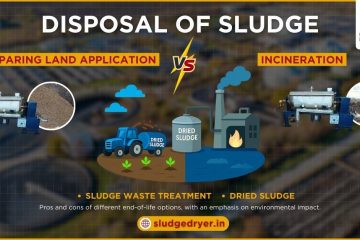
Sludge disposal routes after treatment
Final disposal depends on sludge composition, classification and local permissions.
| Route | Suitable when | Caution |
|---|---|---|
| TSDF disposal | Hazardous or regulated industrial sludge | Requires approved disposal route and documentation |
| Landfill | Non-hazardous sludge where permitted | Must follow local rules and testing requirements |
| Cement kiln co-processing | Dried sludge has suitable calorific value or material value | Needs testing, acceptance and authorization |
| Composting | Organic, stabilized, non-toxic sludge | Not suitable for contaminated industrial sludge |
| Land application | Treated sewage sludge or biosolids where rules permit | Requires pathogen, metals and quality control |
| Incineration | Suitable sludge requiring thermal destruction | Needs emission control and energy planning |
| Bricks or construction material | Composition supports approved use | Testing and approval required before use |
Dried sludge is not automatically a resource. Drying is an enabling step. Reuse depends on lab analysis, contamination level, end-user acceptance, and approval from the relevant authority.
For hazardous and TSDF-specific reading, refer to CPCB guidelines for hazardous waste disposal and TSDF site standards.
Sludge reuse opportunities
Sludge reuse should be treated as a controlled technical and regulatory decision.
Possible routes include:
- Alternative fuel: Possible when dried sludge has suitable calorific value and acceptable contamination profile.
- Cement co-processing: Possible when cement plants and regulators accept the material.
- Composting: Possible for safe, stabilized, organic sludge, usually from STP, food or similar non-toxic sources.
- Biogas: Possible before drying when organic sludge is suitable for anaerobic digestion.
- Brick or construction material: Possible only when ash and mineral composition are suitable.
- ZLD residue handling: Drying can reduce volume and improve logistics, but reuse is not automatic.
For circular economy context, see sludge waste recycling and biosolids resource recovery.
Cost logic: why moisture is the hidden cost
Most sludge disposal contracts are affected by weight, volume, transport frequency or handling effort. Moisture increases all of them.
A simple cost review should calculate:
| Input | Why it matters |
|---|---|
| Wet sludge quantity per day or month | Base disposal burden |
| Inlet moisture after dewatering | Shows how much water remains in cake |
| Current disposal cost per ton | Builds business case |
| Transport distance | Affects logistics cost |
| Storage space available | Affects urgency and safety |
| Heating medium cost | Determines drying OPEX |
| Target final moisture | Prevents over-drying or under-drying |
| Reuse or disposal route | Decides whether drying depth is justified |
AS Engineers’ source material shows a representative example where 10 tons per day of wet sludge becomes 2 tons per day after drying, reducing the quantity sent for disposal or reuse. This should be treated as an example, not a universal promise. Actual results depend on inlet moisture, solids content, drying target, sludge chemistry, operating hours, fuel cost and disposal rate.
Sludge management checklist for plant teams
Use this before selecting a dryer, press, contractor or disposal route.
| Checkpoint | What to confirm |
|---|---|
| Sludge source | Primary, secondary, chemical, biological, ZLD, CETP, oily, paper, textile, pharma or mixed |
| Daily generation | Average and peak sludge quantity |
| Feed moisture | Moisture after thickening and after dewatering |
| Sludge behaviour | Sticky, fibrous, granular, oily, saline, abrasive, corrosive or odorous |
| Hazard classification | Heavy metals, pH, solvents, toxicity, pathogens, oil, salts and other parameters |
| Current cost | Wet disposal cost, transport cost, storage cost and manpower |
| Existing equipment | Filter press, centrifuge, screw press, sludge pump, conveyor, holding tank |
| Heat source | Steam, thermic fluid, hot water, gas, electricity, biomass or other site resource |
| Vapour route | Scrubber, condenser, cyclone, bag filter, chimney or other system |
| Final outlet | TSDF, cement co-processing, composting, landfill, incineration, bricks or internal storage |
| Documentation | Test reports, manifests, weighment, gate pass, disposal receipts, authorization records |
| Service planning | Spares, AMC, operator training, cleaning access and shutdown planning |
RFQ inputs for sludge dryer selection
Do not ask for a quote with only “we need a sludge dryer.” Send useful duty data.
Share these details:
- sludge source: ETP, STP, CETP, ZLD, industrial process or mixed sludge
- industry: textile, pharma, chemical, food, paper, refinery, paint, municipal or other
- feed quantity per hour or per day
- operating hours per day
- inlet moisture after dewatering
- desired final moisture
- sludge temperature
- pH, TDS, salts, oil, grease, solvents, heavy metals, ash and calorific value if available
- current dewatering equipment
- available heating medium
- available space
- preferred product handling: bagging, silo, truck loading, conveyor or screw discharge
- vapour and odour control requirement
- disposal or reuse route
- MOC concerns: corrosion, abrasion, hygiene or solvent exposure
For price and vendor discussion, see industrial sludge dryer machine price and paddle dryer manufacturer in India.
Common sludge management mistakes
Treating all sludge as the same
Municipal sludge, chemical sludge, biological sludge, RO reject sludge and oily sludge behave differently. Testing comes before equipment selection.
Stopping at dewatering even when cake remains costly
Mechanical dewatering is important, but some plants still carry high transport and disposal cost because the cake contains too much moisture.
Selecting equipment by capacity only
A dryer selected only by tons per day may fail if sludge stickiness, vapour load, MOC, heat source and discharge behaviour are ignored.
Making reuse claims before testing
Dried sludge is not automatically fertilizer, fuel or construction material. It must be tested and accepted through the correct route.
Ignoring vapour and odour control
Drying removes moisture, but that moisture becomes vapour. Vapour, odour and fines need proper routing.
Forgetting service access
A sludge system should be maintainable. Gearbox, bearings, seals, feeder, paddles, scraper zones, inspection doors and discharge sections need access.
Where ZLD sludge fits
In a ZLD plant, water recovery is the main objective, but the final reject stream still has to be handled. ZLD sludge or residue may be salty, concentrated, crusty, sticky or difficult to dispose of. Drying may help reduce volume and improve handling, but the final route still depends on composition and approval.
For related reading, see the zero liquid discharge guide and AS Engineers ecosystem support on ZLD systems.
When to consider a pilot trial
A pilot trial is useful when sludge behaviour is uncertain.
Consider a trial when:
- sludge is sticky, pasty or variable
- final moisture target is strict
- the plant wants to check discharge texture
- vapour, odour or fines are a concern
- sludge has salts, solvents, oil or high ash
- the project involves a large dryer investment
- the buyer wants realistic drying behaviour before final sizing
AS Engineers’ source material mentions a 50 kg/hr paddle dryer pilot trial machine. A trial can help check drying behaviour, phase change, discharge condition, moisture target, vapour load and practical feasibility before full-scale equipment finalization.
For broader AS Engineers paddle dryer application context, see paddle dryers for sludge drying.
Conclusion
Sludge management is not only a disposal task. It is a full plant-side system that connects wastewater treatment, dewatering, drying, storage, transport, documentation, compliance and possible resource recovery.
For small, low-risk sludge quantities, simple dewatering and authorized disposal may be enough. For high-volume ETP, STP, CETP and ZLD plants, wet sludge can become a recurring cost and operating burden. In those cases, sludge drying can reduce moisture, improve handling, lower transport load and prepare the material for a more controlled disposal or approved reuse route.
The right decision depends on sludge testing, feed consistency, moisture target, heating medium, vapour handling, MOC, space, disposal cost and service planning.
To review a sludge dryer requirement, share sludge source, daily quantity, inlet moisture, desired final moisture, lab analysis, current disposal route, heating medium and available layout. The AS Engineers team can review the duty condition and suggest the next practical step based on actual plant data.
FAQs
What is sludge management in wastewater treatment?
Sludge management is the process of collecting, testing, thickening, dewatering, drying, storing, transporting, disposing or reusing sludge generated from wastewater treatment. It helps reduce moisture, volume, odour, handling difficulty, disposal cost and compliance risk.
What is the difference between sludge dewatering and sludge drying?
Sludge dewatering mechanically removes free water using equipment such as a filter press, belt press, centrifuge or screw press. Sludge drying uses heat to remove deeper moisture from sludge cake, making it lighter, drier and easier to handle, store or transport.
Which sludge drying method is best?
There is no single best method for every plant. Paddle dryers are strong for wet, sticky and industrial sludge where indirect heating, enclosed operation and compact layout are useful. Solar drying beds suit low-cost drying where land, climate and time are available. Belt, disc, rotary and thin film dryers fit different duties.
Can dried sludge be reused?
Dried sludge can be reused only when testing and approval support the route. Possible uses include alternative fuel, cement co-processing, composting, biogas-related processing, bricks or construction material. Hazardous or contaminated sludge must follow the approved disposal or utilization route.
What data is required for sludge dryer selection?
Key data includes sludge source, industry, feed quantity, inlet moisture, final moisture target, pH, salts, oil, solvents, ash, heavy metals, calorific value if relevant, current dewatering method, available heating medium, vapour control requirement, MOC concerns and final disposal or reuse route.