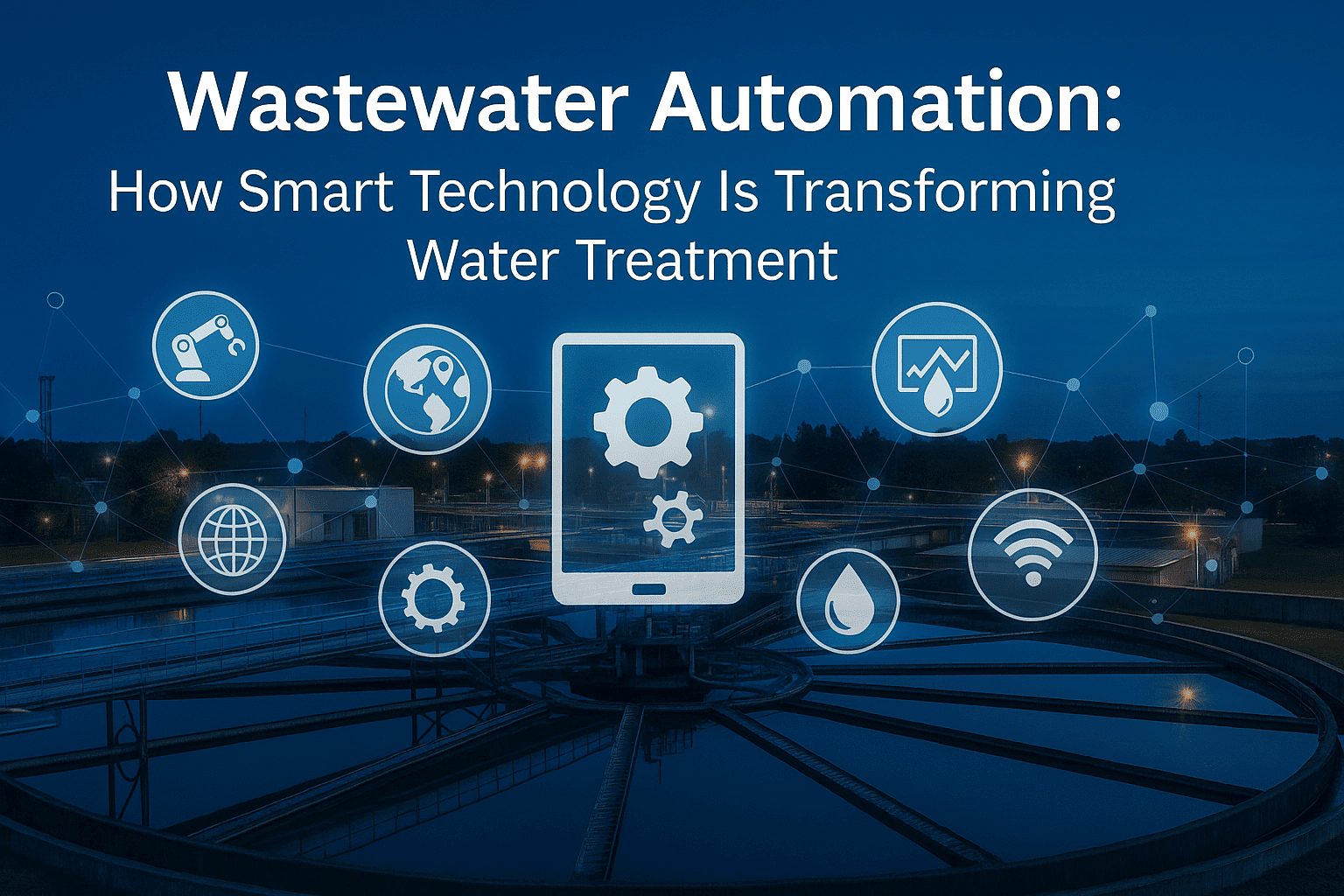
Wastewater automation is the use of sensors, PLC control panels, HMI/SCADA dashboards, alarms, interlocks, VFDs, dosing controls, flow meters and data logging to monitor and control wastewater treatment operations in real time.
For ETP, STP, CETP and ZLD plants, automation is not only about switching pumps on and off. It is about improving process visibility, reducing manual dependency, catching deviations earlier, supporting documentation, and connecting sludge handling equipment into the overall treatment workflow.
In my view, many wastewater plants do not fail because one machine is bad. They fail because operators do not get the right data at the right time. Flow changes, pH drift, pump dry-run, blower overrun, sludge accumulation, dosing error, and tank-level mismatch all become bigger problems when there is no reliable monitoring and control logic.
What Is Wastewater Automation?
Wastewater automation means connecting treatment equipment, sensors, control panels and software so the plant can monitor operating conditions and respond through predefined logic.
A practical wastewater automation setup may include:
- pH, ORP, DO, TSS, turbidity, conductivity, TDS, flow and level monitoring
- PLC-based logic for pumps, blowers, valves and dosing systems
- HMI panels for local operator control
- SCADA dashboards for central monitoring and reporting
- VFDs for speed control of blowers, pumps and agitators
- Alarms for overflow, dry-run, high/low pH, high turbidity, motor trip and abnormal runtime
- Data logging for daily operation review, audit support and maintenance planning
- Interlocks between sludge pumps, dewatering equipment, sludge dryers and downstream handling
For Indian industrial plants, online monitoring is also important because CPCB has issued directions for online monitoring systems in specified high-pollution industry categories and common treatment facilities, with data connectivity to SPCB/PCC and CPCB servers in applicable cases.
Why Manual Wastewater Operation Creates Risk
Manual operation may still work for small or low-variability systems, but it becomes risky when the plant has fluctuating flow, variable inlet load, multiple shifts, high sludge generation, or compliance pressure.
| Manual Operation Issue | What Usually Happens | Automation Benefit |
|---|---|---|
| Delayed sampling | Operators detect problems late | Real-time monitoring and alarms |
| Fixed dosing | Chemical overuse or under-dosing | Flow or pH-based dosing control |
| Pump dry-run | Seal damage, motor stress, downtime | Level-based pump interlock |
| Blower overrun | High power use and equipment wear | DO-based or timer-based logic |
| Poor sludge transfer | Sludge accumulates in pits or tanks | Pump sequence and level control |
| Paper logs | Missing or inconsistent records | Automated data logging |
| No alarm history | Root-cause review becomes difficult | SCADA event and alarm reports |
Automation does not remove the need for operators. It changes the operator’s role from manual checking to supervision, diagnosis, maintenance coordination and process decision-making.
Core Components of a Wastewater Automation System
Sensors and Analyzers
Sensors are the eyes of the plant. They convert process conditions into readable signals for the PLC, HMI or SCADA system.
Common wastewater sensors include:
- pH sensor for neutralization and dosing control
- ORP sensor for oxidation-reduction control
- DO sensor for biological aeration control
- TSS or turbidity sensor for solids monitoring
- Conductivity or TDS sensor for dissolved solids trend monitoring
- Flow meter for inlet, outlet, recycle and dosing calculations
- Level transmitter or level switch for tanks, sumps and sludge pits
- Pressure, temperature and vibration sensors where equipment protection is needed
Important point: BOD and COD monitoring needs careful treatment. CPCB’s OCEMS guidance notes that direct real-time BOD/COD instrumentation is limited and that indirect estimation methods, such as TOC correlation or UV absorption, may need validation for the specific wastewater matrix.
So, do not treat every online analyzer value as a perfect replacement for lab validation. Use it for trend visibility, early warning and process control, and keep laboratory correlation where required.
PLC Control Panel
The PLC is the logic controller. It receives signals from sensors and gives commands to pumps, blowers, valves, agitators, dosing pumps and other equipment.
Typical PLC logic in wastewater plants includes:
- Transfer pump start/stop based on sump level
- Dosing pump operation based on pH or flow
- Blower duty/standby sequencing
- Sludge pump interlock with sludge tank level
- Filter press or dewatering feed pump sequencing
- Dryer feed interlock based on upstream sludge availability
- Motor trip alarm and standby equipment changeover
- Emergency stop, overload and dry-run protection
For ETP and STP plants, PLC logic should be process-specific. Copy-paste panel logic can create trouble when inlet characteristics, tank arrangement, batch timing or sludge behavior differs from site to site.
HMI and SCADA
HMI is generally used near the control panel for local operation. SCADA is used for wider visualization, reporting and historical data review.
A good SCADA screen should show only what helps operators act faster:
- Tank level status
- Pump, blower and motor running status
- pH, DO, TSS, turbidity, flow and conductivity trends
- Alarm list and alarm history
- Manual/auto mode status
- Runtime and maintenance counters
- Daily treated-water and sludge-handling summary
- Dryer feed, discharge and vapour handling status where a sludge dryer is integrated
SCADA should not become a decorative dashboard. It should help the plant team answer: what is running, what is abnormal, what changed, and what needs action?
VFDs, Starters and Motor Protection
VFDs are useful where speed control improves process stability or energy use. In wastewater plants, VFDs may be used for:
- Blowers
- Transfer pumps
- Sludge pumps
- Agitators
- Screw conveyors
- Dryer feed systems
- ID/FD fans connected to drying or vapour handling systems
However, VFD selection must consider motor rating, duty cycle, cable length, enclosure, harmonics, panel ventilation, site dust and maintenance capability. A VFD is not automatically the right choice for every motor.
Data Logger and Reporting System
Data logging is important for plant review, audits and maintenance planning.
Useful data points include:
- Inlet and outlet flow
- pH trend
- DO trend
- TSS/turbidity trend
- Sludge transfer quantity or runtime
- Pump and blower runtime
- Power consumption where measured
- Dosing pump runtime or chemical consumption
- Alarm history
- Equipment trip history
- Dryer feed and discharge pattern, where applicable
For plants under applicable online monitoring requirements, regulatory data handling should be checked with the plant’s consultant, SPCB/PCC direction and current CPCB protocol. Do not design compliance reporting only from generic assumptions.
Cybersecurity and Access Control
Remote monitoring is useful, but it introduces risk. Public water and wastewater systems are increasingly cyber-sensitive, and EPA notes that basic cyber hygiene helps utilities prevent, detect, respond and recover from cyber incidents.
For wastewater automation, practical security controls include:
- Role-based user access
- Strong passwords and password rotation
- Separate operator and admin permissions
- VPN or secure remote access
- No open public access to PLC or SCADA
- Backup of PLC program and SCADA configuration
- Change log for setpoint changes
- Local manual override for safe operation during network failure
Automation should make the plant safer, not expose the plant to uncontrolled remote changes.
Where Wastewater Automation Adds the Most Value
STP Automation
STP automation is useful for residential societies, hotels, hospitals, institutions, commercial buildings and industrial townships.
Common automation areas:
- Sewage pump level control
- Bar screen or inlet pump monitoring
- Aeration blower sequencing
- DO monitoring in aeration tank
- Sludge recycle or wasting control
- Chlorine or disinfection dosing
- Treated water tank level control
- Reuse water pumping
- Daily runtime and alarm reports
For more process context, connect this page with the internal guide on STP sludge and sewage treatment.
ETP Automation
ETP automation is more complex because industrial wastewater varies by process, production batch, cleaning cycle, chemical usage and raw material.
Common ETP automation areas:
- Equalization tank level and mixing control
- pH correction and neutralization
- ORP-based chemical dosing
- Flow-paced dosing
- Coagulation and flocculation controls
- Clarifier sludge pump scheduling
- Filter feed pressure and backwash logic
- Sludge transfer to dewatering or drying system
- Alarm reports for high pH, low pH, high turbidity or pump failure
For industrial effluent readers, link this with effluent treatment industrial guide and ETP sludge challenges.
CETP Automation
CETP automation must handle multiple inlet streams, mixed pollutant loads and shared responsibility between member industries.
Useful automation areas:
- Multi-inlet flow monitoring
- Equalization and load balancing
- pH/TSS/turbidity trend monitoring
- Central SCADA view
- Dosing control based on actual load
- Sludge handling and disposal tracking
- Member-wise inlet data where infrastructure supports it
A CETP automation plan should never be designed only from total KLD. It needs inlet variation, industry mix, peak flow, sludge generation, chemical consumption, and disposal route data.
Use internal support from CETP key concepts and ETP vs CETP comparison.
ZLD Automation
ZLD systems need stronger control because multiple units must work together: pretreatment, UF/RO, evaporator, crystallizer, ATFD or sludge dryer, condensate handling and reject management.
Important automation points:
- Feed flow and reject flow monitoring
- RO reject and recovery trend
- MEE or evaporator feed balancing
- Dryer feed interlock
- Condensate quality monitoring
- Sludge or salt discharge handling
- High temperature and vapour-side alarms
- Emergency shutdown logic
- Batch report or daily water balance report
Connect this section with Zero Liquid Discharge guide and top challenges for ZLD plants.
The Missing Link: Sludge Handling Automation
Many ETP and STP automation discussions focus on treated water quality, but ignore sludge handling. That is a serious gap.
Even when the liquid treatment side is automated, sludge problems continue if the plant has:
- Manual sludge pit checking
- No sludge level monitoring
- No interlock between sludge pump and dewatering equipment
- Wet sludge stored for too long
- Irregular filter press feeding
- No dryer feed planning
- No record of sludge quantity generated
- No connection between dewatering and thermal drying
- No alarm for sludge pump failure
- No tracking of dried sludge discharge
In a well-planned sludge handling system, automation should connect the wet sludge pit, sludge transfer pump, dewatering machine, sludge dryer feed system, vapour handling, pollution control equipment and dried product handling.
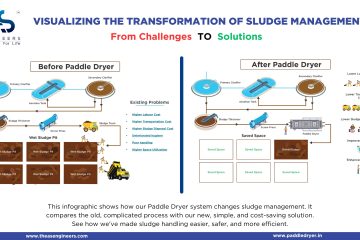
AS Engineers’ paddle dryer process documentation shows a connected sludge drying workflow that can include feeding, heating, FD blower/scavenging, ID blower, cyclone, scrubber, bag filter, solvent/vapour management and product handling systems.
How Automation Connects With Sludge Dryers
A sludge dryer should not be treated as a standalone machine placed after dewatering. It should be integrated into the plant’s operating sequence.
Important automation and interlock points include:
| Dryer Area | Automation Requirement | Why It Matters |
|---|---|---|
| Wet sludge feed | Sludge pump and feed screw interlock | Prevents starvation or overfeeding |
| Feed consistency | Level and runtime monitoring | Helps stabilize dryer operation |
| Heating system | Temperature and pressure monitoring | Supports safe heat transfer control |
| Vapour handling | ID fan and duct status | Prevents vapour accumulation |
| Pollution control | Cyclone, scrubber or bag filter monitoring | Supports safer exhaust handling |
| Product discharge | Screw conveyor or bagging interlock | Prevents discharge blockage |
| Emergency stop | Linked shutdown sequence | Protects equipment and operators |
| Maintenance | Runtime and alarm logs | Improves service planning |
For equipment selection, connect this page with paddle dryer configuration guide, thermal sludge drying system guide and how to choose sludge paddle dryer.
Basic, Intermediate and Advanced Automation Levels
Not every plant needs the same automation level. The right level depends on plant size, inlet variation, compliance requirement, manpower availability, budget and downtime risk.
| Automation Level | Suitable For | Typical Scope |
|---|---|---|
| Basic automation | Small STP or simple ETP | Pump timers, level switches, basic alarms, manual logs |
| Process automation | Industrial ETP/STP | PLC panel, pH/DO/flow sensors, dosing control, HMI |
| SCADA automation | Larger ETP, CETP, ZLD | Central dashboard, alarms, history, reports, remote view |
| Integrated plant automation | ZLD and sludge drying plants | Liquid treatment, sludge transfer, dewatering, dryer, vapour handling and reporting |
| Predictive automation | Mature multi-site plants | Trend analytics, maintenance alerts, energy and chemical review |
Start with the process risks that create real losses. Do not buy a dashboard before fixing measurement quality, sensor location, calibration practice and control logic.
RFQ Checklist for Wastewater Automation
Before asking for a wastewater automation proposal, prepare these inputs:
- Plant type: STP, ETP, CETP, ZLD or combined system
- Capacity in KLD or MLD
- Average and peak flow
- Inlet wastewater characteristics
- Existing process stages
- Tank sizes and current level control method
- Pump, blower, agitator and dosing pump list
- Existing MCC/control panel details
- Required sensors and analyzer points
- Current manual log format
- Required reports
- Alarm escalation requirement
- Remote monitoring requirement
- Available internet/network condition
- Power backup arrangement
- Existing sludge handling method
- Dewatering equipment type
- Wet sludge quantity and moisture
- Final sludge disposal route
- Dryer integration requirement, if applicable
- Maintenance team skill level
- Compliance reporting requirements as advised by consultant or regulator
For sludge drying RFQs, also share feed moisture, final moisture target, sludge behavior, daily throughput, heating medium, material of construction requirement, vapour handling requirement and discharge method.
Common Mistakes in Wastewater Automation
Treating Automation as Only a Panel Job
A control panel without process understanding can create wrong sequences, nuisance alarms and operator bypassing. Wastewater automation must follow process logic.
Buying Too Many Sensors Without Maintenance Planning
Sensors need cleaning, calibration and correct installation. A badly maintained sensor gives bad data, and bad data creates bad automation decisions.
Ignoring Sludge Handling
Automation that only monitors treated water but ignores sludge transfer, sludge pits, dewatering and dryer feed leaves a major operating problem unsolved.
No Manual Bypass Planning
Every automated plant still needs safe manual operation for maintenance, emergency and sensor failure situations.
Weak Alarm Design
Too many alarms create operator fatigue. Too few alarms create late response. Alarms should be prioritized by risk and action required.
No Cybersecurity Discipline
Remote access must be controlled. Do not expose PLC, HMI or SCADA directly to the public internet.
Assuming Automation Guarantees Compliance
Automation supports monitoring, reporting and faster action. It does not guarantee compliance by itself. Compliance still depends on treatment design, plant operation, maintenance, sampling, calibration, wastewater characteristics and statutory requirements.
When Wastewater Automation Is a Good Fit
Wastewater automation is a strong fit when:
- The plant has variable inlet load
- Operators miss critical deviations
- Chemical dosing is inconsistent
- Pump or blower failures are frequent
- Sludge handling is irregular
- Reporting takes too much manual effort
- Multiple shifts create accountability gaps
- The plant is moving toward ZLD
- Dryer feed needs better sequencing
- Management needs remote visibility
- Audit or compliance documentation is important
When Automation Alone Will Not Solve the Problem
Automation should not be used as a cover-up for poor process design.
First fix the process if:
- The ETP or STP is undersized
- Equalization capacity is inadequate
- Aeration system is wrongly selected
- Sludge wasting is not defined
- Dewatering equipment is overloaded
- Wet sludge disposal route is unclear
- Dryer sizing is not based on real feed data
- Operators are not trained
- Sensors are not maintained
- No one reviews the data
Automation improves control. It does not replace correct engineering.
FAQs
What is wastewater automation?
Wastewater automation is the use of sensors, PLCs, HMI/SCADA systems, alarms, interlocks and data logging to monitor and control treatment plant equipment such as pumps, blowers, valves, dosing systems, sludge pumps and dryer feed systems.
Is wastewater automation useful for small STPs?
Yes, small STPs can benefit from basic automation such as level-based pump control, blower timers, pH monitoring, treated water tank control and simple alarm systems. A full SCADA system may not be necessary for every small plant.
Which parameters are commonly monitored in wastewater automation?
Common parameters include pH, ORP, DO, TSS, turbidity, conductivity, TDS, flow, tank level, pressure, temperature, motor runtime and alarm status. BOD and COD online monitoring should be treated carefully because many systems rely on indirect estimation and site-specific validation.
How does automation help sludge handling?
Automation can connect sludge pit levels, sludge pumps, dewatering equipment, dryer feed systems, vapour handling, discharge conveyors and alarms. This helps reduce manual dependency and prevents sludge accumulation, dry-run, overfeeding and discharge blockage.
Can automation guarantee wastewater compliance?
No. Automation helps monitoring, control, reporting and faster response, but it does not guarantee compliance. Compliance depends on correct treatment design, operation, maintenance, calibration, lab validation, wastewater load and applicable regulatory requirements.
Conclusion
Wastewater automation is most useful when it improves real plant control, not just when it creates a dashboard.
For ETP, STP, CETP and ZLD plants, the best automation plan connects liquid treatment, sludge transfer, dewatering, drying, vapour handling, alarms, reports and operator action. The sludge side should not be left outside the automation plan because wet sludge accumulation, irregular feeding and poor handling can become major cost and reliability problems.
For sludge dryer or paddle dryer integration, share your sludge type, daily sludge quantity, feed moisture, final moisture target, dewatering method, heating medium, available utilities, vapour handling need and discharge plan. The AS Engineers team can review sludge drying requirements and help align the dryer-side equipment selection with actual plant operating conditions.