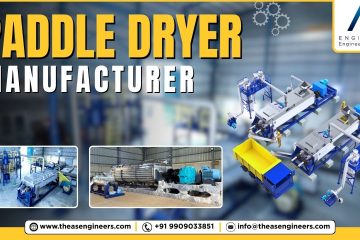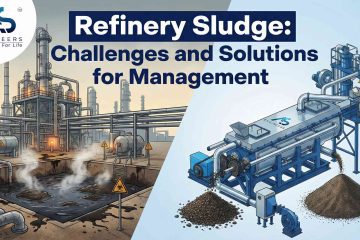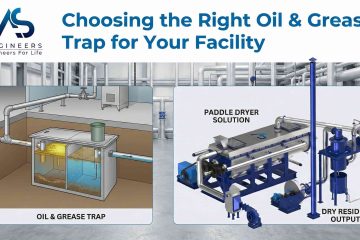
Wastewater treatment sludge is the semi-solid residue separated from sewage or industrial wastewater during treatment. It contains water, organic matter, inorganic solids, biological solids, grit, chemicals, and sometimes hazardous constituents depending on the source. Before disposal or reuse, this sludge usually needs thickening, stabilisation, dewatering, testing, and in many plants, controlled drying.
For STP, ETP, CETP, and ZLD plants, the main problem is not only “sludge generation.” The real problem is wet sludge handling. Wet sludge is heavy, sticky, difficult to store, expensive to transport, and risky to dispose of without correct classification.
This guide explains where wastewater treatment sludge comes from, how it is treated, when dewatering is enough, when drying becomes useful, and what plant teams should check before selecting a sludge dryer.
What is wastewater treatment sludge?
Wastewater treatment sludge is the concentrated solid material removed from wastewater during physical, chemical, and biological treatment. In simple plant terms, it is the material left behind after the water treatment system separates suspended solids, biomass, precipitated chemicals, and settled impurities from the liquid stream.
Sludge can come from:
- Municipal sewage treatment plants, STPs
- Industrial effluent treatment plants, ETPs
- Common effluent treatment plants, CETPs
- Zero Liquid Discharge, ZLD, systems
- Food, textile, paper, chemical, pharma, dye, refinery, and metal processing plants
- Biological treatment systems
- Primary and secondary clarifiers
- Filter press, centrifuge, screw press, and belt press discharge
The composition changes from plant to plant. That is why sludge treatment should not be selected only by industry name. It should be selected by sludge behaviour, moisture level, solids concentration, contaminants, pH, corrosiveness, odour, stickiness, disposal route, and final moisture requirement.
For a broader sludge foundation, read what sludge is and how it behaves in treatment systems.
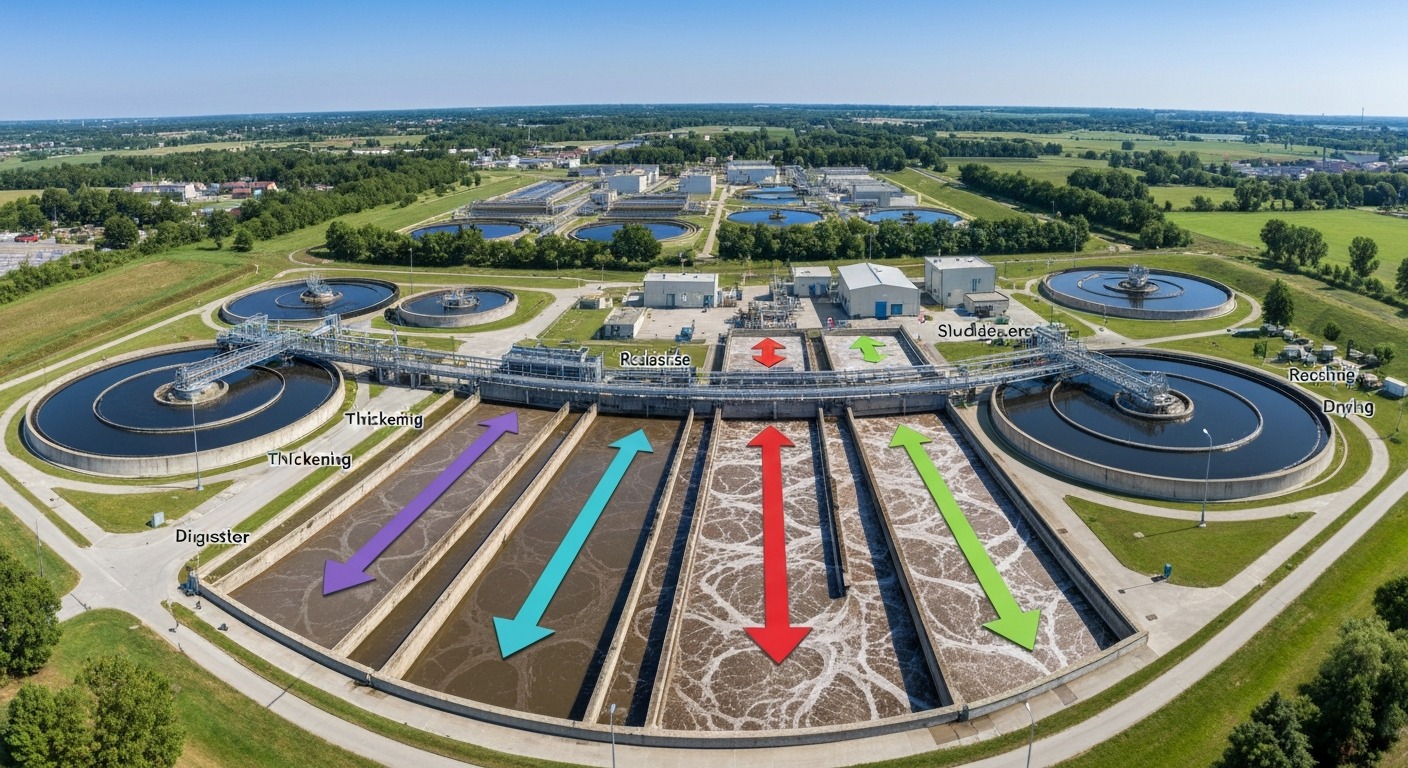
Where sludge forms in a wastewater treatment plant
Wastewater sludge is generated at different stages of treatment. Each stage creates a different sludge load and behaviour.
| Treatment stage | Sludge generated | Practical handling issue |
|---|---|---|
| Screening and grit removal | Screenings, grit, coarse solids | Needs segregation before sludge handling |
| Primary clarification | Primary sludge | Usually heavier, more settleable, organic-rich |
| Biological treatment | Waste activated sludge or biological sludge | Often lighter, more water-bound, harder to dewater |
| Secondary clarification | Secondary sludge | Needs return/waste balance and further thickening |
| Chemical treatment | Chemical or precipitated sludge | May contain salts, metals, coagulants, or hazardous constituents |
| Tertiary/ZLD treatment | Concentrated solids and mixed sludge | Often needs careful classification and disposal planning |
For the main treatment sequence, link this page to the wastewater treatment process guide and the 4 stages of wastewater treatment process.
Main types of wastewater treatment sludge
Not all wastewater treatment sludge should be handled the same way.
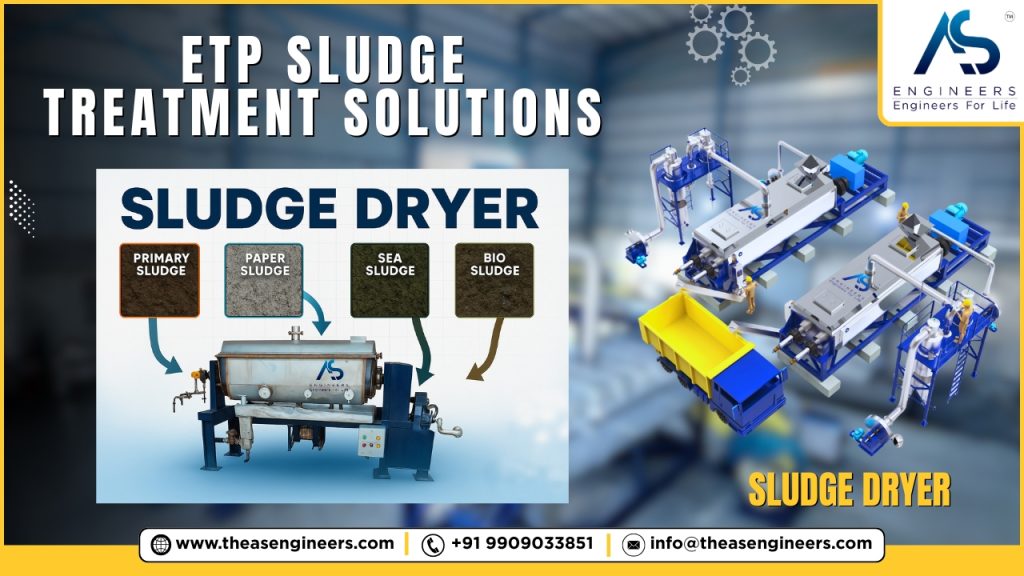
Primary sludge
Primary sludge comes from primary clarifiers. It usually contains settleable solids, organic matter, grit, fibres, and suspended matter removed before biological treatment. It may thicken better than biological sludge, but it can create odour and storage issues if not stabilised.
Secondary biological sludge
Secondary sludge comes from biological treatment systems such as activated sludge processes. It contains microbial biomass and fine suspended solids. This sludge can hold more water and may be more difficult to dewater.
For deeper biological sludge context, read the guide on bio-sludge and its handling potential.
Mixed sludge
Many STP and ETP plants combine primary and secondary sludge before thickening or dewatering. Mixed sludge behaviour depends on the ratio of primary solids, biological solids, chemicals, and conditioning chemicals.
Chemical sludge
Chemical sludge is produced when coagulants, neutralising agents, precipitation chemicals, or treatment additives are used. It may contain salts, metals, lime, alum, iron salts, polymers, or other process-specific constituents.
Industrial ETP sludge
Industrial sludge is the most variable category. Textile, dye, chemical, pharma, food, paper, refinery, electroplating, and agrochemical plants may all generate different sludge with different disposal risks. Some industrial sludge may require hazardous waste classification and authorised disposal.
For industrial disposal planning, connect this article with the industrial sludge disposal guide.
The practical sludge treatment sequence
A good sludge management line usually follows this order:
- Sludge collection from clarifiers or treatment units
- Equalisation or holding
- Thickening
- Stabilisation, where required
- Conditioning with polymer, lime, or other approved additives
- Mechanical dewatering
- Thermal drying, if remaining moisture is still a problem
- Testing and classification
- Storage, transport, disposal, co-processing, incineration, land application, or approved reuse
The exact sequence depends on whether the sludge is municipal, biological, chemical, hazardous, non-hazardous, reusable, or disposal-only.
Thickening vs dewatering vs drying
Many plant teams use these terms interchangeably, but they are not the same.
| Stage | What it does | Typical plant objective | Output condition |
|---|---|---|---|
| Thickening | Increases solids concentration by removing free water | Reduce volume before digestion or dewatering | Pumpable thickened sludge |
| Dewatering | Mechanically removes more water using filter press, centrifuge, screw press, or belt press | Produce sludge cake for easier handling | Wet cake, often still heavy and moist |
| Drying | Uses heat to remove deeper moisture after dewatering | Reduce weight, improve handling, lower transport burden, support approved reuse or disposal | Drier granular, cake-like, or dischargeable solids depending on sludge |
Mechanical dewatering is usually attempted before thermal drying. Drying becomes relevant when dewatered sludge cake remains too wet, sticky, heavy, odorous, or costly to transport and dispose of.
For more detail, add links to sludge dewatering techniques and sludge thickener fundamentals.
Common wastewater sludge treatment methods
Sludge thickening
Thickening reduces the volume of sludge before further treatment. Gravity thickeners, mechanical thickeners, dissolved air flotation, and rotary drum thickeners may be used depending on sludge type.
A thickener does not make sludge dry. It only prepares the sludge for better digestion, dewatering, or downstream handling.
Sludge stabilisation
Stabilisation reduces odour, biological activity, and pathogen risk in sewage sludge. Methods may include anaerobic digestion, aerobic digestion, lime stabilisation, or thermal processes depending on the plant design and regulation.
For STP sludge, stabilisation is often important before reuse or disposal discussions. For industrial sludge, chemical composition and classification may matter more than biological stabilisation alone.
Sludge dewatering
Dewatering uses mechanical force to separate water from sludge. Common systems include:
- Filter press
- Belt filter press
- Screw press
- Decanter centrifuge
- Plate and frame press
- Sludge drying beds for smaller or land-available sites
Dewatering reduces water, but it may not reduce moisture enough for economical disposal. Many plants still face wet cake handling issues after dewatering.
For machine selection, link to sludge dewatering machine guide.
Thermal sludge drying
Thermal drying removes additional moisture from sludge after dewatering. It is usually considered when plants want lower transport weight, better storage, easier handling, volume reduction, or preparation for approved reuse, co-processing, incineration, or disposal.
Drying should be selected based on:
- Feed moisture
- Final moisture target
- Daily sludge quantity
- Sludge stickiness
- Heating medium
- Vapour handling need
- Odour control
- Dust and fines behaviour
- Material of construction
- Pollution control requirement
- Final disposal or reuse route
For a deeper drying discussion, link to thermal sludge drying systems and wet sludge drying.

When is sludge drying needed?
Sludge drying is not needed in every plant. It becomes practical when normal treatment and dewatering still leave sludge in a difficult condition.
Consider sludge drying when:
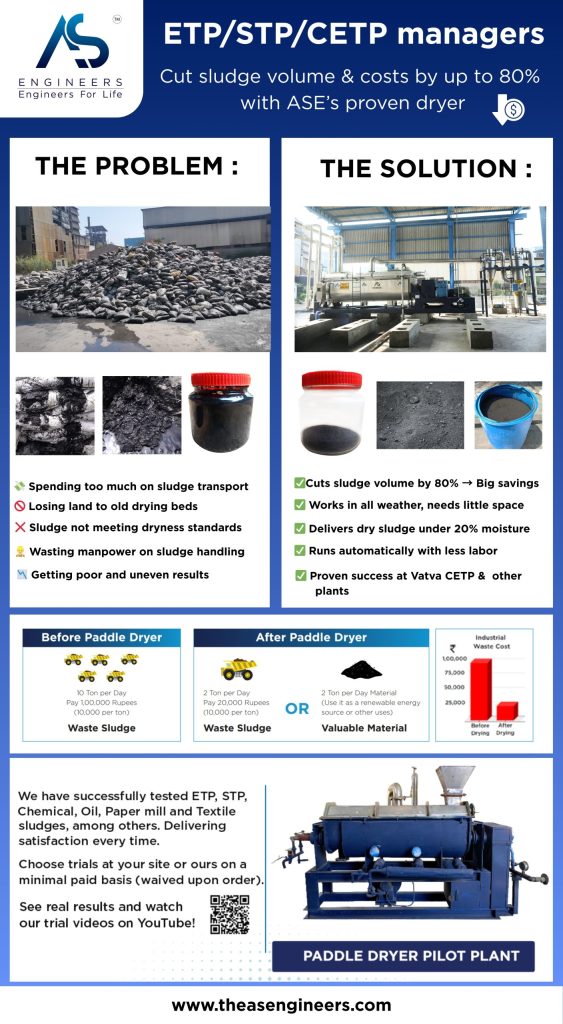
- Dewatered sludge cake is still too heavy to transport economically
- Wet sludge storage is taking too much space
- Sludge is sticky, pasty, odorous, or difficult to convey
- Disposal cost is linked to wet sludge weight
- The plant wants to reduce handling frequency
- Approved co-processing or reuse needs lower moisture
- Weather-dependent drying beds are unreliable
- The plant has steam, thermic fluid, hot water, waste heat, or other usable heat source
- The site needs enclosed handling instead of open drying
- Final disposal route requires better moisture control
Do not start with a dryer if the upstream sludge line is unstable. First check sludge thickening, polymer dosing, dewatering machine condition, feed consistency, and foreign matter contamination.
How a paddle dryer fits into wastewater sludge handling
A sludge paddle dryer is generally installed after thickening and mechanical dewatering. Its role is not to replace the wastewater treatment plant. Its role is to reduce remaining moisture from sludge cake so the material becomes easier to handle, store, transport, or send to the next approved route.
In a paddle dryer, heat is transferred indirectly through heated surfaces such as hollow shafts and a jacket. Rotating paddles mix and move the sludge while moisture evaporates. This is useful for sticky, pasty, cake-like, or semi-solid sludge that is difficult to dry uniformly.
A typical sludge drying line may include:
- Wet sludge storage or feed hopper
- Screw feeder or sludge pump
- Paddle dryer
- Heating system using steam, thermic fluid, hot water, or other suitable medium
- Vapour handling
- Cyclone, scrubber, bag filter, or other pollution control equipment where required
- Screw conveyor, bagging system, silo, or truck loading system
For dryer selection, connect this page with the guide to sludge dryers and how to choose a sludge paddle dryer.
What drying can improve in sludge management
Drying can improve sludge management, but it should be described correctly. It does not automatically make sludge safe, non-hazardous, or reusable. Testing and regulatory approval still matter.
| Problem with wet sludge | How drying can help | What still needs checking |
|---|---|---|
| High transport weight | Removes moisture and reduces wet load | Final moisture and disposal route |
| Poor handling | Converts wet cake toward drier discharge | Stickiness, lumps, fines, discharge behaviour |
| Large storage requirement | Reduces wet sludge volume | Storage safety and odour control |
| Odour and hygiene concerns | Enclosed drying can reduce open handling | Vapour handling and plant housekeeping |
| Disposal cost pressure | May reduce payable wet weight | Local disposal pricing and classification |
| Reuse or co-processing interest | Can prepare lower-moisture solids | Lab testing, calorific value, metals, permission |
AS Engineers’ company material gives one practical example where a 10 ton/day wet sludge stream is shown as reducing to 2 ton/day after drying, based on moisture reduction from 80% to 20%. Treat this as an application example, not a universal guarantee. Actual reduction depends on inlet moisture, final moisture, volatile content, ash, sludge type, and operating conditions.
Disposal and reuse options for treated sludge
Final sludge management depends on composition and local approval. Common options include:
Landfilling or TSDF disposal
Industrial sludge that cannot be reused may need authorised disposal. Hazardous sludge must be classified and sent through the approved hazardous waste route as required by applicable regulation and state pollution control conditions.
For this topic, link to CPCB hazardous waste disposal guidance and TSDF site standards.
Incineration or co-processing
Some sludge may be suitable for incineration or co-processing if it has suitable calorific value and meets acceptance criteria. Moisture reduction can support this route, but laboratory testing is mandatory.
Agriculture or land application
Municipal biosolids may be considered for land application only when properly treated, tested, and approved. Heavy metals, pathogens, organic pollutants, and local rules must be checked before any agricultural use.
Cement, brick, or fuel route
Dried sludge may be evaluated for cement production, brick making, alternative fuel, or other resource recovery routes if the sludge chemistry and regulatory approval allow it. This should never be assumed only because the sludge is dry.
Contaminants to test before disposal or reuse
Before any sludge is reused, co-processed, land-applied, or disposed of, the plant should test the sludge based on its source and regulatory requirement.
Important checks may include:
- Moisture content
- Total solids and volatile solids
- Ash content
- pH
- Chlorides and sulphates
- Heavy metals
- Oil and grease
- COD and organic load
- Pathogens, for sewage sludge
- Calorific value, for fuel or co-processing route
- Toxicity or hazardous characteristics, where applicable
- Corrosiveness or chemical compatibility
- Odour potential
- Presence of solvents or volatile compounds
Drying changes moisture. It does not remove all contaminants. That distinction is important for safe and compliant sludge management.
RFQ checklist for wastewater sludge dryer selection
Before asking for a sludge dryer quote, prepare the following information:
| RFQ input | Why it matters |
|---|---|
| Sludge source | STP, ETP, CETP, ZLD, chemical, pharma, textile, paper, food, refinery |
| Daily wet sludge quantity | Needed for dryer capacity and operating hours |
| Inlet moisture | Determines water evaporation load |
| Final moisture target | Defines drying duty and discharge condition |
| Current dewatering method | Filter press, centrifuge, screw press, belt press, drying bed |
| Sludge behaviour | Sticky, pasty, granular, fibrous, oily, abrasive, corrosive |
| pH and chemistry | Helps decide material of construction |
| Oil, solvent, or VOC presence | Affects vapour handling and safety review |
| Heating utility | Steam, thermic fluid, hot water, gas, electricity, waste heat |
| Space availability | Affects layout and feeding/discharge design |
| Vapour handling need | Condenser, scrubber, chimney, cyclone, bag filter |
| Final disposal route | TSDF, incineration, co-processing, landfill, reuse |
| Automation requirement | Manual, semi-automatic, or PLC-based operation |
| Site operating hours | Batch or continuous operation planning |
When I review a sludge drying requirement, I do not start with dryer size alone. I first check sludge source, feed moisture, final moisture target, material behaviour, heating medium, vapour handling, and the final disposal route. Without these inputs, the dryer discussion becomes a guess.
Common mistakes in wastewater sludge handling
Treating all sludge as the same
Municipal sludge, biological sludge, chemical sludge, and industrial hazardous sludge are different. One treatment route cannot be copied blindly from another plant.
Buying a dryer before fixing dewatering
If the dewatering machine is underperforming because of poor polymer dosing, worn cloth, feed variation, or wrong operation, drying cost can increase unnecessarily.
Ignoring vapour handling
Drying evaporates water and sometimes volatile compounds. Vapour handling, odour control, condensation, scrubber, cyclone, bag filter, or chimney requirements must be reviewed before finalising the system.
Assuming dry sludge is automatically reusable
Dry sludge may be easier to handle, but reuse depends on lab results, contaminants, calorific value, nutrient value, and regulatory acceptance.
Not sharing sludge samples
A pilot trial or sample review can reveal stickiness, foaming, crust formation, lumps, dust, odour, and discharge behaviour. These cannot be judged from industry name alone.
Where AS Engineers can support
AS Engineers supports sludge drying applications with paddle dryer and sludge dryer systems for wet, sticky, paste-like, cake-like, and selected industrial sludge materials. Depending on the application, the system may include feeding, indirect heating, vapour handling, pollution control, and product handling.
For wastewater sludge projects, share feed moisture, outlet moisture target, daily quantity, sludge source, utility availability, and final disposal route. The AS Engineers team can review the application and suggest a dryer configuration based on actual sludge behaviour and site conditions.
Relevant next reading: paddle dryer manufacturer in India and sludge dryer machine applications.
Frequently Asked Questions
What is wastewater treatment sludge?
Wastewater treatment sludge is the semi-solid residue separated from sewage or industrial wastewater during treatment. It contains water, organic solids, inorganic solids, biological solids, grit, chemicals, and other constituents depending on the wastewater source.
Is sludge dewatering the same as sludge drying?
No. Dewatering mechanically removes part of the water from sludge and produces wet sludge cake. Drying uses heat to remove additional moisture after dewatering when the cake is still too wet, heavy, sticky, or costly to dispose of.
When should a wastewater plant consider a sludge dryer?
A wastewater plant should consider a sludge dryer when dewatered sludge remains difficult to handle, store, transport, dispose of, or send for approved reuse. The decision should be based on moisture, sludge type, utility cost, disposal route, and site conditions.
Can dried sludge be reused?
Dried sludge can sometimes be evaluated for agriculture, co-processing, cement, brick making, or fuel use, but only after proper testing and regulatory approval. Drying reduces moisture; it does not automatically make sludge safe or reusable.
What information is required for sludge dryer selection?
The buyer should share sludge source, daily wet quantity, inlet moisture, final moisture target, current dewatering method, sludge behaviour, pH, contaminants, heating medium, vapour handling requirement, space availability, and final disposal route.
Conclusion
Wastewater treatment sludge should be managed as a complete sludge line, not as a single machine problem. Thickening, stabilisation, dewatering, drying, testing, storage, transport, and disposal all affect the final cost and risk.
For many STP, ETP, CETP, and ZLD plants, mechanical dewatering is the first major step. Sludge drying becomes useful when dewatered cake still remains too wet, heavy, sticky, or expensive to handle. A paddle dryer can help reduce moisture and improve downstream handling, but correct selection depends on real sludge data, heating utility, vapour management, and the approved final disposal or reuse route.
If your plant is evaluating wastewater treatment sludge drying, prepare the RFQ inputs listed above and share the actual sludge condition with AS Engineers for application-specific review.