An anaerobic sludge blanket is a biological wastewater treatment process where wastewater flows upward through a dense blanket of anaerobic microorganisms. These microorganisms digest organic matter without oxygen and generate biogas, mainly methane and carbon dioxide. In practical ETP/STP operation, a UASB reactor can reduce organic load and generate energy value, but it does not eliminate the need for post-treatment, sludge withdrawal, dewatering, drying, and safe disposal planning.
For plant teams, the real question is not only “What is a UASB reactor?” The better question is: Will this process suit my wastewater, and how will I handle the sludge after treatment?
What Is an Anaerobic Sludge Blanket?
An anaerobic sludge blanket is the active biological zone inside a UASB reactor. UASB means Upflow Anaerobic Sludge Blanket.
In this system, wastewater enters from the bottom of the reactor and moves upward. As it passes through the suspended sludge blanket, anaerobic microorganisms break down biodegradable organic matter. This biological digestion produces biogas and leaves behind treated effluent plus stabilised sludge.
In simple terms:
Anaerobic sludge blanket = suspended microbial sludge bed that treats organic wastewater without oxygen and produces biogas as a by-product.
This process is commonly considered for high-organic-load wastewater from industries such as food processing, dairy, distillery, beverage, pulp and paper, agro-processing, municipal sewage, and some chemical or industrial ETP streams after proper treatability review.
How a UASB Reactor Works
A UASB reactor works by maintaining controlled contact between incoming wastewater and anaerobic biomass. The reactor is not just a tank. Its performance depends on feed distribution, sludge granule health, gas separation, pH, temperature, hydraulic loading, and proper post-treatment.
| Stage | What Happens | Why It Matters |
|---|---|---|
| Influent entry | Wastewater enters from the bottom | Ensures upward flow through the sludge blanket |
| Sludge blanket contact | Microbial granules digest organic matter | Main COD/BOD reduction happens here |
| Biogas formation | Methane and carbon dioxide are released | Gas can be collected and used after treatment |
| Gas-liquid-solid separation | Gas, treated water, and sludge are separated | Prevents sludge washout and improves stability |
| Effluent outlet | Treated water leaves from the top | Usually needs polishing before final discharge |
| Excess sludge withdrawal | Accumulated sludge is removed periodically | Supports stable reactor operation and downstream disposal |
The gas-liquid-solid separator is especially important. If the separator does not retain biomass properly, valuable sludge granules can wash out, reducing treatment efficiency and biogas production.
Where Anaerobic Sludge Blanket Fits in Wastewater Treatment
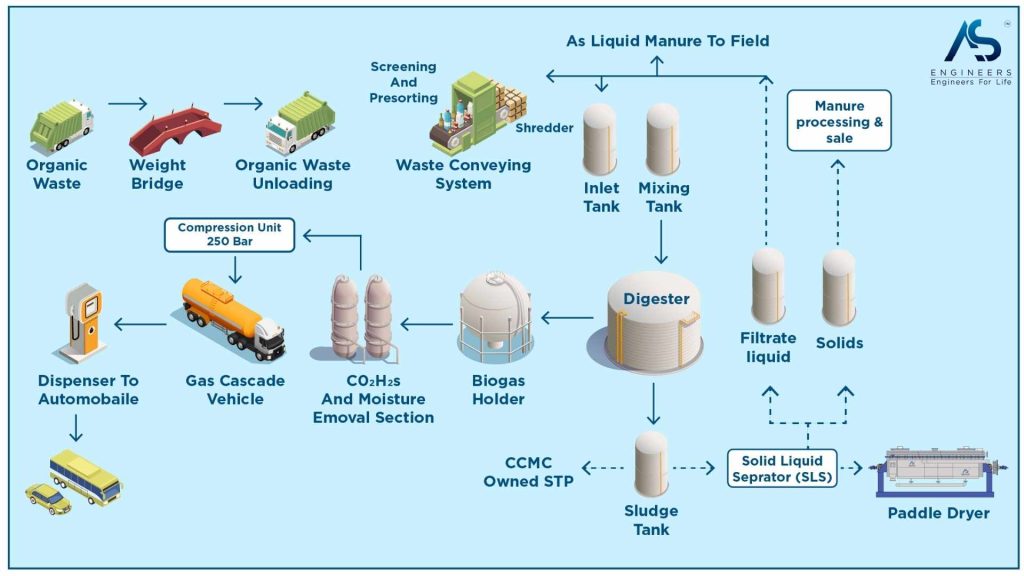
A UASB reactor is usually not the full treatment plant by itself. It is normally one stage inside a broader wastewater treatment plant or sludge treatment plant.
A practical treatment train may look like this:
- Screening and grit removal
- Oil and grease removal, if required
- Equalization tank
- pH correction and nutrient balance, if required
- UASB reactor
- Aerobic polishing, MBBR, SBR, activated sludge, filters, or tertiary treatment
- Sludge thickening, dewatering, drying, or disposal
For municipal and sewage applications, compare this with STP sludge and sewage treatment. For industrial wastewater, the process must be reviewed based on COD, BOD, toxic compounds, salts, sulphates, pH fluctuation, FOG, temperature, and hydraulic variation.
Anaerobic Sludge Blanket vs Activated Sludge
Many buyers confuse UASB with activated sludge, but they are different biological processes.
| Point | Anaerobic Sludge Blanket / UASB | Activated Sludge Process |
|---|---|---|
| Oxygen requirement | Works without oxygen | Requires aeration |
| Main purpose | Organic load reduction and biogas generation | Aerobic polishing and biological oxidation |
| Energy demand | Lower aeration demand because no aeration tank is needed in the anaerobic stage | Higher due to blowers and aeration |
| Sludge generation | Usually lower than aerobic treatment | Usually higher biological sludge generation |
| Effluent quality | Often needs post-treatment | Can produce better polished effluent when designed correctly |
| Best fit | High-strength biodegradable wastewater | Municipal sewage and polishing after anaerobic treatment |
| Key risk | Toxic shock, pH crash, sludge washout, poor granulation | Bulking, foaming, low DO, high sludge volume index |
A strong ETP design may use both: UASB first for organic load reduction and biogas recovery, followed by an aerobic stage for polishing.
Key Operating Parameters Plant Teams Should Watch
UASB performance depends on stable biological conditions. A plant should not be run only by checking flow rate and outlet clarity.
Feed consistency
Sudden changes in COD, pH, solvent content, cleaning chemicals, disinfectants, FOG, or salt load can disturb the anaerobic biomass. Equalization before UASB is often important for industrial plants.
pH and alkalinity
Methanogenic microorganisms are sensitive to acidic conditions. If volatile fatty acids build up faster than methane-forming organisms can consume them, pH may drop and the reactor can turn unstable.
Temperature
Anaerobic digestion is temperature-sensitive. In colder conditions, digestion slows down. Temperature variation can reduce biogas production and treatment stability.
Upflow velocity
The upward water velocity must keep the sludge blanket suspended without washing out the granules. Too low velocity may cause poor contact. Too high velocity may carry biomass out of the reactor.
Organic loading rate
High organic load can improve biogas generation only when the biomass can handle it. Overloading during start-up or after a wastewater change may cause acidification, odour, and poor treatment.
Sludge blanket level
Operators should monitor sludge bed height and sludge quality. Excessive accumulation, inert solids, grit, or broken granules can reduce useful reactor volume.
What Happens to Sludge After UASB Treatment?
A UASB reactor retains most of the active sludge inside the reactor, but excess sludge still needs periodic removal. This sludge is generally more stabilised than raw sludge, but it still contains water and may contain contaminants depending on the influent.
This is where many plants underestimate the handling burden.
After UASB treatment, sludge may need:
- Thickening to reduce free water
- Mechanical dewatering through screw press, belt press, centrifuge, or filter press
- Testing for contaminants and disposal category
- Thermal drying where lower moisture, volume reduction, or better handling is required
- Final reuse, co-processing, landfill, TSDF, composting, or other approved route depending on sludge quality and local rules
For this downstream stage, review sludge dewatering equipment selection and advanced sludge drying technologies.
Role of Sludge Drying After Anaerobic Treatment
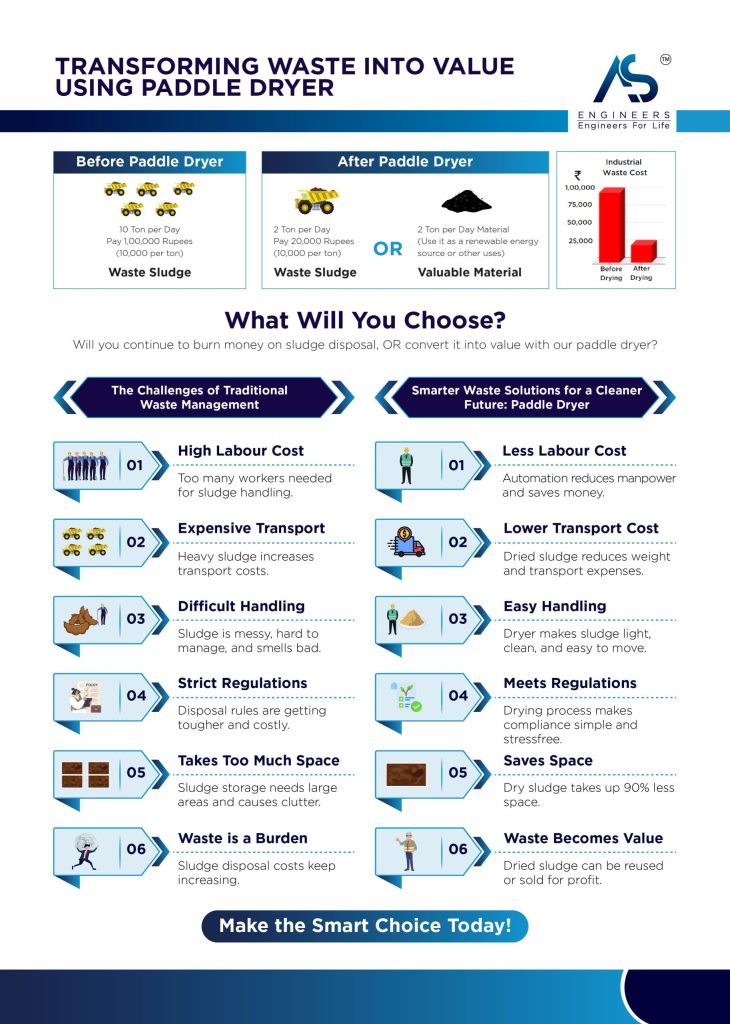
Anaerobic treatment reduces organic load and can produce biogas, but it does not automatically create dry, easy-to-handle sludge. Even after dewatering, digested sludge cake can remain heavy, wet, sticky, and expensive to transport.
A sludge drying system becomes useful when the plant wants to reduce moisture further after dewatering. In suitable applications, drying helps improve handling, reduce transport burden, reduce storage volume, and prepare sludge for the selected disposal or reuse route.
AS Engineers’ sludge drying approach is based on indirect paddle dryer technology, where heat is transferred through hollow shafts and jacketed surfaces. This type of dryer is commonly reviewed for wet cake, paste-like sludge, biological sludge, ETP sludge, STP sludge, and other sludge streams after feed testing and duty review. AS Engineers’ official material identifies Paddle Dryer / Sludge Dryer as a core product and describes its use for municipal, industrial, and livestock sludge drying.
For a deeper equipment-focused guide, refer to sludge dryer types, benefits, and selection criteria and thermal sludge drying systems.
When UASB Is a Good Fit
Anaerobic sludge blanket treatment may be suitable when:
- Wastewater has high biodegradable COD/BOD
- Organic loading is reasonably consistent
- Temperature and pH can be controlled
- Toxic shocks can be prevented
- Biogas collection and handling are technically feasible
- The site has space and operating discipline for post-treatment
- Sludge withdrawal, dewatering, and drying routes are planned from the start
Typical industries that may evaluate UASB include dairy, food processing, beverage, distillery, starch, sugar, pulp and paper, slaughterhouse, agro-processing, and selected industrial ETP streams.

When UASB May Not Be the Right First Choice
UASB should be reviewed carefully or avoided when:
- Wastewater has low biodegradable organic strength
- Flow and COD vary heavily without equalization
- Toxic chemicals, disinfectants, heavy metals, or solvents are frequently present
- Wastewater temperature is too low for stable anaerobic digestion
- Final discharge norms require strong polishing but no post-treatment is planned
- Operators are not trained to monitor pH, alkalinity, VFAs, sludge blanket level, and biogas safety
- Sludge disposal route is not defined
For difficult industrial sludge streams, the plant should also review broader industrial sludge disposal planning before selecting only the biological treatment stage.
Common UASB Problems and Practical Checks
| Problem | Likely Cause | Practical Check |
|---|---|---|
| Low biogas generation | Low biodegradable COD, poor temperature, toxic inhibition, pH imbalance | Check COD profile, pH, alkalinity, VFA trend, feed changes |
| Sludge washout | Excessive upflow velocity or poor gas-liquid-solid separation | Check flow peaks, granule condition, separator design |
| Foaming | FOG, surfactants, sudden organic shock, biological imbalance | Check oil/grease trap, DAF, feed equalization |
| Bad odour | Poor gas capture, sulphide issues, acidification, open sludge handling | Check gas line, pH, H2S control, sludge storage |
| Poor effluent quality | Overloading, short HRT, poor granulation, toxic feed | Check HRT, OLR, sludge blanket level, post-treatment |
| Frequent sludge handling issues | Excess water, poor dewatering, no drying plan | Check thickening, dewatering, dryer feed behaviour |
When I review sludge drying needs after biological treatment, I do not start from dryer size first. I first ask what sludge is coming out, how much water remains after dewatering, whether the sludge is sticky or granular, what final moisture is expected, and where the dried output will go.
RFQ Inputs for Post-UASB Sludge Drying
For proper sludge dryer discussion, plant teams should prepare these inputs before asking for a quotation:
| Input | Why It Is Needed |
|---|---|
| Sludge source | UASB excess sludge, mixed ETP sludge, STP sludge, biological sludge, chemical sludge |
| Feed quantity | Daily sludge generation after thickening/dewatering |
| Feed moisture | Dryer sizing depends heavily on water load |
| Final moisture target | Affects residence time, heat duty, and discharge handling |
| Sludge behaviour | Sticky, paste-like, fibrous, granular, oily, odorous, abrasive |
| Existing dewatering equipment | Screw press, belt press, filter press, centrifuge, drying bed |
| Heating medium available | Steam, thermic fluid, hot water, gas, fuel, waste heat possibility |
| Vapour handling need | Condensation, scrubbing, odour control, fines control |
| MOC concern | Corrosion, chloride, pH, sulphide, solvents, abrasive solids |
| Disposal or reuse route | TSDF, co-processing, landfill, composting, fuel, cement, bricks, agriculture where allowed |
| Site constraints | Space, power, utilities, automation level, manpower, safety requirements |
This information helps avoid wrong dryer selection and unrealistic moisture expectations.
Buyer Mistakes to Avoid
Do not select a UASB system only because it can generate biogas. First check whether the wastewater has enough biodegradable organic load and whether the site can maintain stable operation.
Do not assume UASB effluent is ready for discharge. Many plants still need aerobic polishing, filtration, disinfection, nutrient control, or other post-treatment depending on discharge requirement.
Do not ignore sludge handling. Even when sludge generation is lower than aerobic treatment, the removed sludge still needs dewatering, drying, or safe disposal.
Do not use generic internet design values as final sizing. UASB sizing and sludge dryer sizing both need real influent and sludge data.
Do not mix hazardous industrial sludge with general biological sludge in content, RFQ, or disposal planning. The treatment and disposal route can change completely based on contaminants.
Conclusion
An anaerobic sludge blanket system can be a strong wastewater treatment option when the influent has suitable biodegradable organic load and the plant can maintain stable anaerobic conditions. It can reduce organic pollution, generate biogas, and lower the burden on downstream treatment.
But a UASB reactor is not the end of the sludge management chain. Excess sludge still needs controlled withdrawal, testing, dewatering, drying, and disposal or reuse planning. For industrial plants, the best result comes when UASB design, post-treatment, sludge dewatering, vapour handling, and thermal drying are planned together instead of being treated as separate problems.
For post-UASB sludge drying, share feed quantity, moisture, sludge behaviour, heating medium, final moisture target, vapour handling requirement, and disposal route. The AS Engineers team can review the sludge drying requirement based on actual plant conditions.
FAQs
What is an anaerobic sludge blanket?
An anaerobic sludge blanket is a suspended layer of anaerobic microorganisms inside a UASB reactor. Wastewater flows upward through this layer, and the microorganisms digest biodegradable organic matter without oxygen.
Is a UASB reactor the same as an activated sludge system?
No. A UASB reactor is anaerobic and works without aeration. An activated sludge system is aerobic and requires oxygen through blowers or diffused aeration. Many treatment plants may use UASB first and aerobic polishing after it.
Does anaerobic sludge blanket treatment produce biogas?
Yes. Anaerobic digestion produces biogas, mainly methane and carbon dioxide. The gas must be collected and treated properly before use because it may contain moisture, hydrogen sulphide, and other impurities.
Does UASB remove all pollutants from wastewater?
No. UASB mainly reduces biodegradable organic load. Effluent may still need post-treatment for residual COD/BOD, nutrients, suspended solids, pathogens, colour, or specific contaminants depending on the wastewater and discharge requirement.
Why is sludge drying needed after anaerobic treatment?
UASB sludge may be more stabilised than raw sludge, but it still contains significant moisture after withdrawal and dewatering. Drying helps reduce water content, improve handling, reduce transport burden, and support the selected disposal or reuse route.