Biological Sludge: What Plant Teams Need to Know
Biological sludge is the biomass-rich sludge generated when microorganisms break down organic matter in ETP, STP, CETP, and wastewater treatment systems. The main operating challenge is not only treating it, but reducing its moisture so it becomes easier to store, transport, dispose of, or reuse after proper testing.
In most plants, biological sludge looks simple from outside, but behaves differently every week. Feed COD load, aeration pattern, polymer dosing, pH, nutrient balance, and seasonal wastewater variation can change its stickiness, odor, and dewatering behavior. That is why a biological sludge management plan should not stop at thickening or filter press operation.
For readers comparing treatment routes, start with the basics of what sludge is and how it moves through a wastewater treatment process. Biological sludge is closely connected with activated sludge, but for disposal planning the buyer question is more practical: how much water is still being carried after dewatering, and what will that moisture cost during transport, storage, and final disposal?
How Is Biological Sludge Formed in ETP, STP, and CETP Plants?
Biological sludge forms during secondary biological treatment, where microorganisms consume dissolved and suspended organic matter and convert part of it into biomass. Once this biomass settles or is separated, it becomes excess sludge that must be thickened, dewatered, stabilized, dried, or disposed of.
In an STP, the sludge usually comes from domestic sewage treatment. In an industrial ETP, the same biological stage may receive variable organic load from pharma, food, textile, chemical, paper, or mixed industrial wastewater. In a CETP, variation is often higher because multiple industries send wastewater into one treatment network.
This variation matters because biological sludge can be fibrous, sticky, foamy, septic, or difficult to discharge depending on upstream plant operation. A filter press may produce a cake, but that cake can still be wet enough to create odor, leachate, storage issues, and heavy transportation cost. Before selecting any dryer, the plant team should record inlet moisture, cake consistency, polymer usage, chloride level, volatile content, ash content, and disposal destination.
For a deeper treatment context, connect this page with sludge treatment plant planning and wastewater treatment sludge. These supporting pages help separate treatment biology from downstream sludge handling decisions.
Why Does Biological Sludge Become Difficult to Handle After Dewatering?
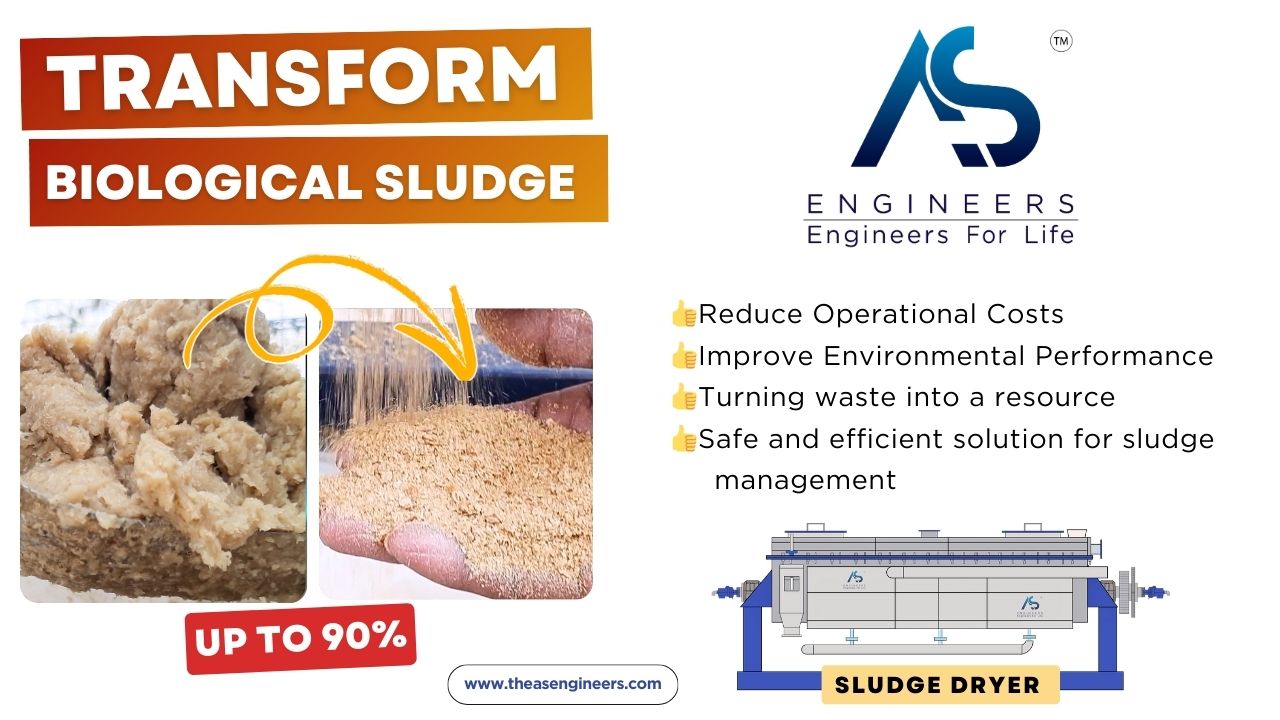
Dewatering removes free water, but biological sludge still holds bound and capillary water inside the sludge structure. That remaining moisture is the reason many plants face heavy transport, unstable storage, odor, flies, hygiene issues, and repeat handling even after using a centrifuge, screw press, belt press, or filter press.
A common buyer mistake is assuming that dewatering and drying are the same decision. Dewatering is a mechanical separation step. Drying is a thermal moisture reduction step. Dewatering prepares sludge for drying, but it usually does not finish the disposal problem by itself.
On the shop floor, the issue shows up in simple ways. Wet cake sticks to conveyor walls. Operators add water to move sludge, then the disposal load increases again. Storage bags deform. Trucks carry moisture instead of solids. During monsoon or humid seasons, the same sludge may become harder to handle and more odorous.
This is where sludge dewatering techniques and sludge drying methods should be viewed together. Dewatering is the first cost-control step. Drying becomes important when the plant needs stronger volume reduction, safer handling, lower hauling load, or a more stable output for approved disposal or reuse.
Where Does a Paddle Dryer Fit in Biological Sludge Drying?
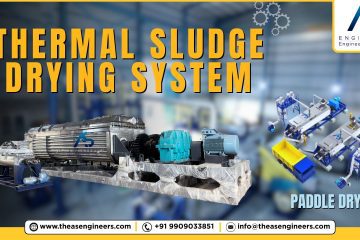
A paddle dryer fits after thickening and dewatering, when biological sludge is already converted into a pumpable or conveyable wet cake. The purpose is to apply indirect heat through hollow shafts, paddles, and jacket surfaces so moisture can be evaporated while the sludge is mixed and moved through the dryer.
AS Engineers manufactures paddle dryer systems for wet, sticky, paste-like, granular, and powder materials. For sludge drying, the indirect heating arrangement is useful because the sludge is not directly blasted with a high volume of hot gas. This can reduce off-gas volume compared with direct drying methods, although the exact system design depends on feed condition and site requirements.
The company’s paddle dryer design uses hollow shafts and jacket heating, dual counter-rotating shafts, wedge-shaped paddles, and self-cleaning intermeshing action. Steam heating up to 14.06 kg/cm² and thermal oil heating up to 400°C are listed AS Engineers options, with atmospheric, vacuum, and pressurized operating possibilities depending on application. Outlet dryness must be selected based on disposal route, feed test, and buyer requirement; AS Engineers also states capability for up to 99% dryness or a specified moisture target under suitable design conditions.
For sludge-focused readers, the sludge dryer manufacturer page, paddle sludge dryer guide, and sludge drying with paddle dryer technology are useful next references.
What Should Buyers Check Before Selecting a Biological Sludge Dryer?
Buyers should check sludge behavior before checking dryer price. Biological sludge drying success depends on feed consistency, inlet moisture, stickiness, heat sensitivity, odor load, discharge behavior, utilities, pollution control, layout, and the final disposal or reuse route.
| Buyer check | Why it matters for biological sludge | Safe decision direction |
|---|---|---|
| Inlet moisture after dewatering | Defines evaporation load and dryer sizing | Requires testing |
| Stickiness and lump formation | Affects shaft load, mixing, discharge, and cleaning access | Needs pilot trial |
| Organic and volatile content | Influences odor, off-gas, and disposal planning | Application-specific |
| Utility available at site | Steam, thermal oil, fuel, and power affect system layout | Site-specific |
| Final outlet moisture target | Different routes need different dryness levels | Depends on disposal route |
| Pollution control need | Biological sludge can carry odor and fines | Check cyclone, scrubber, bag filter need |
| Maintenance access | Sticky sludge demands practical inspection and cleaning space | Must be planned before order |
| Reuse possibility | Fertilizer, fuel, brick, or cement use depends on testing and approval | Do not assume without lab data |
AS Engineers supports pilot evaluation through a 50 kg/hr pilot trial machine at its facility or client site, with trial cost waived on order placement as stated by AS Engineers. In practical terms, a trial is valuable because biological sludge does not always behave as expected from a lab moisture report. The feed may bridge in the hopper, smear on the paddle surface, or discharge as uneven lumps if the design is not matched to the sludge.
The correct selection path is to test first, then finalize heating medium, dryer type, feed system, discharge system, and pollution control. For system-level understanding, refer to thermal sludge drying systems, guide to sludge dryers, and AS Engineers’ paddle dryer for wastewater treatment.
Can Dried Biological Sludge Be Reused or Converted Into Value?
Dried biological sludge may support waste-to-value routes, but reuse must be decided only after laboratory testing, local rules, and buyer approval. Possible routes include fertilizer, biogas-linked systems, alternative fuel, cement, brick, or controlled incineration, depending on composition and contamination risk.
This is where many articles become unsafe. Biological sludge is not automatically fertilizer. It may contain nutrients, but it can also contain salts, metals, pathogens, chemicals, or mixed industrial contamination. Municipal biological sludge and industrial bio-sludge should not be treated as the same material without testing.
AS Engineers’ documented sludge drying value example shows how drying can support disposal-load reduction and possible reuse routes when suitable. The company example compares 10 ton/day wet sludge with 2 ton/day dry sludge for disposal calculation, with dry sludge taking up less space and creating possible value routes such as alternative fuel, cement, bricks, or fertilizer when suitable. Treat this as a planning example, not a universal result for every biological sludge stream.
Plants exploring circular routes can connect this page with bio sludge waste-to-resource guidance and advanced sludge drying technologies. For off-gas and environmental equipment, AS Engineers also supplies pollution control equipment such as cyclone, scrubber, and bag filter systems.
Practical Commissioning Notes for Biological Sludge Drying
Commissioning is where the design becomes real. The first checks should be feed uniformity, controlled sludge loading, shaft rotation, paddle surface condition, heat-up behavior, vapor path, discharge flow, odor handling, and operator access.
From an operations viewpoint, the worst dryer problems usually start outside the dryer. Inconsistent sludge feeding causes uneven residence time. Oversized lumps disturb heat transfer. Poorly planned discharge conveyors create backup. Lack of access around covers, bearings, gearbox, and discharge points makes routine maintenance harder than it should be.
For biological sludge, the commissioning team should avoid rushing to maximum feed rate. Start with stable feed, observe torque behavior, watch the outlet form, and check whether the material moves from sticky paste toward a more granular or manageable state. Record inlet and outlet moisture, utility consumption, odor behavior, condensate or vapor handling, and cleaning observations.
AS Engineers brings 25+ years of engineering experience, 500+ clients, 1500+ projects, 500+ dryers, ISO 9001:2015 TUV India certification, and CE certification into its paddle dryer work. Those proof points matter, but a buyer should still insist on sludge-specific trial logic, proper layout review, and service access planning. For related service and support, see AS Engineers’ paddle dryer services and PaddleDryer.in’s sludge dewatering and drying guide.
FAQs
1. What is biological sludge in wastewater treatment?
Biological sludge is the excess biomass generated when microorganisms treat organic matter in wastewater. It usually comes from secondary treatment systems such as activated sludge, aeration tanks, biological reactors, STPs, ETPs, and CETPs.
2. Is biological sludge the same as activated sludge?
Activated sludge is one common type of biological sludge used in aerated biological treatment systems. Biological sludge is the broader term because it may include excess biomass from different biological treatment processes.
3. Why is biological sludge difficult to dry?
Biological sludge is difficult to dry because it often contains bound water, organic matter, polymer-treated flocs, sticky texture, and variable feed behavior. This makes trial testing important before finalizing dryer size, heating medium, and discharge design.
4. Can biological sludge be used as fertilizer after drying?
Dried biological sludge can be considered for fertilizer only if lab testing, contaminant limits, pathogen control, and local approvals support that use. Industrial biological sludge should not be assumed safe for agriculture without verification.
5. Which dryer is suitable for biological sludge drying?
A paddle dryer is often suitable when the sludge is sticky, wet, paste-like, or difficult to handle after dewatering. Final suitability depends on moisture level, sludge chemistry, odor load, utility availability, outlet moisture target, and pilot trial results.
Closing
If your plant is generating biological sludge that remains costly after dewatering, start with a sludge sample, moisture target, disposal route, and site utility details. AS Engineers can review the application and guide the right paddle dryer configuration through its AS Engineers contact team.