What does sludge management with sludge dryers mean?
Sludge management with sludge dryers means using thermal drying equipment to reduce moisture from wet ETP, STP, CETP, municipal, or industrial sludge so it becomes easier to store, handle, transport, reuse, or dispose of. A sludge dryer is not only a disposal machine. It is a volume-reduction and handling-control system placed after thickening or dewatering.
Every plant generates sludge differently. Textile sludge may behave like sticky paste, biological sludge may change consistency daily, and chemical sludge may need enclosed vapor handling. Before selecting a dryer, operators should first understand what sludge is and how its moisture, solids, odor, and composition affect downstream treatment.
In plant operation, the main mistake is treating sludge as “only waste.” Wet sludge is heavy, unstable, hard to move, and difficult to dispose of predictably. Drying converts that problem into a more controlled material, but only when feed, heat source, vapor handling, discharge, and maintenance access are planned together.
Why wet sludge creates cost, hygiene, and compliance pressure
Wet sludge carries water that increases weight, occupies storage space, creates odor, and makes manual handling difficult. The higher the moisture, the more the plant pays for moving and managing water instead of solids. Drying reduces that burden before the sludge leaves the site.
Wet sludge also affects housekeeping. Operators see it first around feed points, trolley movement, open storage pits, and temporary bags. When sludge remains wet for long periods, it can create smell, leachate, flies, and hygiene complaints.
For industrial plants, disposal is not only a cost item. It is part of traceability and environmental responsibility. If sludge is hazardous, chemically loaded, or generated from ZLD and ETP processes, the plant must be careful about characterization, storage, and approved disposal routes. A dryer does not automatically make sludge safe, but it can reduce moisture and volume, making approved handling more practical.
Plants comparing disposal options should also review industrial sludge disposal before assuming that wet sludge removal is the simplest long-term route.
How does a sludge dryer work inside the treatment chain?
A sludge dryer is normally installed after sludge thickening or dewatering. The dewatering stage removes free water mechanically, while the dryer removes additional moisture using heat. This is why sludge dewatering techniques and drying must be planned as one treatment chain, not as separate purchases.
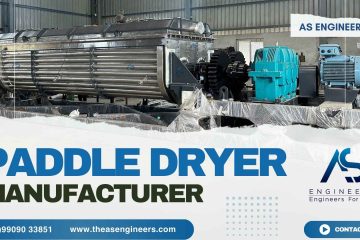
In an indirect paddle dryer, heat transfers through hollow shafts, paddles, and jacketed surfaces. The sludge does not directly contact flame or hot gas. This matters for sticky, odorous, or sensitive sludge because the drying chamber remains enclosed and vapor can be routed to suitable downstream equipment.
AS Engineers’ paddle dryer design uses dual counter-rotating shafts and wedge-shaped paddles to mix, knead, and move wet sludge through the dryer. As moisture reduces, the material can pass through plastic, shearing, and granular stages. On site, the discharge behavior is one of the strongest indicators of whether the dryer has been correctly selected.
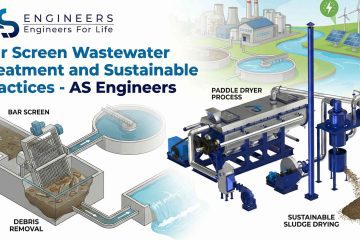
The full sludge drying system may include feeding, heating, drying, scavenging, pollution control, solvent or vapor management, and dry product handling. This is why buyers should compare sludge drying methods before selecting only the dryer body.
Where do advanced sludge dryers create the biggest operational value?
Advanced sludge dryers create the most value where sludge is generated daily, disposal costs are rising, storage space is limited, or wet sludge is difficult to handle safely. The strongest applications are ETP sludge, STP sludge, CETP sludge, biological sludge, chemical sludge, textile sludge, paper sludge, and ZLD sludge.
A well-planned drying system helps reduce wet sludge movement inside the plant. Instead of moving unstable sludge from dewatering to storage to truck loading, the plant can create a more predictable dry output. This improves housekeeping and reduces operator exposure to wet sludge.
Dry sludge may also open reuse routes where composition and local approval allow. AS Engineers’ source data identifies end-use possibilities such as alternative fuel, cement production, fertilizer, brick production, and incineration support. These outcomes must always be checked through sludge testing, end-user acceptance, and local rules.
For waste-to-value planning, the practical starting point is sludge waste recycling and the final decision should be based on lab analysis, calorific value, ash, heavy metals, nutrients, and buyer acceptance.
Sludge dryer selection table for plant buyers
This table is designed for procurement teams, consultants, and plant engineers comparing options before issuing a technical enquiry.
| Buyer decision point | What to check before selection | Risk if ignored | Safe decision logic |
|---|---|---|---|
| Sludge consistency | Sticky, pasty, fibrous, granular, biological, chemical | Feed blockage, coating, unstable discharge | Needs pilot trial or sludge sample review |
| Inlet moisture | Moisture range, not one-time value | Undersized dryer or excess utility load | Use realistic operating range |
| Dewatering quality | Cake dryness after filter press, screw press, centrifuge, or belt press | Dryer used to solve poor upstream dewatering | Improve dewatering before final sizing |
| Heat source | Steam, thermic fluid, hot water, fuel availability | High operating cost or poor heat transfer | Match dryer design to site utility |
| Vapor and odor handling | Water vapor, VOC risk, odor, fines | Unsafe or non-compliant exhaust design | Plan cyclone, scrubber, condenser, or bag filter as required |
| Discharge target | Disposal, fuel, brick, composting, fertilizer, incineration | Wrong final moisture target | Define outlet use before sizing |
| Maintenance access | Shaft seals, bearings, paddles, gearbox, inspection openings | Difficult cleaning and long downtime | Check access before layout approval |
| Trial need | Unknown sludge behavior, variable feed, high-value project | Buying on assumptions | Use pilot trial where feed behavior is uncertain |
Which sludge types need more careful drying trials?
Sludge with variable moisture, high stickiness, strong odor, solvent content, biological instability, or unknown composition needs careful testing before final dryer sizing. A catalogue capacity cannot predict how every sludge will behave inside the dryer. Feed behavior decides the residence time, heat load, discharge quality, and cleaning requirement.
Chemical sludge, pharma sludge, textile sludge, ZLD sludge, and mixed CETP sludge are good examples. Some sludge looks pumpable at the inlet but becomes sticky during the plastic phase. Some becomes granular smoothly. Some creates fines that must be captured in downstream equipment.
AS Engineers offers a 50 kg/hr pilot trial option for performance evaluation, issue identification, process optimization, and feasibility assessment. For uncertain sludge, a paddle dryer pilot trial is often more useful than theoretical comparison because it shows real feed behavior, discharge condition, and utility requirement.
Plants working with CETP or mixed industrial waste can also review CETP key concepts before deciding whether one dryer should handle multiple sludge streams or separate streams should be managed differently.
Why paddle dryers are preferred for sticky ETP and STP sludge
Paddle dryers are preferred for many sticky ETP and STP sludge applications because they use indirect heat transfer, enclosed operation, and continuous agitation. The intermeshing paddle action helps scrape, mix, and move sludge that may not flow well in simpler drying systems.
Compared with belt dryers or open drying beds, the paddle dryer suits plants where sludge is pasty, space is limited, or odor control matters. Compared with direct hot-air dryers, indirect drying keeps sludge away from the heating flame or gas stream and produces lower off-gas volume.
AS Engineers’ sludge dryer manufacturer page is relevant for buyers who want equipment-level information, while paddle dryer technology is useful for understanding how heat transfer and mixing work in detail.
For readers comparing dryer technologies, conductive paddle dryers for sludge treatment explains why indirect contact drying is often a strong choice for wet, sticky, or odor-sensitive sludge streams.
What should be included in a complete sludge drying system?
A complete sludge drying system should include more than the dryer shell. It should cover wet sludge feeding, heat generation or heat transfer, dryer body, vapor removal, air or scavenging arrangement, pollution control, dry discharge handling, and maintenance access. Missing any of these items creates commissioning problems later.
In AS Engineers’ system logic, wet material can be fed using a belt conveyor, screw feeder, or sludge pump depending on consistency. Heat may come from steam, thermic fluid, hot water, or suitable site fuel systems. The dryer then transfers heat through the hollow shafts, paddles, and jacket.
Vapors and fines may require cyclone separation, scrubbing, bag filtration, condensation, chimney discharge, or solvent handling depending on sludge composition. Buyers should not separate dryer selection from pollution control equipment because odor, fines, and vapor management are part of a reliable plant.
Dry product handling also matters. Granular discharge may need a screw conveyor, bagging system, silo, bucket elevator, or truck disposal system. Poor discharge planning can turn a good dryer into a messy plant.
How to avoid common sludge dryer buying mistakes
The most common sludge dryer buying mistake is sizing the equipment from a single moisture value. Sludge moisture changes with season, ETP chemistry, filter press operation, polymer dosing, and operator practice. A safe enquiry includes average moisture, worst-case moisture, daily generation, operating hours, and final moisture target.
The second mistake is ignoring feed consistency. A pumpable sludge, filter press cake, sticky paste, and granular residue need different feeding arrangements. If feeding is unstable, the dryer never sees a steady load, and outlet moisture will fluctuate.
The third mistake is choosing the lowest apparent utility option without checking site reality. Steam, thermic fluid, fuel, electricity, and waste heat all have different plant-side implications. AS Engineers’ paddle dryer system can be configured around the application, but the buyer must share correct site utility data.
For practical pre-purchase checks, use choose a sludge paddle dryer as a decision reference before asking for a quote.
When does sludge drying support waste-to-value?
Sludge drying supports waste-to-value when the dried material has an approved and practical end use. Possible routes include alternative fuel, cement plant use, brick manufacturing, fertilizer-type use, or incineration support, but none should be assumed without testing and acceptance.
The dried sludge must be evaluated for moisture, ash, calorific value, nutrients, heavy metals, salts, odor, and contaminants. For example, biological sludge and livestock sludge may have different reuse potential from chemical or hazardous ETP sludge. ZLD sludge may be high in salts and needs a separate disposal logic.
Plants should treat waste-to-value as an engineering and compliance decision, not as a marketing line. A dryer can reduce moisture and improve handling, but the final value depends on sludge chemistry and the receiving process.
For ZLD applications, ZLD sludge needs special attention because concentrated salts and mixed residues can affect dryer material selection, vapor handling, and final disposal route.
Why AS Engineers for sludge drying systems
AS Engineers manufactures paddle dryer-based sludge drying systems from GIDC Vatva, Ahmedabad, Gujarat, India. The company’s approved proof points include ISO 9001:2015 TUV India certification, CE certification, 25+ years of experience, 500+ clients, 1500+ projects, and 500+ dryers operational.
From an operations viewpoint, the important part is not only manufacturing the dryer. The machine must be built for the actual sludge behavior, checked for shaft and paddle condition, matched to the heat source, and commissioned with proper feed and discharge behavior. Moisture reduction targets are only meaningful when the plant can run steadily.
AS Engineers also provides paddle dryer services, OEM spare parts, repair support, shaft and gearbox replacement, retrofitment, alignment, balancing, AMC, and operator training. That after-sales layer matters because sludge dryers work in difficult conditions and need disciplined maintenance.
For buyers comparing sludge drying with dewatering, the guide on sludge dewatering and drying is a useful next reference.
FAQs
1. What is the main role of a sludge dryer in sludge management?
A sludge dryer reduces moisture from wet sludge after thickening or mechanical dewatering. This lowers volume, improves handling, reduces wet storage problems, and can make disposal or reuse more practical. It does not replace sludge testing or regulatory approval.
2. Is sludge dewatering enough, or is drying also needed?
Dewatering removes free water mechanically, but many sludge cakes still remain heavy, wet, sticky, and difficult to store or transport. Drying is needed when the plant wants deeper moisture reduction, better handling, reduced disposal load, or a more stable dried output.
3. Which sludge types are suitable for paddle dryer systems?
Paddle dryers are commonly suitable for ETP sludge, STP sludge, CETP sludge, biological sludge, textile sludge, paper sludge, chemical sludge, and many wet cake materials. Final suitability depends on moisture, stickiness, temperature sensitivity, chemical composition, vapor load, and discharge target.
4. Can dried sludge be used as fuel, fertilizer, brick material, or cement input?
It can be considered only after testing and approval. Dried sludge may be suitable for alternative fuel, fertilizer-type use, brick production, cement use, or incineration support depending on composition, calorific value, ash, contaminants, and end-user acceptance.
5. Why is a pilot trial important before buying a sludge dryer?
A pilot trial shows how the actual sludge behaves during heating, mixing, drying, and discharge. It helps confirm feed behavior, sticking risk, utility requirement, outlet moisture possibility, odor handling, and system design before final equipment selection.
Closing
If your plant is dealing with daily wet sludge, rising disposal load, poor handling, or uncertain reuse potential, the right next step is to test the sludge and define the drying objective before selecting equipment. Share your feed moisture, sludge type, daily generation, heat source, and disposal or reuse target with AS Engineers for a practical sludge drying discussion.