Every ETP and STP plant generates sludge. What separates plants that manage it well from those that don’t is rarely the equipment. It’s the strategy behind how each stage, from generation through disposal, is planned and operated as a connected system.
I’ve walked through enough ETP plants across Gujarat, Maharashtra, and Rajasthan to know that most sludge management problems are not equipment failures. They’re process failures: sludge thickened too little before dewatering, dewatered cake left too wet before drying, disposal records that won’t survive a CPCB inspection. Fixing one unit without understanding how it affects the next stage is where most plants lose money.
This guide covers the complete chain of effective sludge management strategies for industrial and municipal wastewater treatment plants in India, with specific reference to CPCB guidelines, NGT compliance requirements, and the economics of each stage.
Why Sludge Management Demands a System Approach, Not a Single Fix
Effective sludge management strategies work best when an ETP or STP treats sludge as a connected chain, not as one disposal problem. The practical sequence is characterisation, thickening, dewatering, drying where justified, vapour or pollution-control handling, final reuse or authorised disposal, and documentation.
For most industrial plants, the goal is simple: reduce water, reduce handling volume, make sludge easier to move, and avoid selecting a dryer, press, or disposal route before the sludge behaviour is properly understood.
Why sludge management should start before disposal
Many plants treat sludge management as an end-of-pipe issue. The sludge reaches the pit, volume increases, transport becomes costly, and the purchase team starts searching for a dryer or dewatering machine.
That approach usually creates three problems:
| Problem | What happens at plant level |
|---|---|
| Equipment is selected too late | The plant reacts to sludge load after storage, odour, transport, or disposal cost has already become a problem |
| Data is incomplete | Moisture, solids, oil/grease, pH, salts, metals, and sludge behaviour are not clearly available |
| Disposal route is unclear | The plant dries or dewaters sludge without knowing whether the final material will go to TSDF, co-processing, landfill, composting, bricks, fuel use, or another approved route |
A better approach is to map the sludge stream from generation to final handling. Before selecting any equipment, the plant team should understand what sludge is and how its composition changes, then connect treatment stages based on actual operating conditions.
Start with sludge characterisation
The first step in effective sludge management is sludge characterisation. Without this, thickener sizing, dewatering equipment selection, dryer sizing, fuel estimation, material of construction, and final disposal planning remain uncertain.
| Parameter to check | Why it matters | Decision it affects |
|---|---|---|
| Sludge source | ETP, STP, CETP, ZLD, chemical, textile, pharma, food, paper, refinery, or municipal sludge behaves differently | Treatment route and handling risk |
| Daily quantity | Volume or tonnage changes equipment size and operating hours | Thickener, press, dryer and storage sizing |
| Feed moisture / total solids | High water load increases transport, drying load, and disposal burden | Dewatering and drying strategy |
| Organic content | Affects odour, biological stability, drying behaviour and reuse options | Stabilisation and final route |
| pH and corrosive content | Affects equipment MOC, safety and handling | MOC and maintenance planning |
| Oil and grease | Can reduce dewatering efficiency and affect drying behaviour | Pre-treatment and trial requirement |
| Salts / TDS | Important in ZLD, chemical, textile and pharma sludge | Final disposal and dryer material selection |
| Heavy metals or hazardous constituents | Critical for authorised disposal and regulatory routing | TSDF, co-processing or restricted reuse |
| Stickiness and flowability | Wet cake may bridge, smear, stick or form lumps | Feeder, dryer, discharge and cleaning design |
| Final moisture target | Determines how far drying should go | Dryer sizing and operating cost |
For industrial ETPs, sludge composition may change with batch production, chemical dosing, raw material changes, and plant load. For STP sludge, organic content, pathogen risk, odour, moisture and stabilisation need attention. For mixed industrial and municipal streams, the safer route is to test before assuming reuse.
Build the sludge management chain
A good sludge management plan normally includes these stages:
| Stage | Main purpose | Common equipment or action |
|---|---|---|
| Collection | Bring sludge from clarifier, settling tank, biological system or process area to a controlled point | Sludge pit, hopper, sludge pump, screw conveyor |
| Characterisation | Understand moisture, solids, chemistry and handling behaviour | Lab testing, sampling, plant records |
| Thickening | Reduce free water before mechanical dewatering | Gravity thickener, mechanical thickener, DAF where suitable |
| Dewatering | Convert liquid sludge into cake or semi-solid form | Filter press, centrifuge, screw press, belt press |
| Drying | Reduce remaining moisture when transport or disposal cost is still high | Paddle dryer, disc dryer, belt dryer, solar drying, thermal dryer |
| Vapour and emission handling | Handle water vapour, fines, odour or solvent where applicable | Cyclone, scrubber, bag filter, ID fan, condenser where needed |
| Final handling | Move dried or dewatered sludge to approved route | Bagging, silo, truck loading, authorised disposal, reuse where permitted |
| Documentation | Keep records for audit, traceability and compliance review | Lab reports, disposal manifests, operating logs |
For plants still comparing different routes, this guide to top sludge treatment methods is a useful internal reference before final equipment selection.
Use thickening before forcing dewatering equipment to do all the work
Thickening is often ignored because it looks less important than a filter press, centrifuge or dryer. In practice, a thickener can reduce the hydraulic load going into the dewatering section and improve the stability of downstream operation.
Thickening is especially useful when:
- Sludge is dilute and coming from clarifiers or biological treatment.
- Dewatering equipment is overloaded.
- Polymer consumption is unstable.
- Sludge pits are filling faster than expected.
- The plant wants steadier feed to the dewatering or drying stage.
Plants can use sludge thickener fundamentals to understand the role of thickening, and gravity vs mechanical sludge thickener comparison when space, solids loading and maintenance requirements differ.
Dewater before thermal drying
Thermal drying should not be used to remove water that could have been removed economically by thickening or mechanical dewatering. The usual strategy is to dewater first, then dry only when the remaining moisture still creates transport, storage, odour, hygiene, disposal, or reuse problems.
| Dewatering option | Best-fit situation | Practical limitation |
|---|---|---|
| Filter press | Higher solids cake, batch operation, many industrial ETP applications | Batch cycle, cloth cleaning and feed pressure management |
| Decanter centrifuge | Continuous operation, municipal and industrial sludge where automation is important | Power, wear, polymer and maintenance sensitivity |
| Belt press | Continuous sludge handling with moderate dryness target | Requires good conditioning and wash water |
| Screw press | Lower-speed, enclosed, continuous operation for selected sludge types | Not suitable for every sticky or fibrous sludge |
| Drying bed | Smaller plants, low-cost drying where land and climate support it | Large area, slow drying, weather dependence, leachate handling |
For a deeper selection route, link this page to why sludge dewatering is key to efficient waste management and how to choose the right sludge dewatering equipment.
Use sludge drying when wet cake is still expensive or difficult to handle
After dewatering, many plants still face high transport cost, wet sludge storage problems, odour, hygiene concerns, and limited disposal flexibility. This is where thermal sludge drying becomes useful.
A sludge dryer is normally considered when:
- Dewatered cake still contains high moisture.
- Disposal or transport cost depends heavily on wet weight.
- The plant has limited storage area.
- Sludge must become easier to bag, convey, store or send for authorised disposal.
- Final use or disposal route requires lower moisture.
- The plant wants better control over sludge handling.
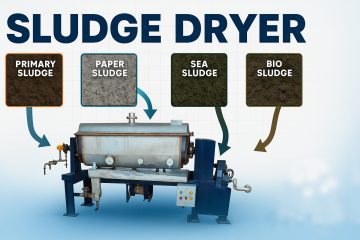
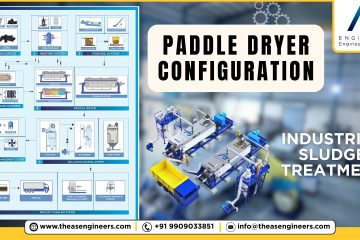
AS Engineers’ paddle dryer is designed as an indirect sludge drying system. Heat is transferred through hollow shafts and jacket surfaces, while paddles mix and move the material through the dryer. AS Engineers’ source material describes wedge-shaped self-cleaning paddles, dual counter-rotating shafts, plug-flow movement, enclosed operation, and downstream support systems such as cyclone, scrubber, bag filter, ID blower, condenser, screw conveyor and bagging arrangement where required.
For supporting technical depth, connect this section to the guide to sludge dryers, thermal sludge drying system guide, and how to choose a sludge paddle dryer.
How a paddle dryer fits into a sludge management strategy
A paddle dryer should not be treated as a standalone machine. It normally works with upstream and downstream systems.
| System | Role in sludge management |
|---|---|
| Feeding system | Controls wet cake feed into the dryer through screw feeder, belt conveyor, sludge pump or other suitable feeding arrangement |
| Heating system | Supplies steam, thermic fluid or other heating medium depending on site utility and process requirement |
| Paddle dryer | Reduces moisture through indirect heat transfer, mixing and controlled movement |
| Scavenging or vapour handling | Helps manage vapour flow and condensation risk where applicable |
| Pollution-control system | Handles fines, vapour, odour or emissions through cyclone, scrubber, bag filter or suitable system |
| Product handling | Moves dried sludge to bagging, silo, truck loading, conveyor or disposal route |
| Instrumentation and controls | Supports temperature, feed rate, discharge and safe operation control |
AS Engineers’ catalog lists heating options such as steam up to 14.06 kg/cm² and thermal oil up to 400°C, with material options including CS, SS304, SS316, Duplex Steel and other alloys as per requirement. These are capability references, not automatic recommendations for every sludge. Final selection must depend on sludge chemistry, operating temperature, moisture target, vapour handling and site duty.
Use catalog benchmarks carefully, not as universal guarantees
Drying economics depend on feed moisture, final moisture, sludge chemistry, heating medium, fuel cost, operating hours, dryer size, vapour handling, maintenance, labour, disposal rate and final route.
AS Engineers’ catalog gives a useful reference basis for sludge drying from 80% initial moisture to 20% final moisture:
| Fuel reference | Catalog benchmark |
|---|---|
| 1 kg wood | About 5 kg sludge |
| 1 kg coal | About 8.25 kg sludge |
| 1 Nm³ gas | About 22.5 kg sludge |
| 1 kg LDO | About 21 kg sludge |
Use these as early discussion references only. For project economics, the plant should confirm actual fuel rate, feed moisture, target final moisture, operating hours, dryer configuration and site utility conditions through review or trial.
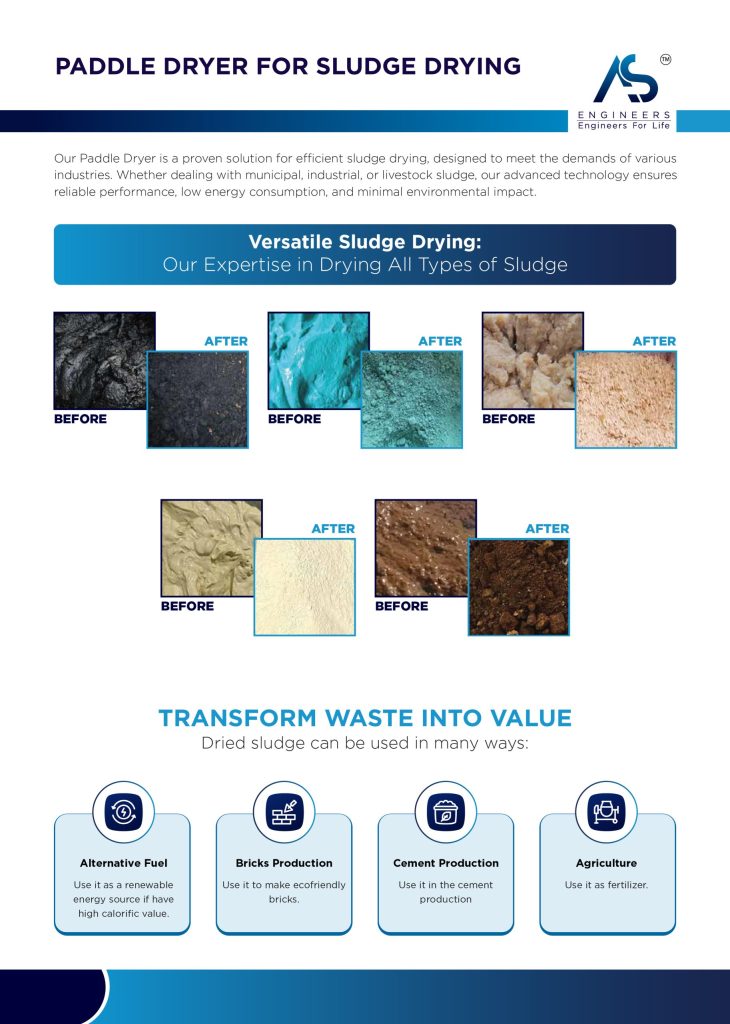
The same caution applies to volume reduction. AS Engineers’ catalog includes an example where 10 tons/day wet sludge becomes 2 tons/day after drying, reducing disposal weight significantly. This is a strong buyer education example, but it should not be presented as a guaranteed result for every sludge type.
Decide the disposal or reuse route before final dryer sizing
Dry sludge is not automatically reusable. Final route depends on composition, moisture, calorific value, contaminants, pathogens, metals, salts, local permissions and buyer acceptance.
| Final route | When it may be considered | Caution |
|---|---|---|
| Authorised disposal / TSDF | Hazardous or restricted industrial sludge | Must follow current authorised disposal route and documentation |
| Co-processing / cement route | Selected sludge with acceptable calorific value and composition | Requires acceptance criteria and approval |
| Bricks or building material route | Selected sludge with suitable characteristics | Composition and leachability must be checked |
| Agriculture / soil application | Only for permitted biosolids or organic sludge meeting rules | Never assume suitability without testing and approval |
| Internal reuse or value recovery | Selected industry-specific sludge | Needs composition, handling and buyer-side acceptance |
For hazardous or regulated sludge, connect this page to industrial sludge disposal guide, CPCB guidelines for hazardous waste disposal, and TSDF site standards.
Strategy by plant condition
| Plant condition | Recommended strategy |
|---|---|
| Wet sludge pit is overflowing | Check sludge generation rate, improve thickening, review dewatering cycle and remove storage bottlenecks |
| Dewatering cake is too wet | Review polymer, feed consistency, equipment condition, sludge type and operator practice |
| Sludge transport cost is high | Compare current wet weight against dewatered and dried weight, then evaluate drying economics |
| Sludge is sticky or pasty | Do not finalize dryer based only on kg/hr. Check feed behaviour and run a trial where needed |
| Disposal route is uncertain | Confirm classification, lab data, authorised route and acceptance criteria before drying investment |
| Odour or hygiene is a concern | Improve containment, reduce residence time, review drying or stabilisation and handle vapour correctly |
| Dryer performance is inconsistent | Check feed moisture variation, heating medium stability, discharge moisture target, build-up and vapour flow |
| ZLD plant sludge is difficult to manage | Review salt load, crystallized solids, ATFD/MEE residue and disposal pathway separately |
For ZLD-related sludge, use zero liquid discharge ZLD guide as a supporting internal link.
Common mistakes in sludge management
Selecting equipment before testing sludge
A sludge dryer, filter press or centrifuge cannot be selected properly from industry name alone. A textile ETP sludge, pharma sludge, chemical sludge, paper sludge and municipal STP sludge can behave very differently.
Ignoring final moisture target
“Dry sludge” is not a technical specification. The final moisture target must connect with disposal cost, handling method, end use, bagging, storage and acceptance criteria.
Buying only by capacity
Capacity in kg/hr or tons/day is not enough. The plant must define feed moisture, bulk density, stickiness, operating hours, heating medium, vapour handling, MOC, site space and discharge arrangement.
Treating drying as the first step
Drying should normally come after reasonable thickening and dewatering. Sending very wet sludge directly to a thermal dryer can increase energy load and operating cost.
Ignoring vapour and pollution-control requirements
Drying produces vapour and may carry fines, odour or volatile components depending on sludge type. Cyclone, scrubber, bag filter, condenser, ID fan or chimney arrangement should be reviewed where relevant.
Assuming dried sludge is always valuable
Dried sludge may be easier to handle, lighter and more stable, but value depends on composition and acceptance. Some sludge must still go to authorised disposal.
RFQ checklist for sludge management and sludge dryer selection
Before asking for a sludge management or sludge dryer quote, prepare these details:
| RFQ input | What to provide |
|---|---|
| Industry and plant type | Chemical, textile, pharma, food, paper, STP, CETP, ZLD or other |
| Sludge source | Primary sludge, secondary sludge, chemical sludge, biological sludge, mixed sludge, filter press cake or other |
| Daily quantity | Wet sludge kg/day, tons/day or m³/day |
| Feed moisture | Current moisture or total solids after dewatering |
| Final moisture target | Required outlet moisture or dryness target |
| Sludge behaviour | Sticky, pasty, granular, fibrous, oily, abrasive, corrosive or free-flowing |
| Lab data | pH, COD, BOD, TDS, salts, metals, oil/grease, ash, volatile matter where available |
| Heating medium | Steam, thermic fluid, hot water, gas, coal, wood, electricity, briquette or available utility |
| Operating schedule | Batch/continuous, hours per day, days per month |
| Site constraints | Space, foundation, height, access, power, steam line, fuel area, chimney route |
| Vapour handling | Water vapour, solvent, odour, fines, scrubber or condenser requirement |
| Disposal route | TSDF, co-processing, landfill, bricks, fuel, agriculture, internal reuse or third-party buyer |
| Product handling | Screw conveyor, bagging, silo, truck loading or manual handling |
| Compliance documents | Consent conditions, hazardous classification, lab reports and transporter/disposal records |
When I review a sludge dryer requirement, I do not start with dryer capacity alone. I first check feed moisture, final moisture target, sludge behaviour, heating medium, vapour route, disposal plan and the practical site constraints. This prevents the common mistake of buying a dryer that looks correct on paper but struggles with real sludge.
Where AS Engineers fits
AS Engineers works in paddle dryer/sludge dryer systems, centrifugal blowers, pollution-control equipment and turnkey support systems. The company’s catalog shows support for paddle dryer/sludge dryer, cyclone, scrubber, bag filter, screw conveyor, ID blower, heating system, product handling and service/spare parts support.
AS Engineers also offers support for repair, upgrades, retrofitment, OEM spare parts, shaft, gearbox and bearing replacement for paddle dryers.
For a sludge drying project, the AS Engineers team can review the sludge stream, moisture target, heating medium, material behaviour and final handling route before recommending a dryer configuration.
FAQs
What is the most effective sludge management strategy for an industrial ETP?
The most effective strategy is to connect sludge characterisation, thickening, dewatering, drying, disposal planning and documentation into one controlled system. For industrial ETP sludge, equipment should be selected only after checking moisture, solids, pH, salts, metals, oil/grease, stickiness and final disposal route.
Is sludge drying always required after dewatering?
No. Sludge drying is required only when dewatered cake is still costly to transport, difficult to store, hard to handle, odorous, hygiene-sensitive, or unsuitable for the intended disposal or reuse route. Many plants need only thickening and dewatering, while others justify thermal drying because wet sludge disposal cost and volume remain high.
What data is needed before selecting a sludge dryer?
At minimum, provide sludge type, daily quantity, feed moisture, target final moisture, lab analysis, sludge behaviour, heating medium, operating hours, available space, vapour-handling requirement and disposal route. Without these inputs, dryer sizing and operating-cost estimation remain uncertain.
Can dried sludge be reused?
Dried sludge can sometimes be considered for fuel, cement, bricks, composting or other uses, but only when composition, moisture, calorific value, contaminants and applicable permissions support that route. Dried sludge should not be treated as automatically reusable.
How does a paddle dryer help in sludge management?
A paddle dryer helps reduce moisture in dewatered sludge through indirect heat transfer. It can reduce wet weight, improve handling, support bagging or conveying, and reduce the burden of wet sludge transport. The final benefit depends on feed condition, dryer design, heating medium, final moisture target and disposal or reuse route.
Conclusion
Effective sludge management is not only about buying a dryer, filter press or centrifuge. It is about controlling the full chain from sludge generation to final disposal or reuse.
For an ETP, STP, CETP or ZLD plant, the correct approach is to first characterise the sludge, reduce free water through thickening and dewatering, use thermal drying only when it is technically and commercially justified, and define the final route before committing to equipment size.
For sludge dryer selection, share feed moisture, final moisture target, sludge type, daily quantity, heating medium, sludge behaviour, vapour-handling requirement and disposal plan. AS Engineers can review these details and suggest a practical sludge drying configuration based on actual site conditions.