To choose a sludge paddle dryer correctly, start with your actual sludge, not only the dryer capacity. The right selection depends on feed moisture, sludge stickiness, daily sludge quantity, final moisture target, heating medium, vapour handling, material of construction, available space, discharge method, and service support.
A sludge paddle dryer can be a strong fit for ETP sludge, STP sludge, CETP sludge, biosludge, paper sludge, chemical sludge, pharma sludge, and many difficult wet cakes. But it must be selected around real site conditions, otherwise the plant may face buildup, high energy use, uneven drying, corrosion, odour issues, or poor discharge handling.
The Short Selection Rule
A sludge paddle dryer should be selected after answering five questions:
| Selection Question | Why It Matters |
|---|---|
| What is the inlet moisture and daily wet sludge quantity? | Decides evaporation load and dryer sizing. |
| What final moisture or dryness is required? | Decides residence time, heat load, and discharge behaviour. |
| Is the sludge sticky, fibrous, abrasive, corrosive, oily, or odorous? | Decides paddle design, MOC, scraper/self-cleaning need, vapour system, and pilot trial requirement. |
| What heating medium is available? | Decides steam, thermic fluid, hot water, boiler, or fuel-side planning. |
| What will happen to dried sludge after drying? | Decides discharge, bagging, conveying, storage, disposal, reuse, or co-processing route. |
When I review a sludge dryer requirement, I do not start with “How many tons per day?” alone. I first ask how the sludge behaves after dewatering, what moisture needs to be removed, where the vapour will go, and how the dried output will be handled.
What Is a Sludge Paddle Dryer?
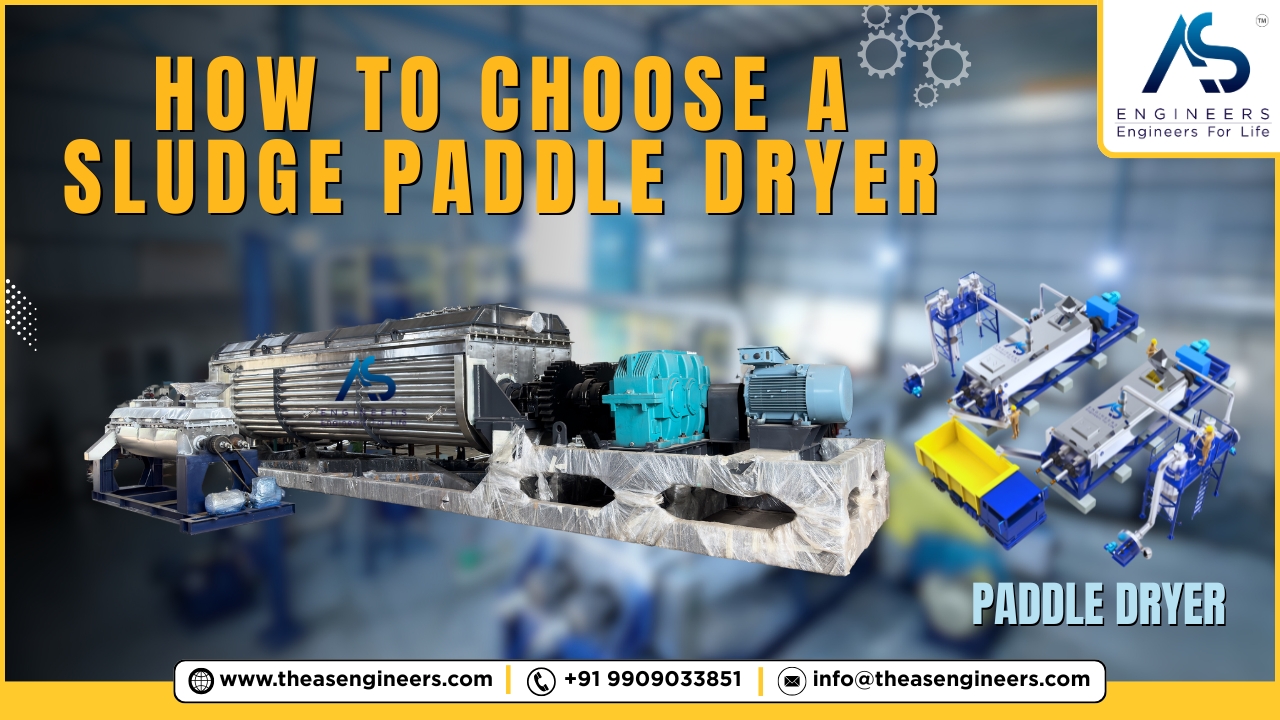
A sludge paddle dryer is an indirect heat drying system used to reduce moisture from wet sludge, filter cake, paste, or sticky waste material. In this system, heat is transferred through hollow shafts, paddles, and a jacketed body instead of exposing sludge directly to flame or hot gas.
The paddles rotate slowly, mix the sludge, break lumps, expose wet material to heated surfaces, and move the material toward discharge. This makes the dryer useful for sludge that is sticky, paste-like, difficult to convey, or unsuitable for simple open drying.
For a deeper working-principle explanation, also review the guide on conductive paddle dryers for sludge treatment.
Where a Sludge Paddle Dryer Fits in the Sludge Line
A sludge paddle dryer normally comes after primary dewatering equipment such as a filter press, belt press, screw press, centrifuge, or sludge thickening/dewatering stage.
Typical flow:
- Wet sludge generation from ETP, STP, CETP, process plant, or wastewater treatment plant
- Thickening or dewatering
- Wet sludge storage or feeding arrangement
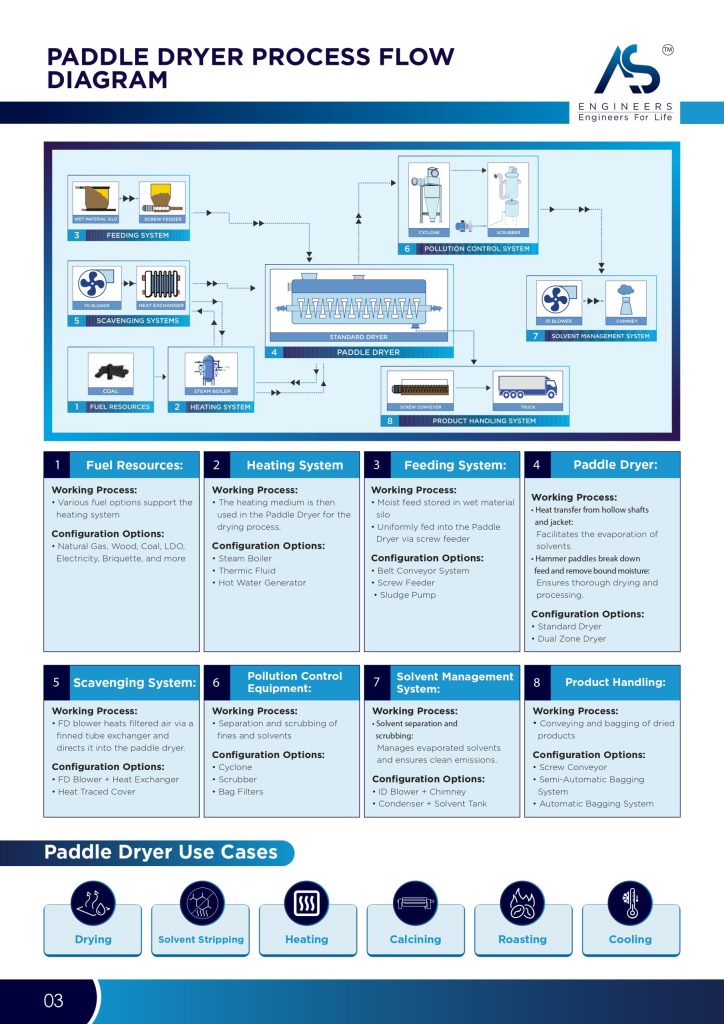
- Paddle dryer feeding through screw feeder, conveyor, or pump
- Indirect drying inside paddle dryer
- Vapour, fines, and odour handling through cyclone, scrubber, condenser, ID fan, or chimney as required
- Dried sludge discharge through screw conveyor, bagging system, silo, bucket elevator, or truck disposal system
This is why dryer selection should not be separated from plant layout. A good dryer with a poor feeding or discharge system can still create daily operating problems.
Is a Sludge Paddle Dryer the Right Fit?
Use this fit/no-fit table before shortlisting the equipment.
| Plant Condition | Paddle Dryer Fit |
|---|---|
| Sludge is wet, sticky, paste-like, or cake-like | Strong fit |
| Plant wants enclosed indirect drying | Strong fit |
| Sludge volume reduction is the main goal | Strong fit |
| Dried output must be easier to handle, store, bag, or transport | Strong fit |
| Steam, thermic fluid, hot water, or suitable heating system is available | Strong fit |
| Sludge contains volatile solvent or odour risk | Possible fit, but vapour handling and safety review are required |
| Sludge is extremely abrasive or corrosive | Possible fit, but MOC and pilot testing are important |
| Feed is very free-flowing powder needing instant flash drying | May not be the first choice |
| Plant wants open low-cost natural drying and has large land area | Solar drying bed may be considered instead |
| Final application requires powder formation in seconds | Compare with other dryer types before final selection |
For method-level comparison, see sludge drying methods, systems, and best practices and paddle dryer vs solar bed for sludge drying.
Sludge Inputs You Must Collect Before Selection
The biggest mistake is asking for a dryer quotation without sludge data. A supplier can give a rough idea, but final design needs real operating inputs.
| Input Required | What to Share in RFQ |
|---|---|
| Sludge source | ETP, STP, CETP, paper mill, pharma, chemical, textile, food, refinery, biological sludge, municipal sludge |
| Wet sludge quantity | kg/hr, ton/day, batch quantity, daily operating hours |
| Inlet moisture | Moisture percentage after filter press, screw press, centrifuge, or other dewatering equipment |
| Final moisture target | Disposal, storage, bagging, co-processing, incineration, fertilizer, brick, cement, or fuel route |
| Sludge behaviour | Sticky, pasty, granular, fibrous, oily, abrasive, corrosive, odorous, heat-sensitive |
| Bulk density | Wet and expected dry density if available |
| Chemical composition | pH, salts, chlorides, solvents, heavy metals, oils, organics, hazardous characteristics |
| Heating medium | Steam, thermic fluid, hot water, electricity, fuel type, boiler availability |
| Vapour handling need | Water vapour, odour, solvent, acid mist, fines, condensate, scrubber requirement |
| MOC preference | CS, SS304, SS316, duplex steel, alloy steel, hard facing, electropolishing |
| Layout limits | Space, height, access, foundation, utility area, maintenance clearance |
| Downstream handling | Screw conveyor, bagging, silo, truck loading, disposal container, storage |
If your upstream dewatering is not finalized, first check the sludge dewatering equipment selection guide. Dryer sizing changes when the inlet moisture changes.
Step-by-Step Guide to Choosing a Sludge Paddle Dryer
Check Feed Moisture and Evaporation Load
Feed moisture decides how much water the dryer must remove. Two plants may both say “10 ton/day sludge,” but if one plant has 70% moisture and another has 82% moisture, the actual evaporation duty is different.
Ask for:
- inlet moisture on wet basis
- final moisture target
- wet sludge quantity per day
- operating hours per day
- peak sludge generation
- sludge variation during season or process change
Do not select only from wet sludge tonnage. The dryer is not only handling solids. It is removing water.
Check Final Moisture Target and Disposal Route
Final moisture should be linked to the next use or disposal method. A plant should not demand very low moisture without a reason, because lower final moisture may increase heat duty, residence time, equipment size, and operating cost.
Common dried sludge routes include:
| Dried Sludge Route | Selection Impact |
|---|---|
| TSDF or landfill disposal | Focus on weight reduction, odour control, and handling stability |
| Co-processing or alternative fuel | Final dryness, calorific value, ash, chlorine, and handling properties matter |
| Cement or brick use | Composition, moisture, and consistency must match downstream acceptance |
| Fertilizer or soil use | Only possible when sludge composition and regulatory approval allow it |
| Incineration or WTE | Dryness, calorific value, feed consistency, and storage safety matter |
| Internal storage | Odour, hygiene, space, and dust control matter |
For disposal context, connect this page with the industrial sludge disposal guide.
Study Sludge Behaviour, Not Only Moisture
Two sludge samples with the same moisture can behave differently inside a dryer.
Check whether the sludge is:
- sticky and paste-like
- fibrous
- oily
- abrasive
- corrosive
- heat-sensitive
- high in salts
- odorous
- likely to form lumps
- likely to cake on heated surfaces
- dusty after drying
Sticky sludge may need stronger mixing and self-cleaning action. Abrasive sludge may need wear-resistant design. Corrosive sludge may need stainless steel, duplex steel, or other metallurgy. Solvent or odour-bearing sludge needs vapour handling planning from the beginning.
This is where pilot testing becomes valuable.
Select the Heating Medium
A sludge paddle dryer can be designed around different heating systems, but selection depends on what the plant has available and what final temperature profile is required.
Common options include:
| Heating Option | When It May Fit |
|---|---|
| Steam | Plants with available boiler capacity and controlled temperature need |
| Thermic fluid | Higher temperature indirect heating applications |
| Hot water | Lower temperature drying or heating duties |
| Natural gas, wood, coal, LDO, briquette, electricity, or other fuel source | Used based on site economics and heating system design |
AS Engineers’ catalogue mentions indirect heating using steam up to 14.06 kg/cm² or thermal oil up to 400°C, subject to design requirement and application review. For final selection, utility availability and safety requirements must be checked before quotation.
For broader thermal drying context, see the thermal sludge drying system guide.
Choose the Right Paddle Dryer Configuration
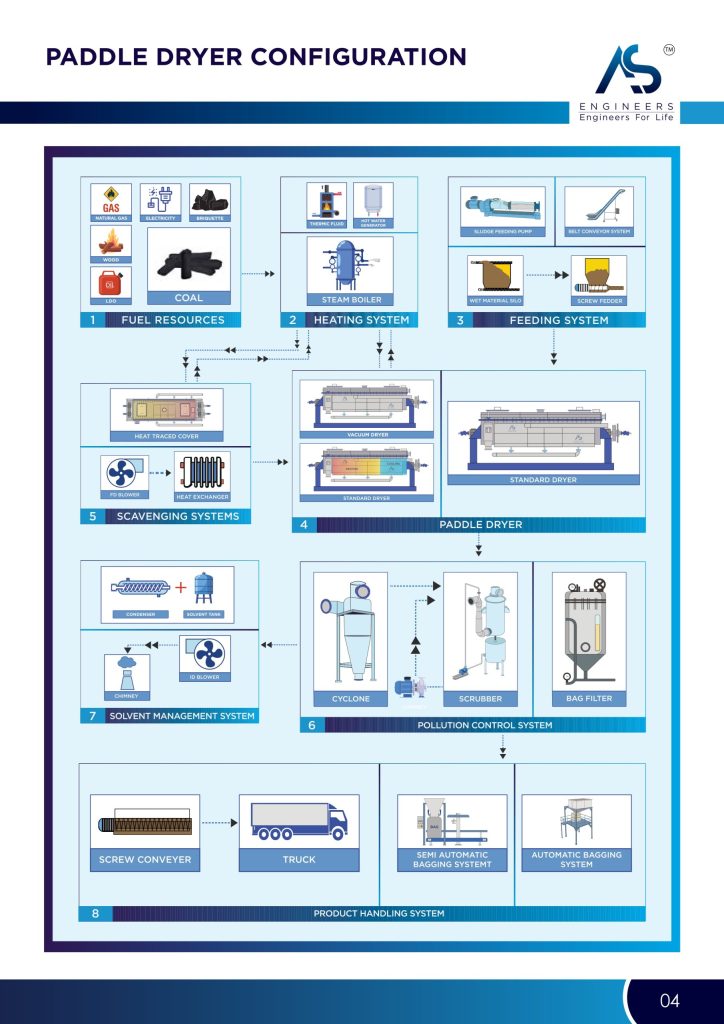
Not every sludge drying duty needs the same configuration. AS Engineers documents mention standard dryer, dual zone dryer, and vacuum dryer options.
| Configuration | Practical Use |
|---|---|
| Standard paddle dryer | General sludge drying and moisture reduction duty |
| Dual zone dryer | Useful when different drying zones or staged thermal control are needed |
| Vacuum dryer | Consider when lower temperature drying, solvent recovery, or sensitive material handling is required |
| Fully enclosed system | Useful for odour, solvent, emission, hygiene, and vapour-control requirements |
| Integrated feeding and discharge | Important when sludge flow is inconsistent or dried material must be bagged/conveyed |
To avoid layout mismatch, review the paddle dryer configuration guide before finalizing the RFQ.
Decide Material of Construction
Material of construction should match sludge chemistry, temperature, abrasion, corrosion, and cleaning requirement.
Common MOC options include:
- Carbon Steel
- SS304
- SS316
- Duplex Steel
- Other alloy steels as per duty
- Hard facing where wear risk is high
- Electropolishing or surface finish options where cleaning and product release matter
Do not finalize MOC only by price. Wrong metallurgy can create corrosion, contamination, frequent repair, and shutdown risk.
Plan Vapour, Fines, and Odour Handling
Sludge drying does not end inside the dryer. Water vapour, fines, odour, and any volatile components must be handled properly.
Depending on sludge type, the system may need:
- cyclone separator
- scrubber
- bag filter
- ID fan
- condenser
- solvent tank
- chimney
- heat-traced cover
- ducting and vapour line
- condensate handling
If the sludge is hazardous, solvent-bearing, oily, odorous, acidic, or chemically reactive, the vapour system needs engineering review. This content should not be used as a replacement for plant safety, EHS, or statutory compliance review. Check CPCB/SPCB requirements for the specific waste category and site.
Check Feeding System Compatibility
Many sludge dryer problems start before the dryer. Wet sludge can bridge, lump, stick, or flow unevenly.
Possible feeding options include:
- belt conveyor system
- screw feeder
- sludge pump
- wet material silo
- controlled hopper
- feed conditioning system
Good feeding design should maintain steady feed rate without starving or overloading the dryer. If the feed varies throughout the day, the dryer should be selected with enough control margin.
Check Discharge and Product Handling
The dried sludge may come out as granules, broken lumps, powdery material, or semi-dry cake depending on sludge type and final moisture.
Possible discharge options include:
- screw conveyor
- bagging system
- silo
- bucket elevator
- truck disposal system
- semi-automatic or fully automatic bagging
Dried sludge handling should be discussed before dryer purchase. If the discharge method is ignored, the plant may solve the drying problem but create a new material handling problem.
Consider Maintenance and Service Access
A sludge paddle dryer is a rotating, heated industrial machine. Maintenance planning should be part of selection.
Check:
- shaft access
- gearbox access
- bearing access
- seal inspection
- paddle and jacket cleaning access
- drive system service access
- vapour line cleaning
- scraper or self-cleaning arrangement
- spares availability
- on-site service support
- operator training
AS Engineers supports paddle dryer service, OEM spare parts, shaft/gearbox/bearing replacement, system repair, upgrades, and retro-fitment support. This matters because sludge dryers often run in demanding plant conditions.
Use Pilot Trials Where Sludge Behaviour Is Uncertain
Pilot trials are useful when the sludge is sticky, chemically complex, variable, abrasive, or when final moisture target is critical.
A pilot trial helps check:
- drying behaviour
- sticking or buildup
- lump formation
- discharge quality
- vapour and odour behaviour
- approximate drying feasibility
- process optimization needs
- possible issues before full-scale selection
AS Engineers has a 50 kg/hr paddle dryer pilot trial machine available for demonstrations, with trial options at AS Engineers’ works or client site on a minimal paid basis, as per company documents. For a related equipment page, see AS Engineers paddle dryer pilot trial.
Evaluate Supplier Capability
A sludge paddle dryer supplier should be evaluated beyond price.
Check whether the supplier can support:
| Supplier Check | Why It Matters |
|---|---|
| Sludge drying experience | Sludge is not the same as free-flowing powder |
| Application engineering | Helps avoid wrong sizing and wrong configuration |
| Pilot trial facility | Reduces risk for difficult sludge |
| MOC guidance | Protects against corrosion and abrasion |
| Vapour handling integration | Important for odour, fines, solvent, and emissions |
| Feeding and discharge integration | Prevents operating bottlenecks |
| Service and OEM spares | Supports long-term plant reliability |
| Retrofit support | Useful for existing plants |
| Quality system | ISO/CE and documented manufacturing process improve buyer confidence |
| RFQ clarity | Helps compare quotations fairly |
For buyer-side manufacturer evaluation, see paddle dryer manufacturer in India.
Sludge Paddle Dryer Selection Checklist
Use this checklist before sending an RFQ.
| RFQ Item | Required Information |
|---|---|
| Sludge type | ETP, STP, CETP, biological, chemical, pharma, paper, textile, refinery, food, municipal |
| Source process | Wastewater treatment, process residue, filter press cake, centrifuge cake, thickened sludge |
| Wet sludge quantity | kg/hr or ton/day |
| Operating schedule | hours/day and days/month |
| Inlet moisture | percentage wet basis |
| Final moisture target | percentage or dryness requirement |
| Feed behaviour | sticky, paste-like, fibrous, abrasive, corrosive, odorous |
| Chemical data | pH, TDS, chlorides, solvents, oil, heavy metals, hazardous category if applicable |
| Heating medium | steam, thermic fluid, hot water, electricity, available fuel |
| Utility limits | boiler capacity, thermic fluid system, power, water, compressed air |
| Vapour treatment | cyclone, scrubber, condenser, bag filter, ID fan, chimney |
| Site layout | space, height, access, foundation, indoor/outdoor installation |
| Downstream handling | bagging, silo, truck loading, disposal, reuse, co-processing |
| Automation need | manual, semi-automatic, PLC, monitoring, interlocks |
| Service requirement | AMC, spares, retrofitment, operator training |
| Pilot trial need | yes/no, sample available, target output required |
Cost and Operating Inputs to Compare
A sludge paddle dryer should be evaluated by total cost of ownership, not only purchase price.
Compare:
- equipment cost
- feeding and discharge system cost
- heating system cost
- vapour treatment cost
- installation and foundation
- power consumption
- fuel or utility cost
- manpower requirement
- maintenance and spares
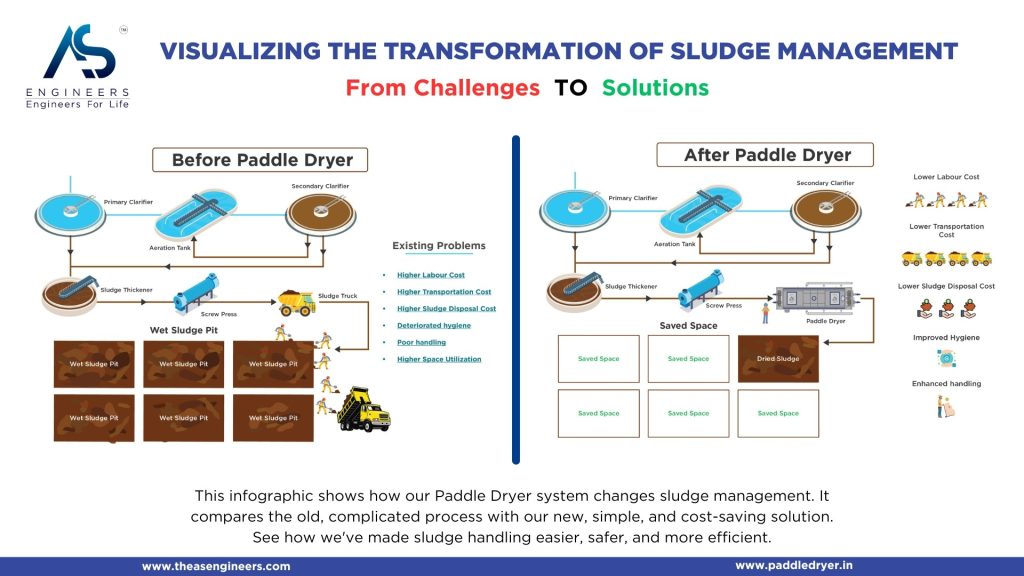
- disposal cost reduction
- transport cost reduction
- space saving
- value or reuse potential of dried sludge, where legally and technically suitable
AS Engineers’ official FAQ gives indicative fuel consumption equivalents for sludge drying from 80% initial moisture to 20% final moisture:
| Fuel Input | Indicative Sludge Drying Yield |
|---|---|
| 1 kg wood | 5 kg sludge |
| 1 kg coal | 8.25 kg sludge |
| 1 Nm³ gas | 22.5 kg sludge |
| 1 kg LDO | 21 kg sludge |
These are basis-specific figures. Actual cost depends on sludge composition, heat losses, plant operation, fuel rate, final moisture, vapour handling, and utility efficiency.
For cost planning, connect this with industrial sludge dryer machine price.
Common Mistakes When Choosing a Sludge Paddle Dryer
Selecting Only by Ton/Day Capacity
Ton/day is not enough. Moisture content, evaporation load, operating hours, feed behaviour, and final dryness target decide real dryer duty.
Ignoring Sludge Stickiness
Sticky sludge can build up on surfaces, bridge inside feeding equipment, or discharge unevenly. Pilot trials or sample testing help reduce this risk.
Forgetting Vapour Handling
Drying removes water and sometimes releases odour, fines, solvent vapour, or acidic components. The vapour system must be designed with the dryer.
Choosing MOC Only by Lowest Cost
The cheapest metallurgy can become expensive if sludge is corrosive, abrasive, salty, acidic, or chemically aggressive.
Setting Final Moisture Too Low Without Reason
Lower moisture is not always better. It can increase heat duty and operating cost. Final moisture should match disposal, reuse, transport, or storage requirement.
Not Planning Discharge Handling
Dried sludge may need conveying, bagging, silo storage, truck loading, or disposal containers. This must be planned before installation.
Not Considering Service and Spare Parts
A sludge dryer is a long-term industrial asset. Supplier support, OEM spares, on-site service, and retrofit capability matter after commissioning.
Final Decision Table
| Selection Area | Good Decision |
|---|---|
| Sludge data | Test actual sludge, not only theoretical plant capacity |
| Dryer sizing | Use evaporation load, not only wet sludge tonnage |
| Moisture target | Link final moisture to disposal or reuse route |
| Heating medium | Match available utility and safety requirement |
| MOC | Match corrosion, abrasion, temperature, and cleaning needs |
| Vapour handling | Include cyclone, scrubber, condenser, bag filter, ID fan, or chimney as required |
| Feeding | Choose system based on sludge flowability |
| Discharge | Plan conveying, bagging, storage, or truck loading |
| Pilot trial | Use for sticky, variable, new, or high-risk sludge |
| Supplier | Check design, manufacturing, service, spares, and retrofit support |
FAQs
How do I choose the right sludge paddle dryer?
Choose a sludge paddle dryer by checking feed moisture, daily sludge quantity, final moisture target, sludge stickiness, chemical composition, heating medium, vapour handling, MOC, layout, discharge method, and pilot trial requirement. Do not select only by ton/day capacity.
Is a paddle dryer suitable for ETP sludge?
A paddle dryer is often suitable for ETP sludge when the sludge is wet, sticky, paste-like, difficult to handle, and needs enclosed indirect drying. Final suitability depends on moisture, chemistry, abrasiveness, corrosiveness, odour, and disposal route.
What heating medium is used in a sludge paddle dryer?
Common heating options include steam, thermic fluid, and hot water, depending on the required temperature and site utilities. AS Engineers also considers fuel-side options such as natural gas, wood, coal, LDO, electricity, briquette, and other available fuels for the heating system.
Why is pilot testing important before buying a sludge paddle dryer?
Pilot testing helps verify drying behaviour, sticking tendency, discharge quality, moisture reduction, vapour behaviour, and feasibility before full-scale equipment selection. It is especially useful for sticky, chemical, hazardous, oily, or variable sludge.
What should I include in a sludge paddle dryer RFQ?
Include sludge type, wet sludge quantity, inlet moisture, final moisture target, operating hours, sludge behaviour, chemical composition, heating medium, utility availability, vapour handling need, MOC preference, space constraints, discharge method, and pilot trial requirement.
Conclusion
Choosing a sludge paddle dryer is an engineering decision, not only a purchase decision. The right dryer depends on sludge moisture, stickiness, evaporation load, heating medium, vapour handling, metallurgy, feeding, discharge, service support, and the plant’s final disposal or reuse route.
For ETP, STP, CETP, industrial sludge, municipal sludge, biosludge, paper sludge, pharma sludge, chemical sludge, textile sludge, and other wet waste streams, the safest approach is to share real sludge data before final selection.
AS Engineers can review your sludge type, inlet moisture, final moisture target, daily quantity, available heating medium, vapour handling need, and site layout before recommending a sludge paddle dryer configuration. For difficult sludge, a pilot trial can help validate the drying behaviour before full-scale project discussion.