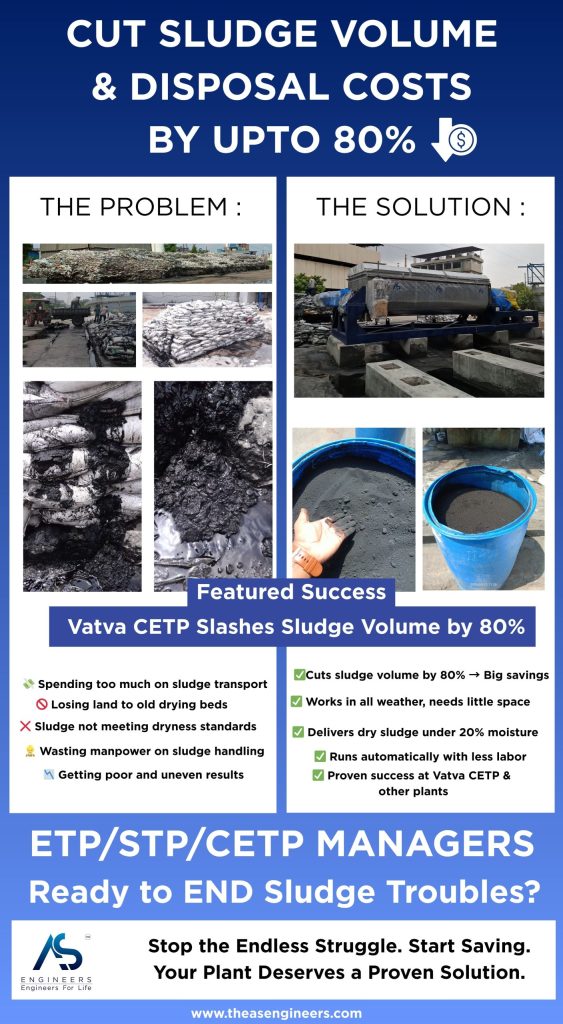
A continuous sludge dryer manufacturer in Gujarat should not be selected only by machine price or catalogue claims. The right supplier must understand sludge behaviour, feed moisture, final moisture target, heating medium, vapour handling, material of construction, pollution-control needs, and site operating conditions.
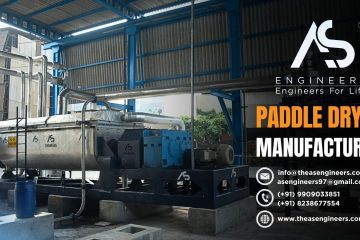
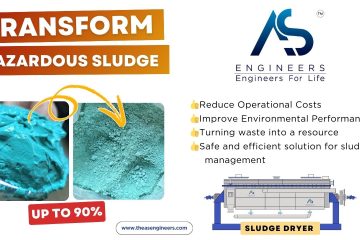
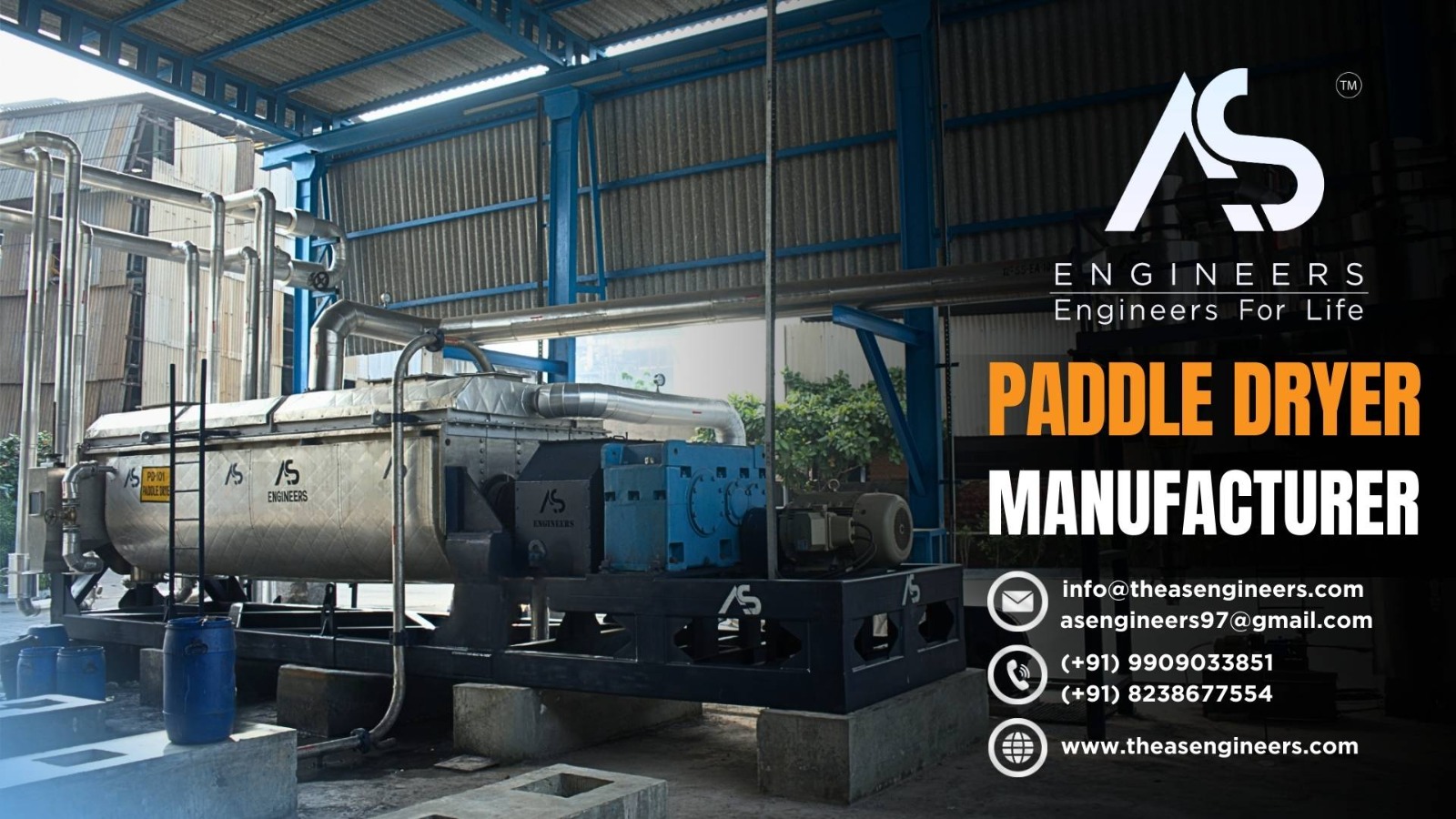
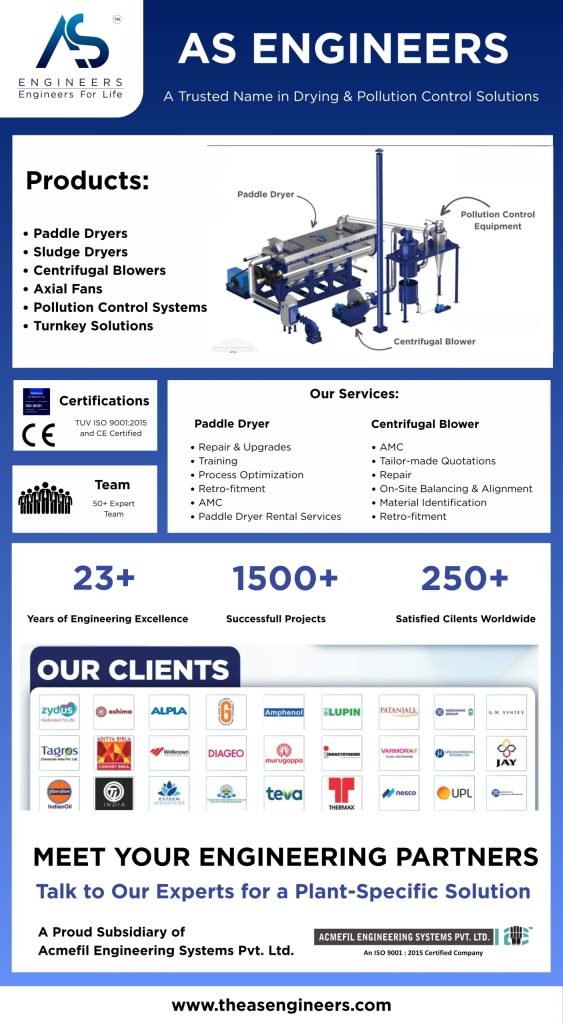
AS Engineers, based in Ahmedabad, Gujarat, manufactures paddle-type sludge dryers for industrial sludge drying applications. Our focus is on continuous, indirect heat-transfer drying for ETP sludge, STP sludge, CETP sludge, municipal sludge, chemical sludge, pharmaceutical sludge, textile sludge, paper sludge, food-processing sludge and other industrial wet cake materials.
If your plant generates sludge every day, the main question is not only “Which dryer is available?” The better question is: which sludge drying system can handle your actual sludge safely, continuously and with predictable operation?
What Is a Continuous Sludge Dryer?
A continuous sludge dryer is an industrial drying system designed to receive wet sludge, dry it through a controlled thermal process, and discharge dried material without stopping after every batch.
In a continuous paddle sludge dryer, wet sludge is normally fed through a screw feeder, sludge pump or conveyor system. Heat is transferred indirectly through the hollow shaft, jacket and heated paddles. The paddles mix, shear and move the sludge forward while moisture evaporates and vapour is handled through a connected vapour and pollution-control system.
This makes continuous sludge drying suitable for plants where sludge generation is regular, disposal cost is high, and manual drying or open drying beds are not practical due to space, odour, weather dependency or handling issues.
For a broader technical overview, you can also read this guide on sludge drying methods and best practices.
Why Gujarat Plants Need Duty-Based Sludge Dryer Selection
Gujarat has strong chemical, pharmaceutical, textile, dye, pigment, ceramic, food, paper, petroleum, CETP and ZLD plant activity across industrial regions such as Ahmedabad, Vatva, Naroda, Ankleshwar, Bharuch, Dahej, Vadodara, Surat, Vapi, Rajkot and Morbi.
These industries do not produce one common type of sludge. A chemical ETP sludge may be sticky, corrosive and high in salts. Textile sludge may have colour, fines and variable moisture. Pharma sludge may need tighter containment and material compatibility. CETP sludge may change daily depending on member industries. Municipal or STP sludge behaves differently again.
That is why a Gujarat sludge dryer project should begin with sludge data, not with a standard machine size.
Why AS Engineers Uses Paddle Dryer Technology for Sludge Drying
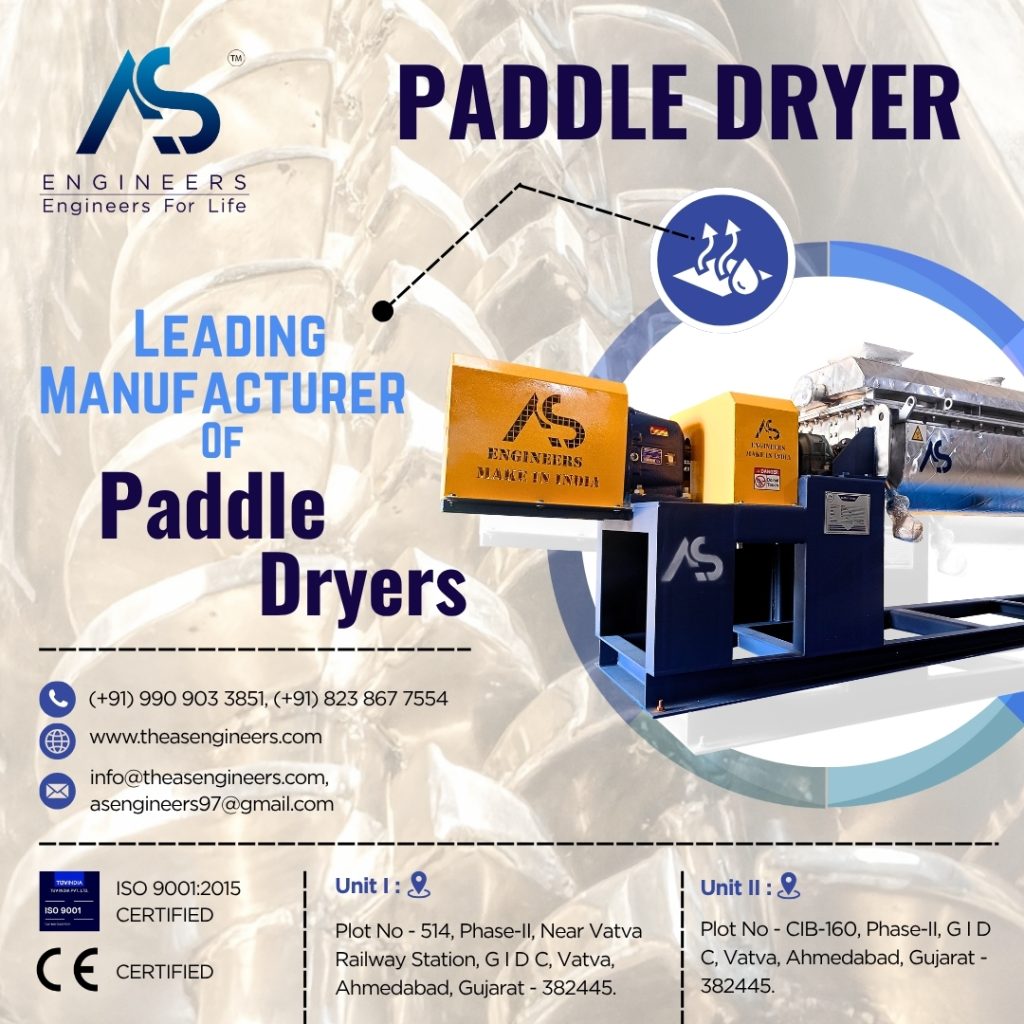
AS Engineers’ paddle dryer works on indirect heat transfer. The heating medium does not directly contact the sludge. Heat is transferred through the jacket, hollow shafts and paddles, while the sludge is continuously mixed and moved through the dryer.
Key design features include:
| Paddle dryer feature | Why it matters for sludge drying |
|---|---|
| Hollow shaft and jacket heating | Helps transfer heat indirectly into wet sludge |
| Dual counter-rotating shafts | Improves mixing, shearing and heat-transfer contact |
| Wedge-shaped self-cleaning paddles | Helps reduce material buildup during sticky-phase drying |
| Plug-flow type movement | Supports controlled residence time and more consistent outlet condition |
| Enclosed drying chamber | Helps contain vapour and reduce open handling of wet sludge |
| Continuous discharge | Suitable for plants generating sludge on a regular operating cycle |
| Compact layout | Useful where open sludge drying area is limited |
If you want the working principle in more depth, review this page on conductive paddle dryers for sludge treatment.
Sludge Types Handled by Continuous Paddle Sludge Dryers
A continuous paddle sludge dryer can be considered for many sludge streams, subject to material testing, process review and final design selection.
Common sludge categories include:
| Sludge type | Typical source | Selection concern |
|---|---|---|
| ETP sludge | Chemical, textile, pharma, food, dye, pigment, paper and other industrial ETPs | Moisture, stickiness, salts, corrosion, odour, disposal route |
| STP sludge | Sewage treatment plants in industrial or municipal facilities | Biological content, odour, handling, final disposal requirement |
| CETP sludge | Common effluent treatment plants | Variation in sludge properties due to mixed member industries |
| Municipal sludge | Municipal wastewater treatment systems | Volume, hygiene, drying target, end-use or disposal route |
| Paper sludge | Paper and pulp mills | Fibre content, ash, bulk density and discharge behaviour |
| Pharma sludge | Pharmaceutical and API plants | MOC, vapour containment, cleaning and EHS review |
| Chemical sludge | Specialty chemical, dye, pigment and intermediate plants | pH, chlorides, toxicity, VOC possibility, MOC |
| Food-processing sludge | Food, beverage and agro-processing units | Organic content, odour, hygiene and fuel value possibility |
For chemical, pharma, hazardous or VOC-bearing sludge, do not finalize the dryer based only on visual sludge appearance. Share lab data, SDS where applicable, moisture analysis and disposal requirements before selection.
AS Engineers Continuous Sludge Dryer Configuration
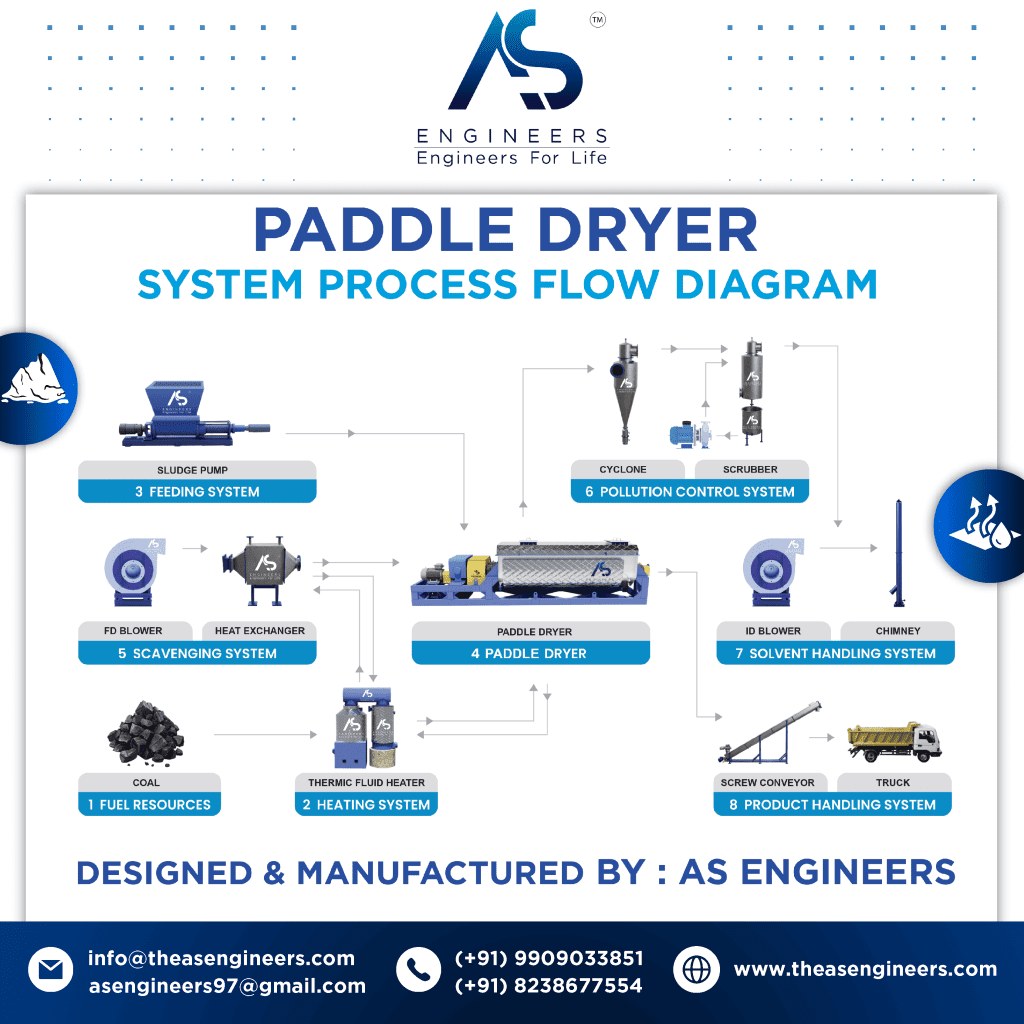
A complete sludge drying system is more than one dryer body. The right configuration depends on feed method, heat source, vapour load, final discharge and site utility availability.
A typical AS Engineers sludge drying line may include:
- Fuel resource system
Natural gas, wood, coal, LDO, electricity, briquette or another site-suitable fuel option. - Heating system
Steam boiler, thermic fluid system or hot water generator, depending on temperature requirement and available utility. - Feeding system
Wet material silo, screw feeder, belt conveyor system or sludge pump, depending on sludge flowability. - Paddle dryer
Standard dryer, dual-zone dryer or vacuum dryer configuration based on material and process requirement. - Scavenging system
FD blower with heat exchanger or heat-traced cover where required for vapour movement and condensation control. - Pollution-control system
Cyclone, scrubber and/or bag filter based on fines, vapour and emission-control needs. - Solvent or vapour management system
ID blower with chimney, condenser and solvent tank where applicable. - Product handling system
Screw conveyor, bagging system, silo, bucket elevator or truck disposal arrangement for dried material.
This full-system view is important. A dryer can be mechanically strong, but the project can still fail if feed handling, vapour handling or discharge handling is ignored.
For more layout and system details, see the paddle dryer configuration guide.
Heating Medium Options for Sludge Drying
AS Engineers’ paddle dryer design can work with indirect heating media such as steam or thermal oil, depending on the application and operating requirement.
| Heating medium | Use case |
|---|---|
| Steam | Common where a plant already has boiler utility and controlled temperature drying is required |
| Thermic fluid | Useful where higher temperature operation is required |
| Hot water | Application-specific, normally lower temperature drying or heating needs |
| Fuel-based heating systems | Selected based on fuel availability, operating cost and plant infrastructure |
AS Engineers source documents mention steam heating up to 14.06 kg/cm² and thermal oil up to 400°C, subject to design suitability and application review. These are design capability references, not automatic operating recommendations for every sludge.
The correct heating medium depends on moisture load, drying temperature, sludge chemistry, safety requirements and the plant’s available utility.
Fuel Consumption Reference for Sludge Drying
AS Engineers’ source FAQ gives fuel consumption equivalents for sludge drying from 80% initial moisture to 20% final moisture.
| Fuel | Approximate sludge drying yield |
|---|---|
| 1 kg wood | 5 kg sludge |
| 1 kg coal | 8.25 kg sludge |
| 1 Nm³ gas | 22.5 kg sludge |
| 1 kg LDO | 21 kg sludge |
These values should be treated as a reference basis, not as a final operating cost for every plant. Actual consumption depends on sludge composition, inlet moisture, final moisture, dryer insulation, heat loss, operating hours, fuel quality, vapour handling and site practice.
For price and cost planning, use the buyer guide on industrial sludge dryer machine price.
Paddle Dryer vs Rotary Dryer vs Solar Drying for Sludge
Different sludge drying technologies can work in different conditions. For continuous industrial sludge drying, the decision should be based on sludge behaviour and site constraints.
| Drying option | Best fit | Limitation to check |
|---|---|---|
| Paddle sludge dryer | Sticky, wet cake, paste-like, high-moisture ETP/STP/industrial sludge requiring indirect heat transfer and compact layout | Requires proper feed, vapour, heating and discharge design |
| Rotary dryer | Larger volumes of free-flowing material where direct hot gas contact is acceptable | Not ideal for all sticky, odorous or containment-sensitive sludge |
| Belt dryer | Lower-temperature drying and spreadable sludge after dewatering | Larger footprint and belt maintenance should be checked |
| Solar drying bed | Low-cost drying where land, time and weather conditions are favourable | Weather dependent, slower, high land requirement |
| ATFD/thin film drying | Certain high-solids or ZLD residue applications | Not always the best fit for bulky dewatered sludge cake |
For a focused comparison, read paddle dryer vs solar bed area requirement.
When a Continuous Sludge Dryer Is the Right Choice
A continuous sludge dryer is usually a strong fit when:
- Your ETP, STP, CETP or industrial process generates sludge daily.
- Wet sludge disposal cost is increasing.
- Sludge transport weight and volume are causing recurring cost.
- Open drying is not suitable due to space, odour, weather or handling concerns.
- Sludge must be made easier to store, convey, bag, transport or send to an approved disposal/reuse route.
- You need a more controlled alternative to manual drying or open sludge handling.
- Your plant has or can create a suitable heat source.
- Your team wants a system designed around actual sludge data instead of generic catalogue sizing.
When a Sludge Dryer May Not Be the Right First Step
A dryer should not be selected blindly. In some cases, another step may be needed first.
A sludge dryer may not be the first recommendation when:
- Sludge quantity is too low or irregular for continuous operation.
- Feed moisture is not known.
- Sludge is not dewatered enough for thermal drying.
- Hazardous characteristics are not tested.
- VOC, solvent, toxic gas or combustible dust risks are not reviewed.
- The plant has no clear disposal, reuse or TSDF route after drying.
- The buyer is comparing only machine price without considering heating, feeding, vapour handling and pollution control.
For hazardous or regulated sludge, involve the plant EHS team, consultant, TSDF partner and relevant authority guidance before finalizing handling or disposal. You can also review this internal guide on CPCB guidelines for hazardous waste disposal.
RFQ Checklist Before Contacting a Sludge Dryer Manufacturer
For a useful quotation, share the following data:
| RFQ input | Why it is required |
|---|---|
| Sludge source | ETP, STP, CETP, pharma, chemical, textile, paper, food, etc. |
| Wet sludge quantity | Daily tonnage or kg/hr feed rate |
| Operating hours | Required drying hours per day |
| Inlet moisture | Moisture before dryer, on wet basis |
| Final moisture target | Required outlet moisture or dryness |
| Current dewatering system | Filter press, screw press, centrifuge, belt press or other |
| Sludge behaviour | Sticky, pasty, fibrous, abrasive, granular, corrosive, odorous |
| Lab analysis | pH, chlorides, salts, ash, VOC, heavy metals where applicable |
| Heating utility | Steam, thermic fluid, gas, coal, LDO, electricity or available boiler system |
| MOC preference | CS, SS304, SS316, Duplex or alloy requirement |
| Vapour handling need | Water vapour, solvent vapour, odour, fumes, fines |
| Space available | Plant layout, access, maintenance clearance |
| Discharge method | Bagging, screw conveyor, silo, truck loading or disposal route |
| EHS notes | Hazard classification, TSDF requirement, operator safety requirements |
A serious sludge dryer manufacturer will ask these questions before recommending a machine.
Why Choose AS Engineers in Gujarat?
AS Engineers is based in Ahmedabad, Gujarat, and manufactures industrial drying and fluid-mechanics equipment for process industries. For sludge drying projects, AS Engineers brings together paddle dryer design, feed handling, heating system integration, vapour movement, pollution-control support equipment and after-sales service.
Key reasons to consider AS Engineers:
| Buyer requirement | AS Engineers capability |
|---|---|
| Gujarat-based manufacturer | Manufacturing and support presence from Ahmedabad, Gujarat |
| Industrial paddle dryer experience | Paddle dryer and sludge dryer are core product categories |
| Continuous drying design | Paddle dryer design supports continuous operation where duty conditions fit |
| Indirect heat transfer | Hollow shafts, jacket and paddle heating reduce direct contact between heating medium and sludge |
| Material flexibility | CS, SS304, SS316, Duplex Steel and other alloy options as required |
| Heating flexibility | Steam, thermic fluid and other heating systems can be reviewed |
| Pilot validation | 50 kg/hr pilot trial machine available at AS Engineers’ facility or client site |
| Service support | OEM spare parts, shaft, gearbox, bearing replacement, system repair and retrofitment support |
| Pollution-control integration | Cyclone, scrubber, bag filter and ID/FD blower support within AS Engineers ecosystem |
| Buyer-side clarity | RFQ review based on sludge condition, utility, layout and final handling need |
For the main company product page, visit AS Engineers sludge dryer manufacturer.
Pilot Trial for Sludge Drying
Pilot testing is valuable when sludge behaviour is uncertain. Sticky sludge, high-salt sludge, chemical sludge, pharma sludge, dye sludge, paper sludge and mixed CETP sludge can behave differently during drying.
AS Engineers offers a 50 kg/hr paddle dryer pilot trial machine for demonstrations and feasibility review. Trials may be done at AS Engineers’ works or at the client site on a minimal paid basis, with the trial fee waived upon order placement as per AS Engineers source material.
A pilot trial can help evaluate:
- Feed behaviour inside the dryer.
- Sticky-phase handling.
- Approximate drying response.
- Final product texture.
- Vapour and odour concerns.
- Discharge behaviour.
- Heating requirement.
- Whether full-scale sizing should move forward.
Pilot results should be treated as project guidance. Final equipment design still needs full duty review, process data and engineering approval.
Sludge Dryer Price in Gujarat: Why Fixed Prices Are Misleading
A continuous sludge dryer is not a shelf product like a small pump or standard motor. Public price ranges are often misleading because they do not include the full system requirement.
Final sludge dryer cost depends on:
- Wet sludge quantity.
- Inlet and outlet moisture.
- Dryer size and heating area.
- Material of construction.
- Heating medium.
- Feed system.
- Vapour and pollution-control system.
- Automation level.
- Product discharge system.
- Site layout.
- Utility availability.
- Trial requirement.
- Documentation, inspection and service scope.
A low machine price may become expensive if it ignores corrosion, feeding difficulty, vapour handling, frequent cleaning, high fuel use or poor after-sales support.
For budget planning, compare total cost of ownership, not only the basic dryer body price.
Common Mistakes Buyers Should Avoid
Selecting only by kg/hr capacity
Capacity without sludge moisture, heat load and residence time is incomplete. Two sludge streams with the same kg/hr can require different dryer designs.
Ignoring sticky-phase behaviour
Many sludge materials pass through a sticky phase during drying. Paddle geometry, mixing and self-cleaning action matter.
Not checking material of construction
Chemical, pharma, dye and ETP sludge may require SS304, SS316, Duplex or other alloy review. Wrong MOC can increase corrosion risk.
Forgetting vapour handling
Drying creates vapour. Vapour may contain water, odour, fines or solvents depending on the sludge. Cyclone, scrubber, condenser, ID fan and chimney requirements must be reviewed.
Comparing only dryer price
A complete sludge drying system includes feeding, heating, drying, vapour handling, pollution control, discharge, controls, service and spares.
Not planning final disposal or reuse
Drying reduces moisture and improves handling, but it does not automatically approve disposal or reuse. End-use must be checked with lab data, EHS team, TSDF partner and applicable rules.
Need a Sludge Dryer Sizing Review?
Share your sludge data with AS Engineers before selecting a continuous sludge dryer. At minimum, provide sludge type, wet quantity, inlet moisture, final moisture target, operating hours, heating medium availability, current dewatering system, lab analysis, site location and disposal route.
The AS Engineers team can review your requirement and suggest a sludge drying configuration based on actual plant conditions.
Frequently Asked Questions
Is AS Engineers a continuous sludge dryer manufacturer in Gujarat?
Yes. AS Engineers is based in Ahmedabad, Gujarat, and manufactures paddle-type sludge dryers for industrial sludge drying applications. The system is suitable for continuous operation where the feed condition, moisture target, heat source and sludge behaviour are technically suitable.
Which sludge types can be dried in a continuous paddle sludge dryer?
A continuous paddle sludge dryer can be considered for ETP sludge, STP sludge, CETP sludge, municipal sludge, paper sludge, chemical sludge, pharma sludge, textile sludge, food-processing sludge and other industrial wet cake materials. Final selection depends on sludge testing and application review.
What information is needed for a sludge dryer quotation?
Share sludge source, wet quantity, operating hours, inlet moisture, final moisture target, current dewatering method, sludge behaviour, heating medium availability, lab analysis, MOC requirement, vapour handling need, plant layout and final disposal or reuse route.
Does AS Engineers offer pilot trials for sludge drying?
Yes. AS Engineers source material mentions a 50 kg/hr paddle dryer pilot trial machine available for demonstrations at AS Engineers’ works or at the client site. Pilot trials help evaluate drying feasibility before full-scale equipment selection.
Can a sludge dryer guarantee regulatory compliance?
No dryer should be sold as a standalone compliance guarantee. A sludge dryer can support controlled moisture reduction and better sludge handling, but compliance depends on sludge classification, pollution-control system, EHS procedure, disposal route, TSDF approval and applicable regulatory requirements.
Conclusion
Choosing a continuous sludge dryer manufacturer in Gujarat requires more than comparing machine price, catalogue capacity or supplier claims. Sludge drying performance depends on feed moisture, final moisture target, sludge chemistry, sticky-phase behaviour, heating medium, MOC, vapour handling, pollution-control system and final disposal or reuse route.
AS Engineers offers continuous paddle sludge dryer systems from Ahmedabad, Gujarat, with indirect heat transfer, hollow shaft and jacket heating, self-cleaning wedge paddles, pilot trial support, OEM spares and practical RFQ review for industrial buyers.
If your plant wants to reduce wet sludge handling burden, start with real sludge data. A correct sludge dryer selection begins with the material, not the machine.