A bar screen in wastewater treatment is the first physical protection stage at the inlet of an STP, ETP, or CETP. It removes large floating and suspended solids such as rags, plastics, cloth, wood, packaging waste, and other debris before they damage pumps, pipelines, valves, clarifiers, aeration systems, sludge pumps, dewatering equipment, and sludge drying systems.
For plant teams, the bar screen is not just a small civil item. It decides how stable the rest of the wastewater treatment line will be.
Poor screening creates avoidable problems downstream. Good screening protects equipment, improves hydraulic flow, reduces sudden blockages, and helps the sludge handling section run with fewer interruptions.
What Is a Bar Screen in Wastewater Treatment?
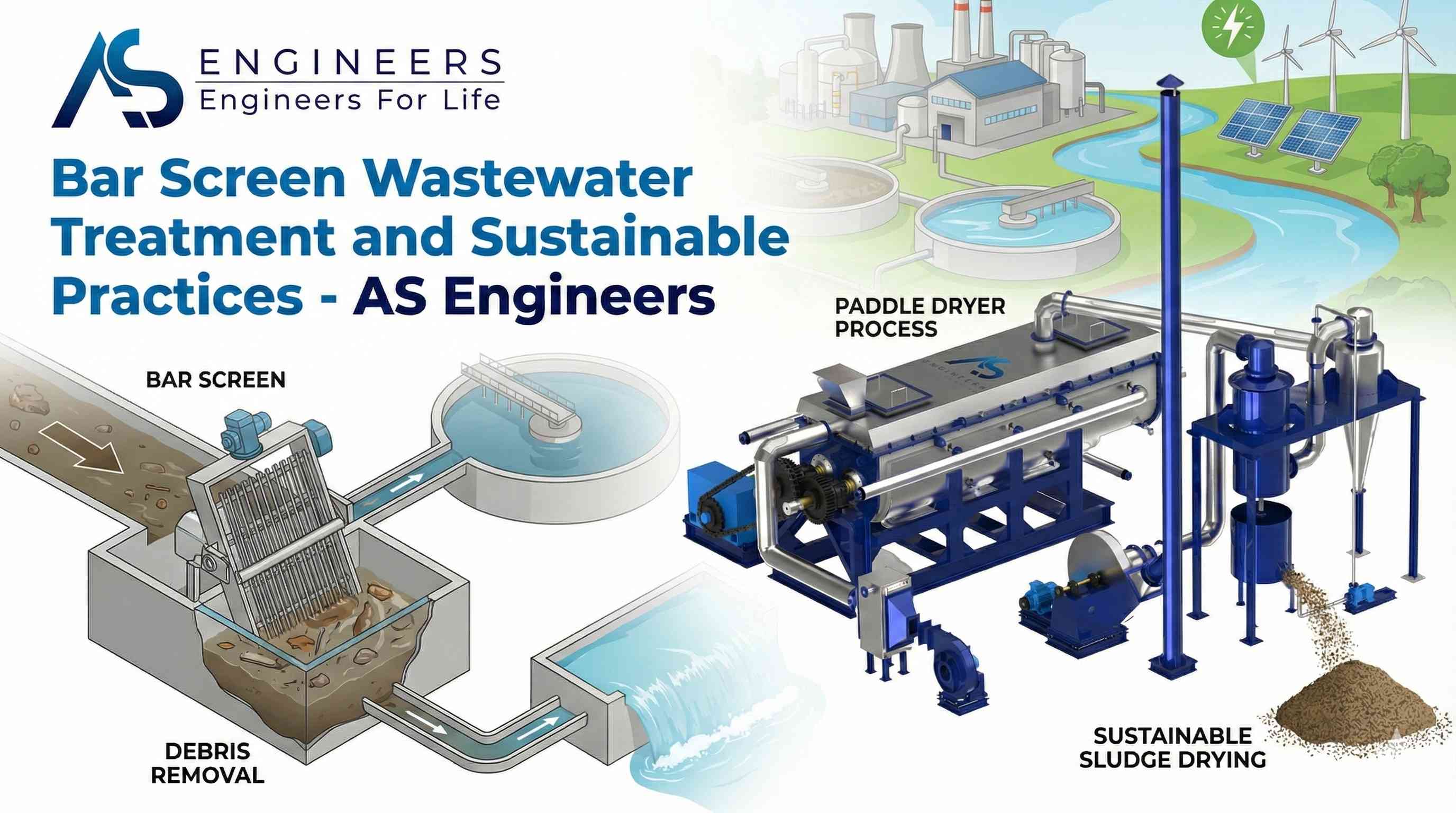
A bar screen is a set of parallel bars installed across an inlet channel. Wastewater passes through the gaps between the bars, while larger solids are retained on the screen surface.
The retained material is called screenings. These screenings must be removed manually or mechanically, collected safely, and disposed of as per the plant’s waste-handling procedure.
In a typical wastewater treatment plant, bar screening comes before grit removal, equalization, primary treatment, biological treatment, clarification, sludge dewatering, and sludge drying.
Why Bar Screening Matters Before Sludge Treatment
Bar screening protects the complete wastewater line. When coarse solids pass into the plant, they can wrap around pump impellers, clog pipes, disturb flow, overload downstream screens, and create maintenance shutdowns.
For sludge handling, this becomes even more important. Rags, fibres, plastics, and coarse debris can create issues in:
| Downstream area | Possible issue if screening is weak |
|---|---|
| Raw sewage or effluent pumps | Choking, impeller damage, reduced flow |
| Equalization tank | Floating debris accumulation |
| Clarifiers | Scum load and poor solids handling |
| Sludge pumps | Frequent choking and maintenance |
| Dewatering equipment | Cloth, plastic, and fibre interference |
| Sludge dryer feeding system | Irregular feed, screw feeder choking, poor handling |
Screening does not reduce dissolved pollution load by itself. Its role is mechanical protection, flow stability, and better downstream operation.

Where Bar Screens Fit in the Wastewater Treatment Flow
A practical wastewater treatment sequence usually looks like this:
- Inlet chamber
- Bar screen or coarse screen
- Fine screen, where required
- Grit chamber
- Oil and grease removal, where required
- Equalization tank
- Biological or chemical treatment
- Clarification
- Sludge thickening or dewatering
- Sludge drying, disposal, or reuse route
You can connect this topic with the full wastewater treatment process to understand how screening affects later treatment stages.
Types of Bar Screens Used in STP, ETP and CETP Plants
Different wastewater plants need different screening arrangements. The correct choice depends on flow rate, debris load, channel design, cleaning frequency, labour availability, automation level, and downstream equipment sensitivity.
| Type | Best fit | Cleaning method | Buyer note |
|---|---|---|---|
| Manual bar screen | Small STPs, low-flow plants, simple inlet chambers | Operator removes screenings by rake | Low initial cost, but depends heavily on manpower and discipline |
| Mechanically cleaned bar screen | Medium and large STPs, ETPs, CETPs, high debris flow | Motorized rake, chain, step, or similar mechanism | Better for continuous operation and reduced manual handling |
| Coarse bar screen | First-stage screening | Manual or mechanical | Removes larger debris before pumps and channels |
| Fine screen | Additional protection after coarse screening | Static, rotary, drum, step, or mechanical type | Useful when fibres, hair, food particles, or finer solids affect downstream equipment |
| Step screen | Higher automation and compact channel applications | Moving step mechanism | Useful where continuous screenings lifting is needed |
| Rotary drum or static fine screen | Fine solids capture in selected applications | Rotary or passive filtration | Not always a direct replacement for coarse bar screening |
For pages focused only on coarse screening, internally link to coarse screens in sludge disposal. For smaller particle removal, connect readers to fine screens in wastewater treatment.
How a Bar Screen Works
The working principle is simple:
Wastewater enters the inlet channel and flows toward the screen. The screen bars allow water and smaller particles to pass, while larger debris is retained. As debris collects on the screen, it increases flow resistance. If the screen is not cleaned on time, water level rises upstream and flow may become unstable.
In a manual system, operators remove the screenings using a rake or cleaning tool.
In a mechanical system, a rake, chain, step, or rotating mechanism lifts the collected screenings and discharges them into a trough, conveyor, bin, or collection area.
The removed screenings should not be left open near the inlet area for long periods. Wet screenings can create odour, hygiene issues, vector nuisance, and unsafe working conditions.
Bar Screen Selection Factors for Industrial Plants
When I review a wastewater treatment line, I do not look at the bar screen as an isolated item. I first check the actual plant conditions because screening mistakes usually appear later as pump, sludge, odour, or maintenance problems.
Before selecting or upgrading a bar screen, collect these inputs:
| Selection input | Why it matters |
|---|---|
| Average and peak flow | Determines channel size, hydraulic loading, and cleaning frequency |
| Type of wastewater | Municipal sewage, textile effluent, food wastewater, chemical ETP, pharma ETP, CETP mixed effluent |
| Debris profile | Rags, plastics, fibres, packaging waste, leaves, food solids, floating matter |
| Bar spacing or screen opening | Controls what is retained and what passes downstream |
| Channel width and depth | Affects hydraulic performance and installation fit |
| Cleaning method | Manual for small plants, mechanical for high-flow or high-debris applications |
| Downstream pump type | Some pumps tolerate solids better than others |
| Maintenance access | Operators need safe access for inspection, cleaning, and removal |
| Screenings disposal route | Screenings need safe collection and disposal |
| Odour and hygiene risk | Important for STPs, CETPs, food plants, and plants near working areas |
Avoid selecting a bar screen only by price. The wrong screen can create recurring downtime in pumps, sludge transfer, dewatering, and drying operations.
Bar Screen vs Grit Chamber vs Clarifier
These three units are often confused, but they do different jobs.
| Unit | What it removes | Main purpose |
|---|---|---|
| Bar screen | Rags, plastics, cloth, wood, large floating solids | Protect pumps and downstream equipment |
| Grit chamber | Sand, grit, broken glass, small heavy inorganic particles | Reduce abrasion and deposits |
| Clarifier | Settleable suspended solids and sludge | Separate solids from liquid after treatment stage |
A bar screen is not a replacement for a grit chamber. A grit chamber is not a replacement for a clarifier. A clarifier cannot protect upstream pumps from rags and plastics. Each unit has a different function in the treatment chain.
Sustainability Benefits of Bar Screens
A bar screen supports sustainable wastewater management by preventing avoidable equipment failure and reducing emergency maintenance. Its sustainability value is indirect but important.
Key benefits include:
- Fewer pump blockages
- Lower risk of emergency bypass
- Better downstream treatment stability
- Reduced wear on mechanical equipment
- Cleaner sludge handling
- Safer operation around inlet chambers
- Better preparation for sludge dewatering and drying
But bar screening alone does not make wastewater sustainable. It must be supported by proper grit removal, biological or chemical treatment, sludge management, operator training, and safe disposal of screenings.
For broader sludge planning, connect this page with the sludge management guide.
What Happens to Screenings and Sludge After Bar Screening?
This is where many plants make a mistake.
Screenings are not the same as sludge.
Screenings are the coarse materials removed at the inlet, such as rags, plastic, cloth, and wood. They are usually washed, compacted, collected, and disposed of based on plant practice and local rules.
Sludge is the semi-solid material generated from primary, biological, chemical, or tertiary treatment stages. Sludge usually contains water, organic/inorganic solids, chemicals, biomass, and process-specific contaminants.
After treatment, sludge may pass through:
- Thickening
- Dewatering
- Storage
- Drying
- Disposal
- Co-processing or reuse evaluation, where legally and technically suitable
For dewatering-stage comparison, use the sludge dewatering techniques guide. For sludge movement issues, use the sludge transfer pumps guide.
Common Bar Screen Problems and Site-Side Causes
| Problem | Likely cause | What to check |
|---|---|---|
| Frequent choking | High debris load, poor cleaning frequency, narrow opening | Debris profile, cleaning schedule, peak flow |
| Upstream water level rise | Screen blockage or hydraulic bottleneck | Bar spacing, channel flow, cleaning mechanism |
| Pump choking after screen | Screen opening too wide or bypass flow | Bar spacing, bypass arrangement, pump suction |
| Bad odour near inlet | Screenings stored too long or poor housekeeping | Screenings bin, washing, disposal frequency |
| Mechanical screen jamming | Oversized debris, chain/rake issue, poor maintenance | Rake alignment, drive, chain, O&M manual |
| Operator safety risk | Manual cleaning without safe access | Platform, railing, tools, PPE, lighting |
The best improvement is not always a new screen. Sometimes the issue is cleaning frequency, bypass leakage, poor channel hydraulics, or weak screenings disposal practice.
When Bar Screen Alone Is Not Enough
A bar screen is only the first protection layer. It is not enough when the plant has:
- High grit load
- Oil and grease load
- High suspended solids
- High biological load
- Hazardous industrial contaminants
- High sludge generation
- Sticky or fibrous sludge
- Poor dewatering performance
- High disposal cost due to wet sludge
In such cases, screening should be reviewed along with the full ETP effluent treatment plant guide or the sludge treatment plant guide.
How Bar Screening Affects Sludge Dryer Performance
A sludge dryer does not receive inlet wastewater directly. It receives sludge after treatment, thickening, and usually dewatering. Still, the quality of preliminary treatment affects the stability of the complete solids-handling chain.
Poor screening can allow plastics, fibres, cloth, and debris into the system. These materials may later create issues in sludge pumping, dewatering, storage, and feeding systems.
For sludge drying, the important inputs are different from bar screen inputs. A sludge dryer selection needs:
| Sludge dryer input | Why AS Engineers asks for it |
|---|---|
| Sludge source | STP, ETP, CETP, chemical, pharma, textile, food, refinery, or municipal |
| Feed moisture | Determines evaporation load |
| Final moisture target | Affects dryer sizing and residence time |
| Daily sludge quantity | Required for capacity planning |
| Sludge behaviour | Sticky, pasty, fibrous, granular, abrasive, corrosive |
| Existing dewatering method | Filter press, centrifuge, screw press, belt press, drying bed |
| Heating medium | Steam, thermic fluid, hot water, or site-specific fuel system |
| Vapour handling need | Water vapour, odour, solvent risk, scrubber or condenser need |
| Disposal or reuse route | TSDF, co-processing, fuel, brick, cement, or other approved route |
AS Engineers’ paddle dryer uses indirect heat transfer through hollow shafts and jacket heating, with self-cleaning paddles designed for wet, sticky, and difficult sludge-type materials. For downstream drying selection, review the paddle dryer manufacturer in India page.
RFQ Checklist for Bar Screen and Sludge Handling Review
Before asking any vendor, consultant, or equipment supplier for a solution, collect these details:
| For bar screen review | For sludge dryer review |
|---|---|
| Inlet flow rate | Daily wet sludge quantity |
| Peak flow factor | Feed moisture percentage |
| Channel width and depth | Final moisture target |
| Type of wastewater | Sludge source and composition |
| Expected debris type | Current dewatering method |
| Manual or mechanical cleaning preference | Sludge behaviour during handling |
| Existing pump choking frequency | Heating medium available |
| Screenings disposal method | Vapour handling requirement |
| Maintenance access | Site space and layout |
| Automation requirement | Disposal or reuse route |
This avoids incomplete RFQs and reduces the chance of wrong equipment selection.
Practical Buyer Mistakes to Avoid
Do not treat bar screen spacing as a copy-paste value from another plant. Wastewater characteristics, debris load, peak flow, and downstream equipment tolerance change from site to site.
Do not ignore screenings disposal. A good screen with poor screenings handling still creates odour, hygiene, and housekeeping issues.
Do not send unscreened or poorly screened flow into sensitive pumps and downstream equipment.
Do not assume that sludge drying solves front-end screening problems. Screening, dewatering, and drying are connected, but each stage has a separate job.
Do not promise reuse of dried sludge without testing and regulatory review. Reuse depends on sludge composition, calorific value, contamination, local rules, and end-user acceptance.
Conclusion
Bar screen wastewater treatment is the first protection stage in an STP, ETP, or CETP. It removes large solids before they reach pumps, pipelines, clarifiers, biological treatment, dewatering equipment, and sludge handling systems.
A well-selected bar screen improves plant reliability, reduces avoidable breakdowns, and supports cleaner downstream sludge management. But it should not be treated as a complete wastewater solution. It must work with grit removal, treatment, dewatering, safe screenings disposal, and a practical sludge management plan.
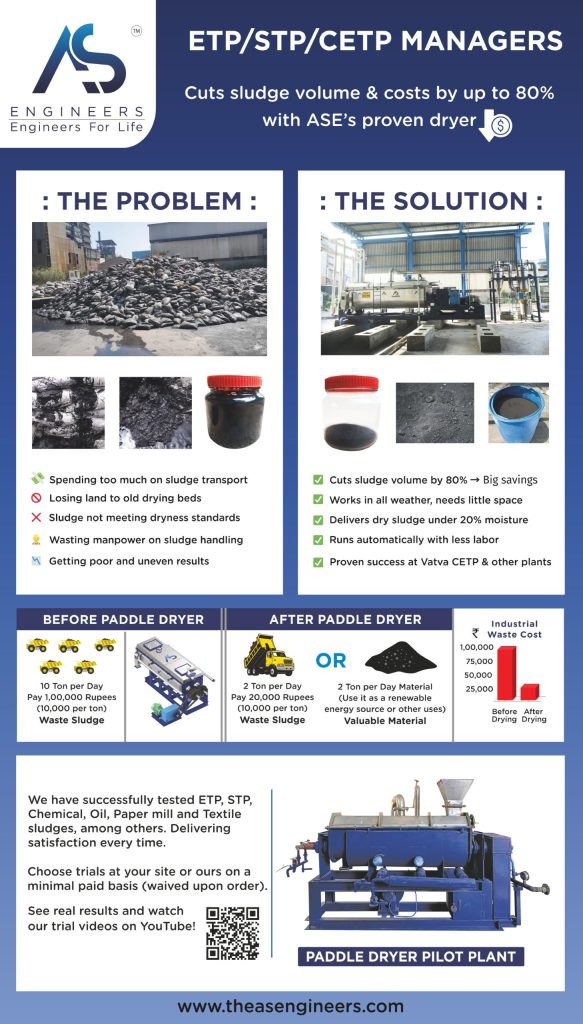
For plants struggling with high wet sludge quantity, poor handling, high disposal cost, or drying requirements, AS Engineers can review the sludge drying side of the process. Share your sludge source, feed moisture, final moisture target, daily quantity, sludge behaviour, heating medium, and vapour handling requirement so the team can evaluate the right sludge dryer configuration.
FAQs
What is a bar screen in wastewater treatment?
A bar screen is a preliminary treatment unit installed at the inlet of a wastewater treatment plant. It uses parallel bars to block large solids such as rags, plastics, cloth, wood, and debris while allowing wastewater to pass to the next treatment stage.
Why is a bar screen important before sludge treatment?
A bar screen protects downstream pumps, channels, clarifiers, dewatering systems, and sludge handling equipment from large debris. Without proper screening, solids can cause choking, equipment damage, flow imbalance, and higher maintenance.
What is the difference between a coarse bar screen and a fine screen?
A coarse bar screen removes larger debris at the first stage of treatment. A fine screen captures smaller particles, fibres, hair, and fine solids where extra protection is needed. Many plants use coarse screening first, then fine screening depending on the process requirement.
Can a bar screen reduce sludge disposal cost?
A bar screen does not directly reduce sludge disposal cost because it removes coarse inlet debris, not treatment sludge. However, good screening protects sludge handling and dewatering equipment, which can support more stable sludge management. Sludge disposal cost reduction usually depends on dewatering, drying, volume reduction, and the final disposal route.
When should a plant consider a sludge dryer after screening and dewatering?
A plant should consider a sludge dryer when wet sludge quantity is high, disposal cost is increasing, storage space is limited, sludge handling is difficult, or final moisture reduction is needed before disposal, co-processing, or approved reuse.