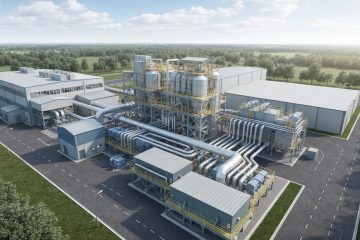
Solar sludge drying is a greenhouse-based drying method that uses solar radiation, controlled ventilation, and sludge turning to reduce moisture from mechanically dewatered sludge. It can work well for STP, FSTP, CETP, and selected ETP sludge where land is available, drying time is flexible, and the climate supports evaporation.
It is not the best fit for every plant. If your site needs compact installation, predictable final moisture, year-round operation during monsoon, or faster continuous volume reduction, compare solar drying with a controlled thermal sludge drying system or paddle dryer before finalizing the project layout.
What Is Solar Sludge Drying?
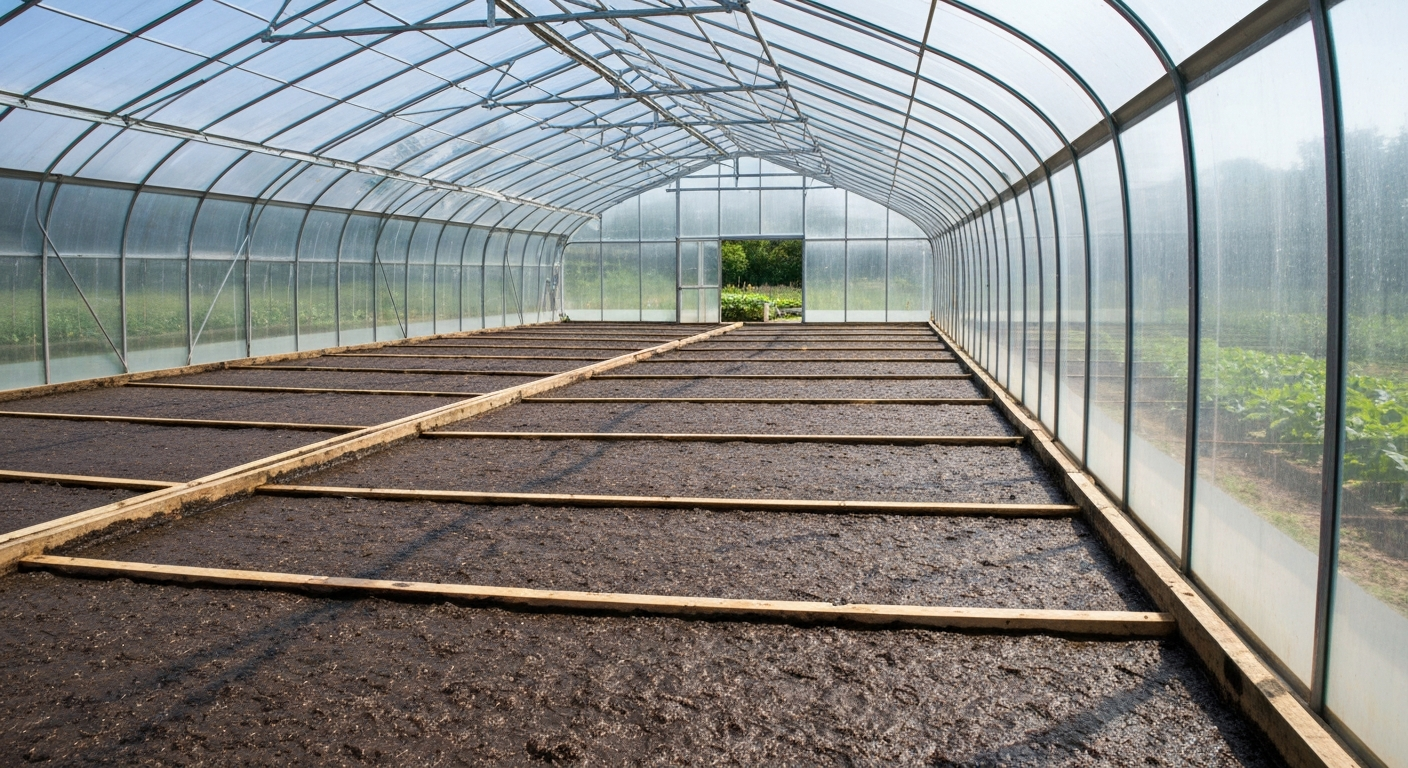
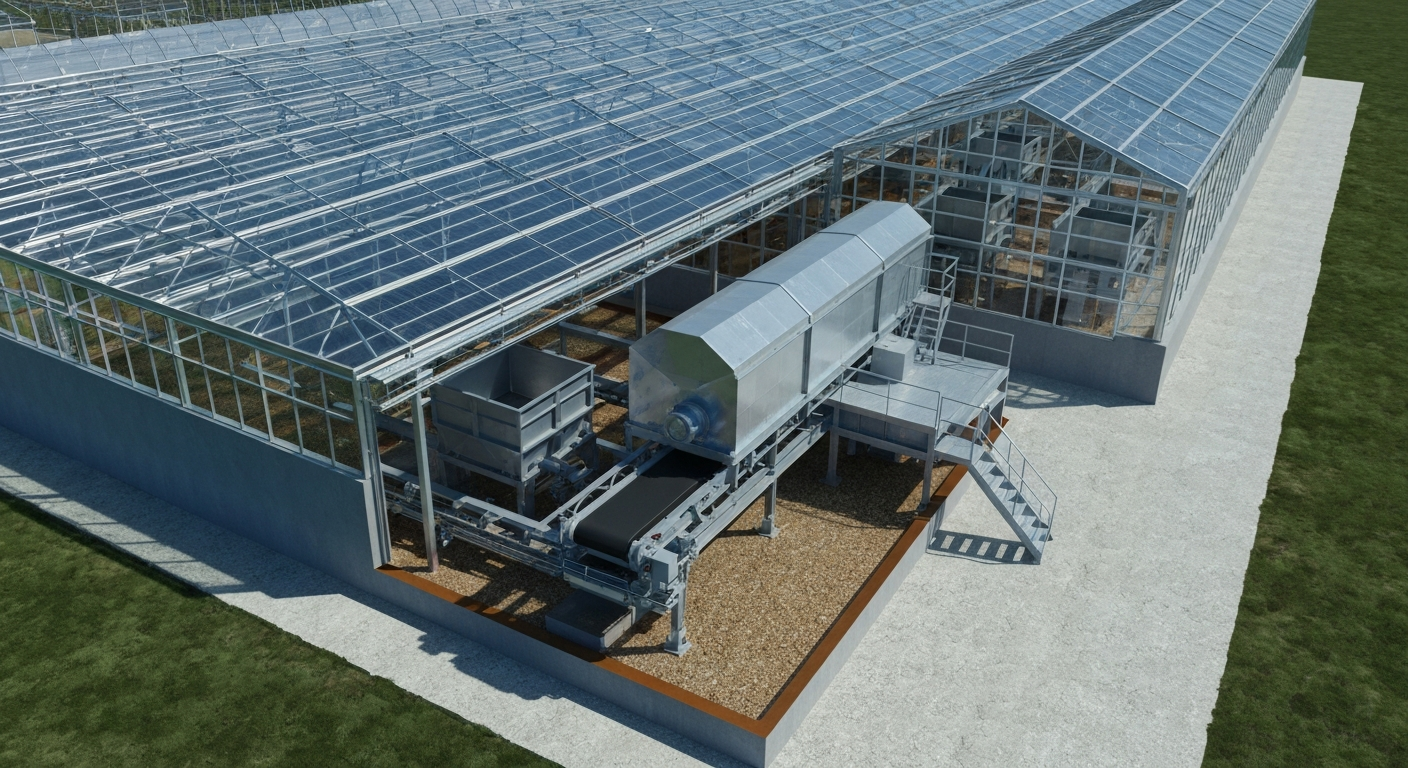
Solar sludge drying is a sludge moisture reduction process where dewatered sludge is spread inside a greenhouse-style drying hall. Solar heat raises the temperature inside the enclosure, while ventilation removes humid air. A sludge turning system mixes and aerates the sludge so that wetter layers are exposed to warm air.
The goal is simple: reduce water content so sludge becomes lighter, easier to handle, and cheaper to transport or dispose of.
Solar sludge drying is usually placed after sludge dewatering. It should not be treated as a replacement for the complete wastewater treatment process. It is a final sludge management step used after thickening, dewatering, stabilization, or other treatment stages depending on the plant design.
Where Solar Sludge Drying Fits Best
Solar sludge drying is most suitable when the project has enough land, flexible drying time, and a sludge stream that can be safely dried in a controlled greenhouse environment.
| Plant condition | Solar sludge drying fit |
|---|---|
| Municipal STP or FSTP sludge with available land | Good fit after dewatering and process review |
| Industrial ETP sludge with stable composition | Possible fit after sludge testing |
| CETP mixed sludge | Needs careful characterization before selection |
| Space-constrained factory | Usually weak fit |
| Monsoon-heavy location | Needs design margin, storage, ventilation, and backup planning |
| Strict final moisture target | Controlled thermal drying may be better |
| Hazardous or high-contamination sludge | Do not select without laboratory analysis and regulatory review |
| Fast disposal-cost reduction required | Compare with compact mechanical/thermal sludge dryer |
For industrial plants, solar drying should not be selected only because sunlight is free. The correct decision depends on sludge quantity, initial moisture, final moisture target, available land, local climate, odor control, disposal route, and whether the sludge is safe for the intended end use.
How Solar Sludge Drying Works
A solar sludge dryer normally works through these stages.
Mechanical Dewatering First
Wet sludge from an STP, ETP, CETP, or FSTP is first dewatered using equipment such as a filter press, screw press, belt press, centrifuge, or other dewatering system. This step removes free water and converts liquid sludge into a semi-solid cake.
Solar drying works better when the sludge is already dewatered. Feeding very wet sludge directly into a solar dryer increases drying time, footprint, odor risk, and handling difficulty.
Sludge Loading and Spreading
The dewatered sludge cake is loaded into the solar greenhouse dryer. It is spread across the drying floor in a controlled layer. The bed depth, feed rate, and loading pattern should be designed according to sludge moisture, daily sludge generation, and expected drying time.
Poor spreading creates uneven drying. A thick sludge layer dries slowly at the bottom and can create odor problems if it remains anaerobic.
Solar Heating Inside the Greenhouse
The transparent roof and side structure allow solar radiation to enter the drying chamber. The floor and sludge absorb heat, increasing the temperature inside the enclosed hall. This greenhouse effect supports evaporation of moisture from the sludge surface.
Actual drying performance depends heavily on solar radiation, ambient temperature, humidity, rainfall, wind, and seasonal variation.
Ventilation and Humidity Removal
As moisture evaporates from the sludge, the air inside the dryer becomes humid. Ventilation is needed to remove this moisture-laden air and replace it with drier air. Without proper ventilation, the air becomes saturated and evaporation slows down.
Ventilation design also affects odor, condensation, corrosion, and worker comfort.
Turning, Mixing, and Aeration
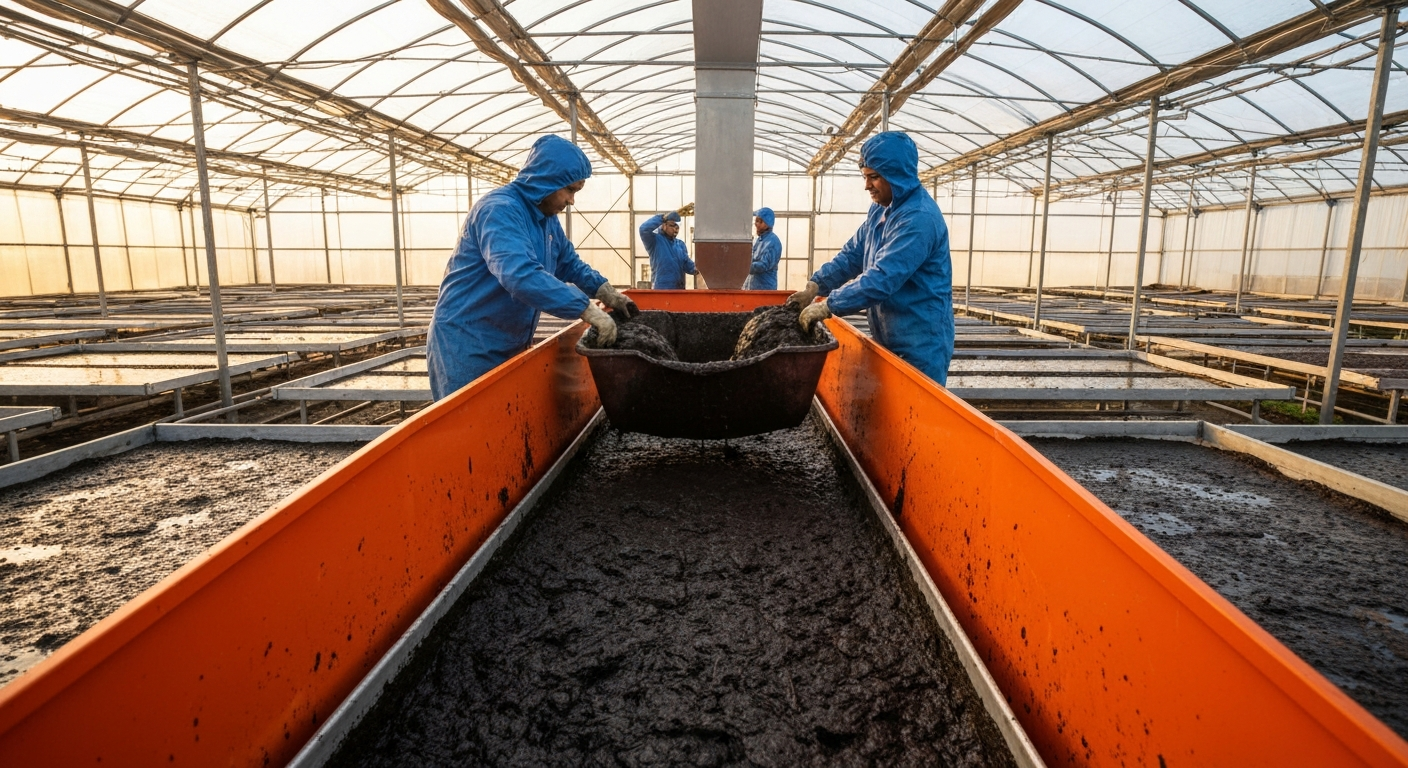
A sludge turning system mixes the sludge bed at intervals. This exposes wet sludge to the surface, breaks crust formation, improves air contact, and helps keep the sludge aerobic.
This step is important because solar drying is not only about heat. It is also about surface exposure, airflow, and moisture migration.
Dried Sludge Collection
After drying, the sludge becomes lighter, more stable, and easier to move. Depending on the sludge type and testing results, the dried material may go for disposal, co-processing, composting, landfill, incineration, or other approved reuse routes.
For industrial sludge, reuse should never be assumed. Drying removes water, but it does not remove heavy metals, salts, toxic chemicals, or other contaminants.
Main Components of a Solar Sludge Dryer
A practical solar sludge drying system usually includes the following components.
| Component | Purpose |
|---|---|
| Greenhouse drying hall | Captures solar heat and protects sludge from rain |
| Transparent roof and walls | Allows sunlight entry and supports greenhouse heating |
| Civil drying floor | Supports sludge bed, turning machine, and drainage planning |
| Sludge feeding system | Transfers dewatered sludge into the drying area |
| Sludge turner or mixer | Mixes, aerates, and moves sludge during drying |
| Ventilation fans and louvers | Removes humid air and controls internal conditions |
| Drainage and leachate handling | Prevents uncontrolled runoff and floor contamination |
| Odor control provision | Required where sludge has odor or public exposure risk |
| Moisture and temperature monitoring | Helps track drying progress and operating conditions |
| Discharge and storage system | Handles dried sludge safely after drying |
A solar dryer without proper mixing, ventilation, drainage, and odor planning becomes only a covered drying bed. For reliable performance, it must be engineered as a controlled sludge drying system.
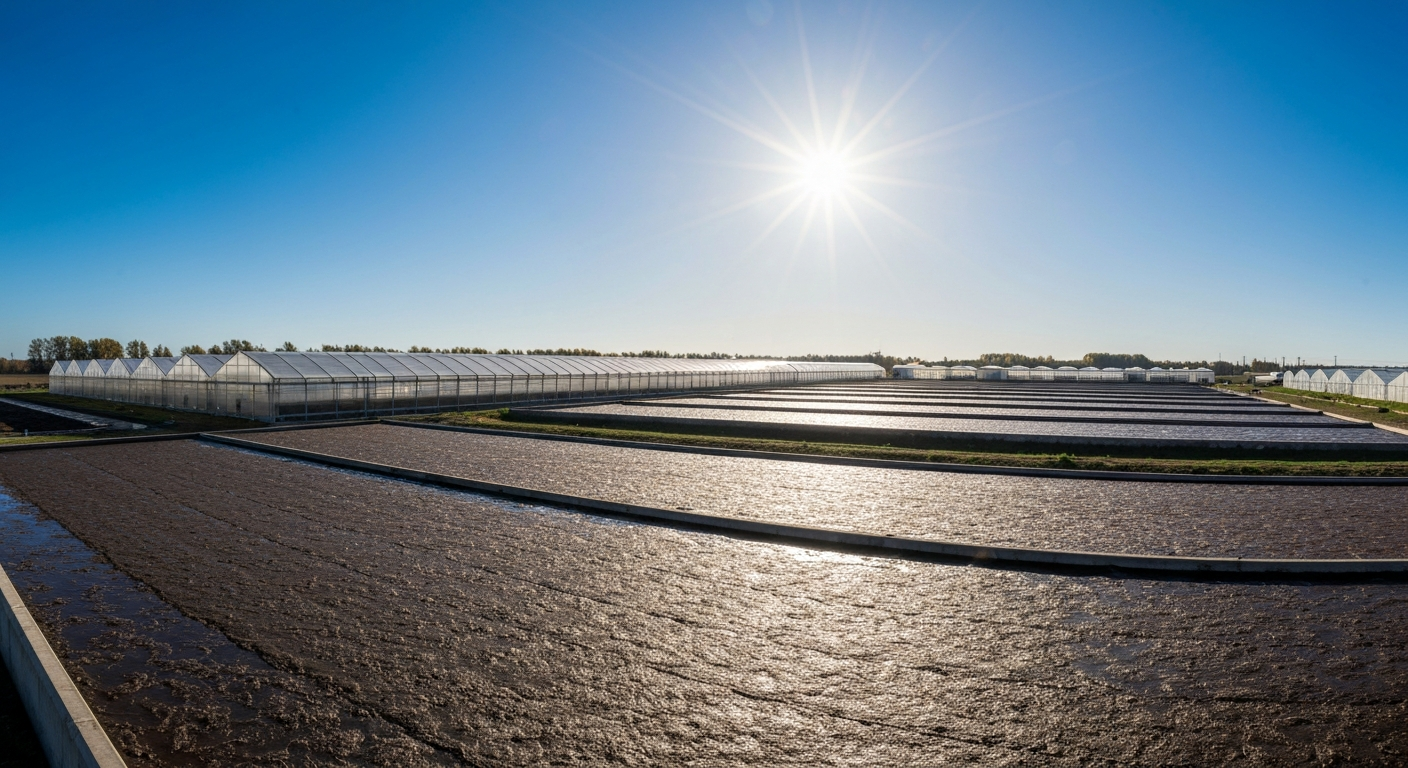
Solar Sludge Drying vs Open Sludge Drying Bed vs Paddle Dryer
| Factor | Open sludge drying bed | Solar sludge drying | Paddle dryer / thermal sludge dryer |
|---|---|---|---|
| Heat source | Sun and ambient air | Sun inside greenhouse | Steam, thermic fluid, hot water, or other heating system |
| Weather protection | Weak | Better than open bed | High |
| Land requirement | High | High to moderate | Compact |
| Drying speed | Slow | Moderate, climate-dependent | Faster and controlled |
| Monsoon dependency | High | Medium to high | Low |
| Odor control | Weak | Better if enclosed and ventilated | Better if vapor handling is designed |
| Automation | Low | Medium to high | Medium to high |
| Final moisture control | Low | Moderate | High |
| Best fit | Small, low-cost, land-available sites | Municipal/FSTP/STP sludge with land and sunlight | Industrial ETP/CETP sludge, compact sites, fixed output targets |
| Buyer risk | Slow drying and hygiene issues | Seasonal performance variation | Higher energy system planning needed |
For a detailed space comparison, connect this page with paddle dryer vs solar bed area requirement.
Benefits of Solar Sludge Drying
Lower Fuel Dependency
Solar sludge drying uses sunlight as the primary heat source. This can reduce dependency on steam, thermic fluid, natural gas, diesel, or electricity for thermal evaporation. Electricity is still required for fans, turning machines, conveyors, lighting, and controls.
Lower Sludge Transportation Weight
Water adds major weight to sludge. By reducing moisture, the plant sends less water for disposal. This can reduce transportation burden, storage pressure, and disposal handling effort.
For broader disposal planning, read the industrial sludge disposal guide.
Better Than Open Drying Beds
A greenhouse dryer gives better protection from rain, better control over drying conditions, and better hygiene than open sludge drying beds. It also helps reduce direct exposure of sludge to workers, animals, and the surrounding environment when the system is properly enclosed.
Useful for Land-Available Municipal Projects
Municipal STPs and FSTPs often have large sludge volumes but limited operating budgets. Where land is available, solar greenhouse drying can be a practical way to improve sludge handling after dewatering.
Possible Circular-Economy Route
Dried sludge may have reuse potential in composting, soil conditioning, cement, co-processing, or energy recovery depending on the sludge type and test results. This should always be verified through laboratory testing and applicable local regulations.
Dry sludge is not automatically safe sludge. Moisture reduction is only one part of the final reuse decision.
Limitations of Solar Sludge Drying
It Needs Land
Solar sludge drying needs a drying hall large enough to match daily sludge generation and drying time. This can be difficult for compact industrial plants, urban STPs, and factories with limited open land.
It Is Climate Dependent
Drying performance changes with season. High humidity, cloudy weather, low winter temperature, and monsoon rainfall can slow drying. If the plant requires fixed daily discharge, the design must include storage and backup planning.
It Is Slower Than Controlled Thermal Drying
Solar drying usually takes more time than a controlled thermal dryer. This may be acceptable where disposal planning is flexible, but it becomes a problem when sludge generation is continuous and storage is limited.
It Does Not Remove Chemical Contaminants
Solar drying removes moisture. It does not remove heavy metals, persistent chemicals, salts, PFAS-type contaminants, or other industrial pollutants. ETP and CETP sludge must be characterized before deciding reuse or disposal.
Odor Can Still Become a Problem
If sludge is loaded too thick, not turned properly, or poorly ventilated, odor can develop inside and around the drying hall. Odor control should be planned at the design stage, not after complaints begin.
When Solar Sludge Drying Is Not the Right Choice
Avoid selecting solar sludge drying as the primary solution when:
- Land is limited.
- Monsoon performance must be predictable.
- The plant needs a fixed final moisture target.
- Sludge generation is high and continuous.
- The sludge is oily, solvent-laden, hazardous, or chemically unstable.
- Odor complaints can create local operating risk.
- The disposal route needs consistently dry output.
- The site cannot support civil works, drainage, ventilation, and safe storage.
In these cases, compare solar drying with a thermal sludge drying system, sludge disc dryer, or paddle dryer configuration before final selection.
Solar Sludge Drying for ETP, STP, and CETP Sludge
STP and FSTP Sludge
Solar sludge drying is often considered for sewage sludge and faecal sludge because these streams are typically organic and generated in high volume. Still, pathogen reduction, final moisture, vector attraction, odor, and final reuse route need proper validation.
For STP basics, connect this page with the sewage sludge treatment guide.
ETP Sludge
ETP sludge can come from textile, chemical, pharmaceutical, food, paper, dairy, metal finishing, dye, pigment, and other industries. Each sludge behaves differently. Some sludge dries well, while some remains sticky, odorous, corrosive, or unsafe for open handling.
Before selecting solar drying for ETP sludge, check:
- Industry source
- pH
- COD/BOD profile
- Heavy metals
- Salts
- Oil and grease
- Solvent content
- Volatile compounds
- Odor behavior
- Hazardous waste classification
- Final disposal route
For industrial sludge pain points, link this topic with ETP sludge challenges and drying solutions.
CETP Sludge
CETP sludge can be more complex because it may combine wastewater from several industries. Mixed sludge may vary daily. Solar drying may still reduce moisture, but the plant should not assume reuse value without testing.
CETP teams should focus on consistency, safe storage, odor control, and disposal acceptance before choosing the drying technology.
Design Inputs Required Before Selection
A reliable solar sludge drying proposal should not start with only plant capacity. It should start with actual sludge data.
Share these inputs before selection:
| RFQ input | Why it matters |
|---|---|
| Sludge source | STP, ETP, CETP, FSTP, industrial sector |
| Daily sludge quantity | Determines drying area and storage requirement |
| Initial moisture | Affects drying time and load |
| Dewatering method | Filter press, screw press, centrifuge, belt press, etc. |
| Final moisture target | Decides whether solar drying is enough |
| Available land | Main feasibility factor |
| Local climate | Solar radiation, humidity, rainfall, monsoon impact |
| Odor sensitivity | Decides enclosure and ventilation planning |
| Sludge test report | Required for safe disposal or reuse decision |
| Disposal route | Landfill, TSDF, composting, cement, co-processing, incineration |
| Automation level | Manual, semi-automatic, or automated turning |
| Civil constraints | Floor, drainage, access, loading, unloading, storage |
| Backup plan | Needed for monsoon and peak sludge generation |
When I review a sludge drying requirement, I do not start with “solar or thermal” as a fixed answer. I first check sludge quantity, moisture, behavior, land availability, climate, disposal route, and how much control the plant needs over final dryness.
How to Decide Between Solar Dryer and Paddle Dryer
Solar sludge drying and paddle drying solve the same broad problem, but they do it differently.
Choose solar sludge drying when land is available, drying time is flexible, sludge risk is manageable, and climate supports evaporation.
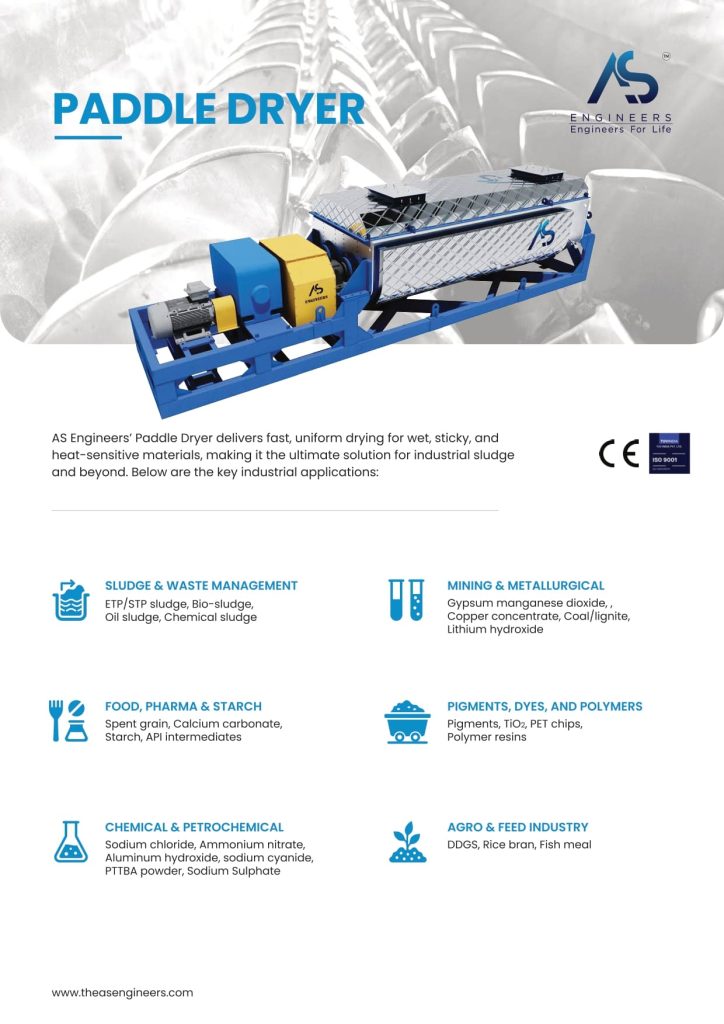
Choose a paddle dryer or controlled sludge dryer when the plant needs compact layout, predictable output, lower weather dependency, faster drying, better process control, or integration with enclosed vapor and product handling.
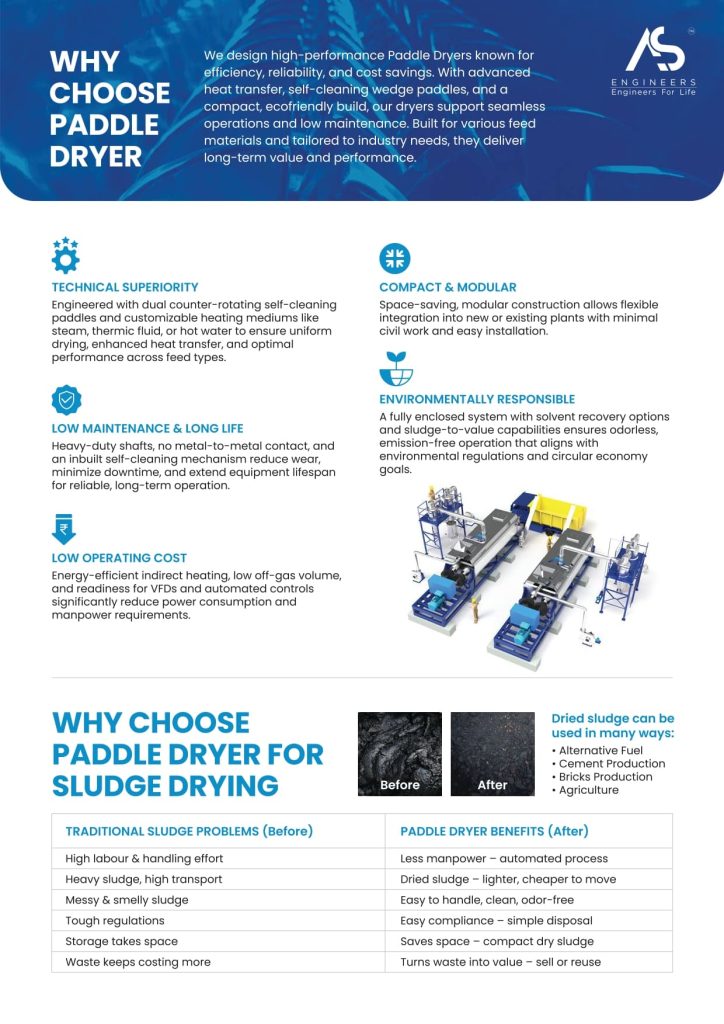
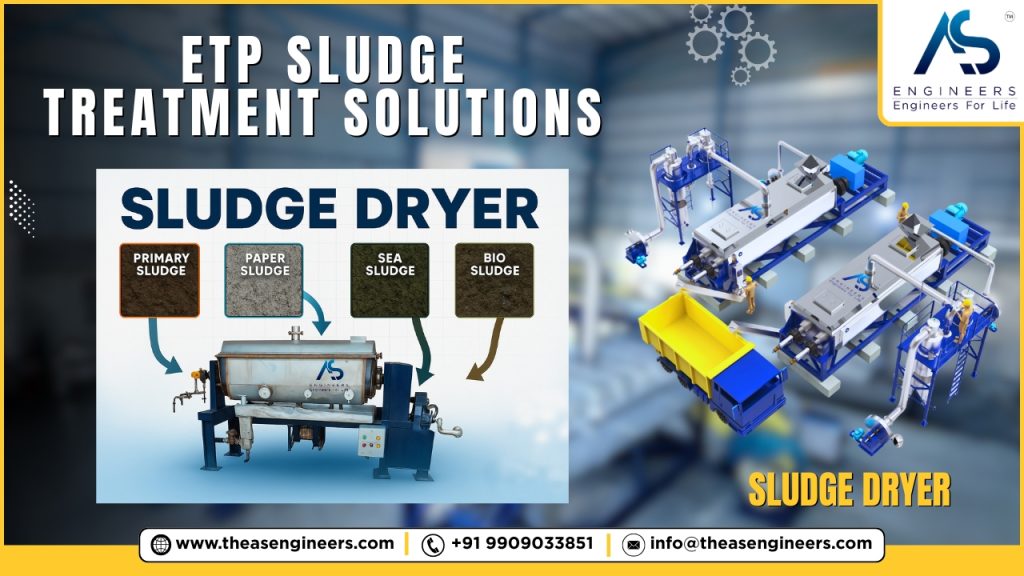
AS Engineers works with controlled sludge drying and paddle dryer systems for industrial sludge volume reduction. For buyer-side clarity, compare your solar drying plan with sludge drying methods and best practices before freezing the equipment route.
Common Mistakes in Solar Sludge Drying Projects
Selecting Solar Drying Only Because Sunlight Is Free
Free heat does not mean free operation. Land, civil work, ventilation, sludge turning, labor, maintenance, odor control, drainage, and monsoon storage still cost money.
Ignoring Monsoon and Humidity
Many projects look good in summer calculations but struggle during cloudy, humid, or rainy periods. Seasonal design margin is critical.
Skipping Sludge Testing
Drying reduces water, not contamination. Industrial sludge needs laboratory characterization before reuse or public-facing disposal claims.
Using Solar Dryer as a Compliance Guarantee
No dryer automatically guarantees regulatory compliance. Final disposal or reuse depends on sludge quality, test results, site permissions, and applicable local rules.
Underestimating Odor Control
Odor risk increases when sludge is thick, wet, poorly aerated, or stored too long. Ventilation and turning frequency must match sludge behavior.
Not Comparing Space Requirement
Solar drying may need a much larger footprint than compact mechanical dryers. Compare land cost, future expansion, access roads, storage, and monsoon holding area before deciding.
Practical Selection Framework
Use this decision path before investing.
| Question | If yes | If no |
|---|---|---|
| Is enough land available? | Solar may be feasible | Compare compact dryer |
| Is drying time flexible? | Solar can be considered | Controlled dryer is safer |
| Is sludge already dewatered? | Solar performance improves | Add dewatering first |
| Is final moisture flexible? | Solar may work | Thermal/paddle dryer may fit better |
| Is sludge non-hazardous and testable? | Reuse/disposal planning possible | Do not assume reuse |
| Is monsoon storage available? | Seasonal operation can be managed | High operating risk |
| Is odor-sensitive area nearby? | Add enclosure/odor control | Avoid weak open systems |
| Is continuous disposal reduction urgent? | Hybrid/control options needed | Solar may be enough |
Conclusion
Solar sludge drying can be a useful sludge management method for STP, FSTP, CETP, and selected ETP plants where land, climate, drying time, and sludge quality support the process. It reduces moisture through greenhouse heat, ventilation, and sludge turning, making sludge lighter and easier to handle.
But solar drying is not a universal replacement for controlled sludge dryers. It is land-dependent, climate-dependent, slower than thermal drying, and cannot remove chemical contaminants from industrial sludge. For factories, CETPs, and space-constrained plants, a controlled paddle dryer may be the more practical route.
If you are comparing solar sludge drying with paddle drying, share your sludge source, daily quantity, initial moisture, final moisture target, dewatering method, available land, climate condition, and disposal route. The AS Engineers team can review the requirement and help you understand which sludge drying approach is more practical for your site.
FAQs
Is solar sludge drying suitable for ETP sludge?
Solar sludge drying may be suitable for some ETP sludge after dewatering and laboratory characterization. It should not be selected blindly for chemical, oily, hazardous, solvent-bearing, or heavy-metal sludge. ETP sludge composition decides whether solar drying is safe, practical, and accepted for final disposal.
How does a solar sludge dryer work?
A solar sludge dryer spreads dewatered sludge inside a greenhouse-style drying hall. Solar heat evaporates moisture, ventilation removes humid air, and a sludge turner mixes the bed so wet layers are exposed to warm air. The final dried sludge becomes lighter and easier to handle.
What is the main difference between solar sludge drying and paddle drying?
Solar sludge drying mainly depends on sunlight, land area, ventilation, and drying time. Paddle drying uses controlled indirect heat through heated surfaces, agitation, and residence time. Solar drying is better where land and time are available. Paddle drying is better where compact layout, predictable final moisture, and faster controlled drying are needed.
Does solar sludge drying make sludge safe for agriculture?
Not automatically. Solar drying can reduce moisture and may support pathogen reduction when properly designed and operated, but agricultural reuse depends on sludge testing, pathogen limits, heavy metals, contaminants, and applicable local rules. Industrial sludge should never be promoted for agriculture without verified testing and approval.
What data is needed before selecting a solar sludge dryer?
You need sludge source, daily quantity, initial moisture, final moisture target, dewatering method, land availability, local climate, odor sensitivity, sludge test report, disposal route, automation preference, civil layout, and monsoon storage plan.