Sewage sludge treatment is the process of converting wet sludge from sewage treatment plants into a safer, more manageable material for disposal, drying, reuse, or further processing. The right treatment method depends on sludge type, moisture content, organic load, pathogen risk, heavy metals, available space, fuel cost, disposal route, and local regulatory requirements.
For many STP operators, the real challenge is not only treating wastewater. The harder operational issue is managing the sludge that remains after primary and biological treatment. Wet sludge is heavy, difficult to store, expensive to transport, and sensitive from hygiene and odor points of view. That is why sewage sludge treatment should be planned as a complete chain, not as one machine or one disposal decision.
What is sewage sludge?
Sewage sludge is the semi-solid material generated during sewage treatment. It comes mainly from settling, biological treatment, and excess biomass removal inside a sewage treatment plant.
In most STPs, sludge is generated from three major points:
| Sludge source | Where it comes from | Typical concern |
|---|---|---|
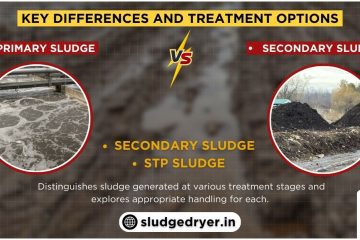
| Primary sludge | Primary clarifier or settling tank | High organic solids, odor risk, high moisture |
| Secondary sludge | Biological treatment, activated sludge, MBBR, SBR, ASP, or similar systems | Microbial biomass, high water content, difficult dewatering in some cases |
| Mixed sludge | Primary and secondary sludge combined | Needs proper testing before drying, reuse, or disposal |
For a deeper sludge-type explanation, read the guide on types of sewage sludge.
Why sewage sludge treatment matters
Untreated or poorly handled sewage sludge creates four practical problems for municipal and industrial STP teams.
First, it contains high moisture, so transport and disposal costs increase. Second, raw or partially treated sludge can create odor, pathogen, and hygiene issues. Third, sludge storage needs space, which is difficult in compact urban STPs. Fourth, the final route, such as land application, composting, co-processing, incineration, or landfill, depends on testing and local approval.
Sewage sludge treatment helps reduce these problems by improving solids concentration, reducing biological instability, reducing moisture, improving handling, and preparing sludge for the selected end route.
The sewage sludge treatment chain
A good sewage sludge treatment plan normally follows this sequence.
| Step | Purpose | Common technologies | Practical note |
|---|---|---|---|
| Sludge characterization | Understand what the sludge contains | Moisture, pH, volatile solids, heavy metals, calorific value, pathogens, ash, chloride, sulfur | Never select final reuse or drying duty without lab data |
| Thickening | Reduce free water before deeper treatment | Gravity thickener, DAF thickener, rotary drum thickener, centrifugal thickening | Reduces volume before digestion or dewatering |
| Stabilization | Reduce odor, biological activity, and pathogen risk | Anaerobic digestion, aerobic digestion, lime stabilization, composting | Required when sludge has high organic activity |
| Dewatering | Convert liquid sludge into cake | Belt press, screw press, centrifuge, filter press | Good dewatering improves dryer performance |
| Drying | Reduce remaining moisture thermally | Paddle dryer, disc dryer, belt dryer, solar dryer, thin film dryer | Useful where transport, storage, fuel use, or disposal volume matters |
| Final route | Reuse, co-processing, landfill, incineration, composting, or other approved route | Depends on test results and local rules | Not every sludge is safe for every reuse route |
For dewatering-specific selection, refer to sludge dewatering techniques for ETP and STP plants.
Main sewage sludge treatment methods
1. Thickening
Thickening is usually the first sludge volume reduction step. It separates part of the water and increases the solids concentration before digestion, dewatering, or drying.
Common options include gravity thickening, dissolved air flotation, rotary drum thickening, and centrifugal thickening. The correct option depends on whether the sludge is primary, secondary, biological, oily, fibrous, or chemically conditioned.
Thickening is not final treatment. It only prepares sludge for the next stage.
2. Stabilization
Stabilization reduces odor, putrefaction risk, and biological instability. This is important when sludge will be stored, transported, composted, land-applied, or dried after delay.
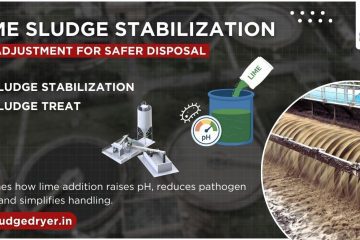
Common stabilization methods include anaerobic digestion, aerobic digestion, lime stabilization, and composting.
Anaerobic digestion can produce biogas where the sludge has suitable organic content and the plant has the required gas handling system. Aerobic digestion is simpler in many smaller plants but can consume more power due to aeration. Lime stabilization is fast, but it can increase sludge volume and may affect downstream reuse options.
For digestion-specific comparison, see the guide on sludge digesters in wastewater treatment.
3. Dewatering
Dewatering removes water mechanically and converts sludge into a cake-like material. It reduces transport load and prepares the sludge for disposal, drying, composting, or further processing.
Common dewatering equipment includes:
- Screw press
- Belt filter press
- Plate and frame filter press
- Centrifuge
- Sludge press machine
Dewatering performance depends on sludge type, polymer dosing, feed solids, biological condition, oil and grease, fibers, ash content, and machine selection. A low-cost dewatering machine can become expensive if it produces cake that is too wet for disposal or thermal drying.
4. Thermal drying
Thermal drying removes moisture from dewatered sludge using heat. It is mainly used when the plant wants major volume reduction, easier storage, lower transport weight, controlled handling, or preparation for a selected reuse or disposal route.
Drying is not always required for every STP. It becomes more important when:
- Wet sludge disposal cost is high
- Sludge transport distance is long
- Open drying beds need too much land
- Monsoon conditions disturb natural drying
- Sludge must be prepared for co-processing, fuel use, cement, bricks, or controlled disposal
- The plant wants cleaner handling and lower storage volume
- A continuous mechanical solution is preferred over manual sludge handling
For a broader drying comparison, read sludge drying methods, systems, and best practices.
5. Composting and biosolids reuse
Composting can convert stabilized sludge into a soil amendment when the sludge quality, pathogen reduction, heavy metal levels, odor control, and local rules allow it.
This route needs careful testing. Sewage sludge should not automatically be called fertilizer. The word “biosolids” should be used only when treated sludge meets the required quality and safety criteria for beneficial reuse.
If a plant is considering land application, composting, or agriculture use, the decision should be based on lab analysis, pathogen reduction, heavy metal limits, nutrient value, odor control, and regulatory permission.
6. Incineration and co-processing
Incineration and co-processing can reduce sludge volume significantly, especially where landfill space is limited or where dried sludge has usable calorific value. However, these routes need careful control of emissions, ash quality, fuel value, moisture content, and legal acceptance.
For many plants, thermal drying is used before co-processing because wet sludge is difficult to burn efficiently. Dry sludge is easier to handle, meter, store, and transport.
Where sludge drying fits in sewage sludge treatment
Sludge drying normally comes after thickening, stabilization where needed, and mechanical dewatering.
A typical practical flow is:
STP sludge generation → thickening → stabilization where required → dewatering → thermal drying → bagging, storage, disposal, co-processing, or approved reuse
Drying should not be selected only by asking “What is the dryer price?” The better question is:
What is the feed moisture, target final moisture, daily sludge quantity, sludge composition, fuel option, disposal route, and available footprint?
That is where plants avoid wrong dryer sizing and operating problems.
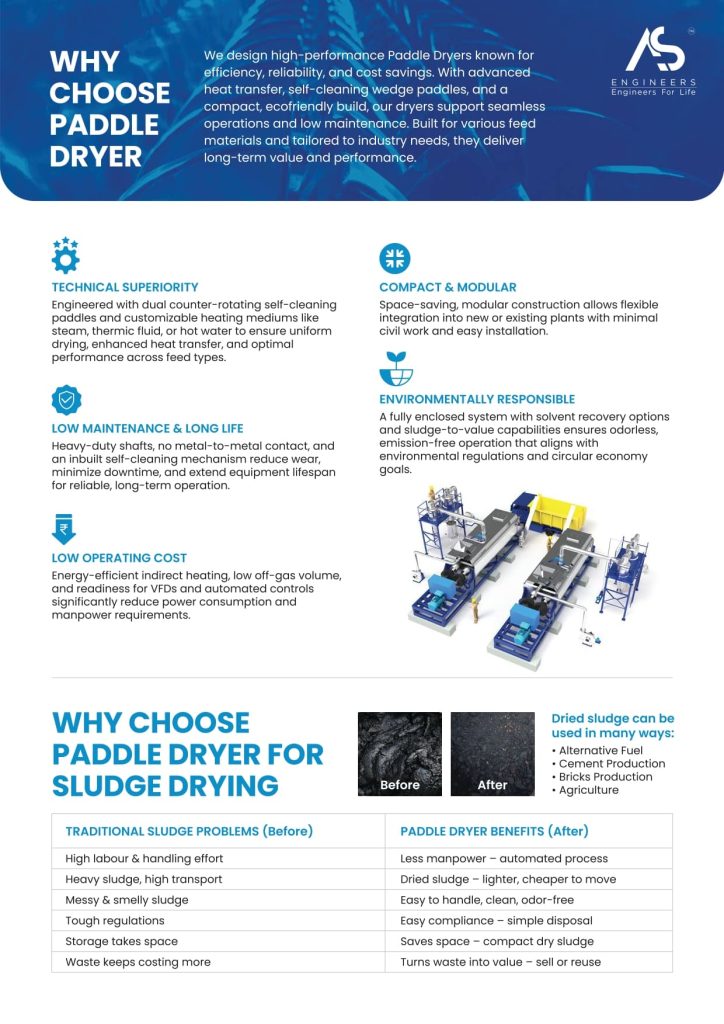
Why paddle dryers are used for sewage sludge drying
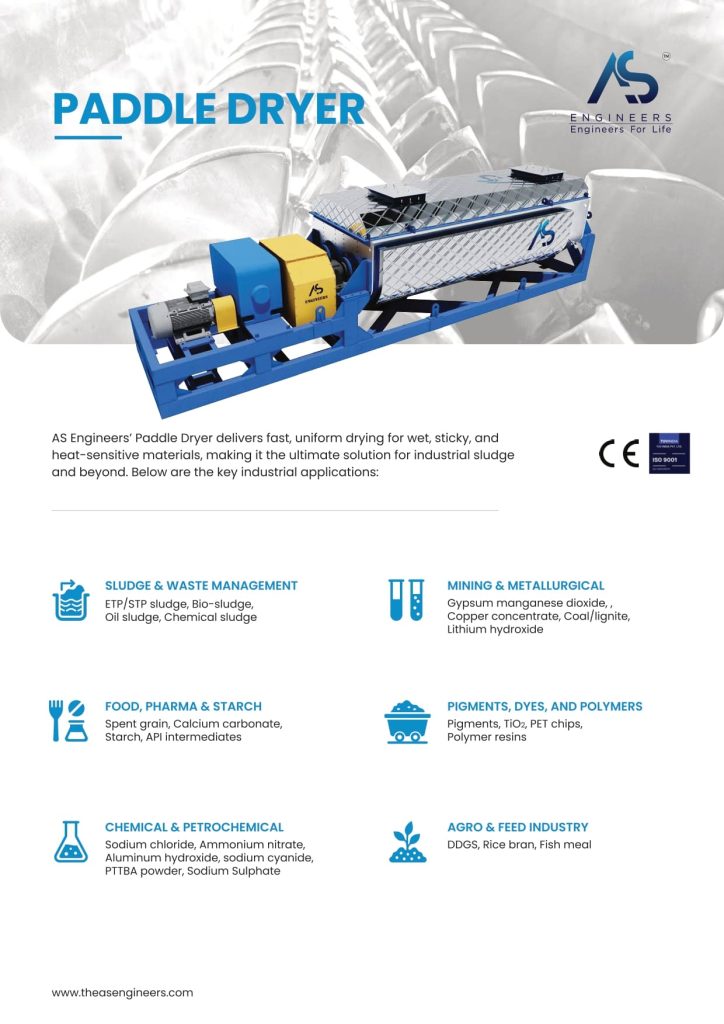
A paddle dryer is an indirect heat transfer dryer. In sludge applications, heat is transferred through hollow shafts, jacketed surfaces, and paddles while the sludge is continuously mixed and moved through the dryer.
For sewage sludge, this design is useful because it can handle wet cake, sticky sludge, and paste-like feed better than many direct drying systems when the duty is properly engineered.
At AS Engineers, paddle dryer selection is reviewed based on feed behavior, inlet moisture, desired outlet moisture, sludge quantity, heating medium, vapour handling, material of construction, discharge form, and downstream handling requirement.
Paddle dryer process for STP sludge
A complete sewage sludge drying system may include:
| System area | Function |
|---|---|
| Feeding system | Receives dewatered sludge cake and feeds it uniformly |
| Paddle dryer | Uses indirect heat transfer to evaporate moisture from sludge |
| Heating system | Uses steam, thermic fluid, hot water, or suitable heating arrangement based on design |
| Vapour handling | Carries evaporated moisture and vapour safely out of the dryer |
| Cyclone, scrubber, or bag filter | Helps manage fines, vapour, and air pollution control needs where applicable |
| Product handling | Moves dried sludge to screw conveyor, bagging, silo, truck loading, or downstream route |
For equipment configuration details, refer to paddle dryer configuration guide.
When sewage sludge drying is a good fit
| Situation | Drying fit |
|---|---|
| STP has limited land for drying beds | Strong fit |
| Wet sludge transport cost is high | Strong fit |
| Sludge goes to landfill at high disposal cost | Strong fit if economics justify |
| Sludge is planned for co-processing or fuel use | Strong fit after calorific value testing |
| Plant is in rainy or humid region | Strong fit compared with open sun drying |
| Sludge has very low daily quantity | Check economics first |
| Sludge has high contaminants or uncertain reuse route | Drying may help handling, but does not automatically make sludge reusable |
| Plant has no reliable fuel or heat source | Drying economics must be reviewed carefully |
For natural drying comparison, see sludge drying bed guide.
When drying may not be the first choice
Thermal drying is not the correct first answer for every STP.
It may not be the first choice when:
- The sludge quantity is too low for thermal drying economics
- The plant already has low-cost approved disposal nearby
- The sludge has no clear final route after drying
- Mechanical dewatering itself is poorly designed
- The plant has no space for feed, dryer, vapour handling, and dried sludge storage
- Fuel cost is high and no waste heat or economical heat source is available
- Sludge testing shows contaminants that restrict reuse
In these cases, the plant may first need better thickening, polymer optimization, improved dewatering, digestion, or a disposal-route review.
Buyer checklist before selecting sewage sludge treatment equipment
Before asking for a dryer quotation, prepare these inputs:
| RFQ input | Why it matters |
|---|---|
| STP capacity and daily sludge generation | Defines equipment size and duty cycle |
| Sludge source | Primary, secondary, biological, mixed, septic, or digested sludge behave differently |
| Feed moisture after dewatering | Determines heat load and dryer sizing |
| Target final moisture | Affects residence time, fuel use, and product handling |
| Sludge composition | Ash, organics, oil, grease, fiber, salts, metals, and grit affect design |
| Heating medium | Steam, thermic fluid, hot water, gas, biomass, or other site utility |
| Disposal or reuse route | Dryer output should match the final route |
| Available footprint | Important for dryer, feeding, vapour handling, and storage |
| Vapour and odor handling needs | Affects cyclone, scrubber, condenser, ID fan, and chimney design |
| Material of construction | Depends on corrosion, chloride, pH, and temperature |
| Operating hours | Continuous and batch requirements change selection |
| Site limitations | Power, fuel, height, access, maintenance, and manpower |
For machine-selection logic, see how to choose a sludge paddle dryer.
Common mistakes in sewage sludge treatment planning
Mistake 1: Selecting equipment before sludge testing
Moisture alone is not enough. Sludge composition, ash, volatile solids, grit, chloride, pH, oil and grease, heavy metals, and pathogen requirements can change the correct treatment route.
Mistake 2: Treating drying as a magic compliance step
Drying reduces moisture and improves handling. It does not automatically make sludge legal for fertilizer, land application, or unrestricted reuse. Final approval depends on testing and local rules.
Mistake 3: Ignoring the dewatering stage
A dryer performs better when feed is consistent. Poor dewatering increases heat load, fuel cost, and operating variation.
Mistake 4: Forgetting vapour and odor handling
Thermal drying evaporates moisture. That vapour must be handled properly through the right ventilation, condensation, scrubbing, cyclone, bag filter, chimney, or other pollution-control arrangement based on the sludge and site requirement.
Mistake 5: Not defining the final route
Dry sludge still needs a destination. The output may go to landfill, co-processing, cement, bricks, fuel use, composting, or approved reuse, but that route should be decided before the dryer is ordered.
AS Engineers’ approach to sewage sludge drying
AS Engineers supports sludge drying applications using paddle dryer systems designed around actual sludge behavior, site utility, final moisture target, and downstream handling.
A practical review normally includes:
- Feed sludge type and moisture
- Dewatering method before drying
- Required final moisture
- Heating medium availability
- Material of construction
- Vapour handling and pollution-control requirement
- Product discharge and storage
- Site footprint and operating hours
- Final disposal or reuse route
- Pilot trial requirement where needed
AS Engineers’ paddle dryer ecosystem also includes related support such as feeding, product handling, cyclone, scrubber, bag filter, ID/FD blower integration, OEM spares, repair, retrofitment, on-site alignment, and service support.
FAQ
What are the main steps in sewage sludge treatment?
The main steps are sludge characterization, thickening, stabilization, dewatering, drying where required, and final reuse or disposal. Not every plant needs every step, but every plant should understand sludge composition, moisture, disposal route, and safety requirements before selecting equipment.
What is the difference between sewage sludge and biosolids?
Sewage sludge is the semi-solid byproduct produced during wastewater treatment. Biosolids are treated sewage sludge that meets defined safety and quality requirements for beneficial use. All biosolids come from sludge, but not all sludge should be called biosolids.
Is sludge drying required after dewatering?
Not always. Dewatering may be enough when the disposal route accepts the sludge cake and transport cost is manageable. Drying becomes useful when the plant needs stronger volume reduction, lower transport weight, better storage, cleaner handling, or preparation for co-processing or approved reuse.
Can dried sewage sludge be used as fertilizer?
Only when the sludge meets applicable safety, pathogen, heavy metal, and quality requirements. Dried sludge should not automatically be treated as fertilizer. Lab testing and local regulatory approval are essential before agricultural use.
Which dryer is suitable for sewage sludge?
The suitable dryer depends on sludge moisture, stickiness, quantity, heat sensitivity, final moisture target, fuel availability, space, vapour handling, and disposal route. Paddle dryers are commonly considered for wet, sticky, paste-like sludge where indirect heat transfer and continuous mixing are useful.
Conclusion
Sewage sludge treatment should be planned as a complete chain, not as a single disposal decision. Thickening, stabilization, dewatering, and drying each solve a different problem. The right combination depends on sludge type, moisture level, treatment goal, disposal route, fuel cost, and site conditions.
For STP owners, municipal plants, EPC teams, and wastewater consultants, the safest first step is to define the sludge data before selecting equipment. Share the sludge type, daily quantity, feed moisture, target moisture, dewatering method, heating medium, site layout, and final disposal or reuse plan. The AS Engineers team can review the requirement and suggest a practical sludge drying configuration based on real operating conditions.