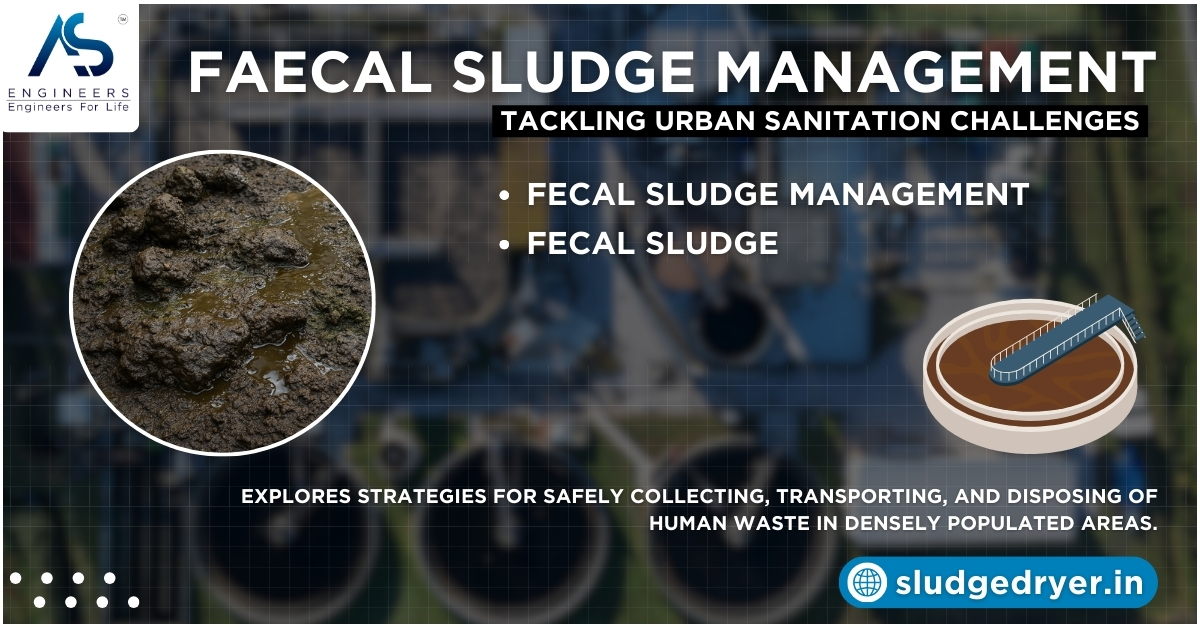
Faecal sludge management is the safe collection, transport, treatment, drying, reuse, or disposal of sludge from septic tanks, pit latrines, twin pits, and other onsite sanitation systems. In India, FSM is important because many homes, small towns, peri-urban areas, institutions, and public sanitation blocks still depend on onsite systems instead of full sewer networks.
A good FSM system does not end at toilet construction. It must answer one practical question: what happens after the pit or septic tank is emptied?
For ULBs, EPC contractors, sanitation consultants, FSTP operators, and plant teams, this guide explains the faecal sludge treatment chain, where drying fits, and when a sludge dryer can support reliable all-weather solid handling.
What is faecal sludge?
Faecal sludge is the semi-solid material collected from onsite sanitation systems such as septic tanks, lined pits, unlined pits, twin pits, holding tanks, community toilet tanks, and public toilet containment systems.
It is different from sewage sludge.
| Point | Faecal sludge | Sewage sludge |
|---|---|---|
| Source | Septic tanks, pit latrines, onsite sanitation systems | Sewage treatment plants connected to sewer networks |
| Collection method | Vacuum tanker or desludging vehicle | Generated inside STP process |
| Consistency | Highly variable, from watery septage to thick settled sludge | More predictable within STP operation |
| Treatment route | FSTP, co-treatment, drying bed, dewatering, composting, drying, approved disposal | STP sludge thickening, digestion, dewatering, drying, disposal or reuse |
| Main challenge | Irregular characteristics, informal emptying, illegal dumping, odour, pathogen risk | Process control, sludge volume, disposal cost, dewatering and drying efficiency |
For more background on sewage-side sludge, see the STP sludge and sewage treatment guide.
Why faecal sludge management matters in India
Faecal sludge management matters because untreated septage can contaminate drains, land, groundwater, surface water, and public spaces. The risk is not only environmental. Poor FSM also creates odour complaints, unsafe manual handling, tanker discharge problems, and long-term sanitation failure.
A functional FSM program must control the full chain:
- Household or institutional containment
- Scheduled desludging
- Licensed tanker operation
- Safe transport and tracking
- FSTP reception and screening
- Solid-liquid separation
- Liquid treatment
- Sludge dewatering and drying
- Treated sludge reuse, co-processing, storage, or approved disposal
If any one stage fails, the system can still create pollution even when toilets and septic tanks exist.
Faecal sludge management process
A practical faecal sludge management system follows a sequence. Each stage has a different engineering purpose.
| FSM stage | What happens | Practical design check |
|---|---|---|
| Containment | Sludge accumulates inside septic tanks, pits, or holding tanks | Type, size, lining, groundwater entry, septic tank condition |
| Desludging | Tanker removes accumulated sludge | Desludging frequency, access, operator safety, no manual entry |
| Transport | Sludge is carried to an authorized FSTP or STP co-treatment point | Licensed vehicle, route control, leakage prevention, dumping control |
| Reception | Tanker unloads at the treatment plant | Screen chamber, grit removal, odour control, tanker queue planning |
| Solid-liquid separation | Solids are separated from liquid fraction | Settling, drying bed, screw press, belt press, geotube, or other dewatering method |
| Liquid treatment | Percolate or filtrate is treated before discharge or reuse | BOD, COD, TSS, pathogens, local consent limits |
| Solid treatment | Dewatered sludge is stabilized, dried, composted, or thermally dried | Moisture target, pathogen reduction strategy, odour, storage and handling |
| End-use or disposal | Treated output goes for composting, co-processing, landfill, soil conditioning, or approved reuse | Lab testing, local rules, buyer acceptance, transport cost |
When I review an FSM or FSTP drying requirement, I do not start with dryer size. I first ask for incoming septage volume, solids concentration, dewatering method, expected sludge cake moisture, operating hours, available fuel or heating medium, odour-control requirement, and final disposal route.
What is an FSTP?
An FSTP, or faecal sludge treatment plant, is a dedicated plant that receives septage from vacuum tankers and treats the liquid and solid fractions separately.
A basic FSTP may include:
- Unloading station
- Screen chamber
- Grit removal
- Settling or stabilization unit
- Sludge drying bed or planted drying bed
- Leachate or filtrate treatment
- Horizontal planted gravel filter or constructed wetland
- Polishing pond or final treatment stage
- Dried sludge storage area
- Odour and vector-control planning
A more compact or urban FSTP may also use mechanical dewatering and thermal drying when land is limited or all-weather operation is required. For a deeper page on plant-level design, link this page to faecal sludge treatment plants.
FSTP treatment technologies used for faecal sludge
There is no single universal FSTP technology. The right system depends on septage volume, land availability, sludge characteristics, climate, odour sensitivity, local discharge requirements, and end-use plan.
| Technology | Where it fits | Strength | Limitation |
|---|---|---|---|
| Screen chamber | Inlet stage | Removes plastics, rags, grit, and coarse material | Needs regular cleaning and safe disposal of screenings |
| Settler / thickener | Primary separation | Reduces downstream load | Sludge characteristics may vary heavily |
| Unplanted drying bed | Solid-liquid separation and drying | Simple, low mechanical complexity | Land-heavy, climate-dependent, manual handling |
| Planted drying bed | Dewatering and stabilization | Better stabilization than open drying bed when well maintained | Needs plant/media management and loading control |
| Screw press / belt press | Mechanical dewatering | Compact and faster than natural drying | Needs power, maintenance, polymer/lime strategy if applicable |
| Constructed wetland / gravel filter | Liquid treatment | Useful for decentralized treatment | Needs land and hydraulic control |
| Composting / co-composting | Stabilization and reuse route | Can improve soil-conditioner value when quality is acceptable | Requires bulking agent, time, pathogen and heavy-metal testing |
| Thermal drying | Final moisture reduction after dewatering | Compact, weather-independent solid handling | Needs heating medium, energy planning, vapour/off-gas handling |
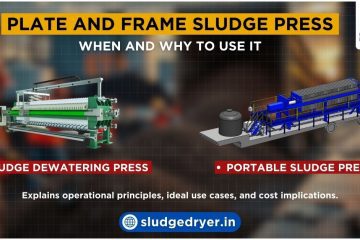
If your issue is specifically dewatering equipment before drying, read how to choose the right sludge dewatering equipment and the comparison of belt filter press vs screw press dewatering.
Drying beds in faecal sludge management
Drying beds are widely used because they are simple and familiar. In an unplanted drying bed, faecal sludge is loaded onto a sand and gravel bed. Liquid drains through the media, and the top layer dries through evaporation.
Drying beds can work well where land is available, labour is trained, odour is manageable, and monsoon performance is acceptable. But they become difficult in dense towns, high-throughput FSTPs, industrial-periphery locations, or sensitive sites where odour and manual handling are serious issues.
For a detailed comparison, use sludge drying bed and paddle dryer vs solar bed as supporting internal links.
Where thermal drying fits in faecal sludge management
Thermal drying should usually be considered after screening and dewatering, not as the first treatment step for raw septage.
The correct sequence is usually:
Tanker unloading → screening → settling/thickening → mechanical dewatering or drying bed → sludge dryer → dried sludge storage or approved end-use
A sludge dryer is useful when the FSTP needs:
- Lower sludge volume for storage and transport
- More consistent dry output than open drying beds
- All-weather operation during monsoon
- Lower dependence on large drying-bed area
- Better handling for co-processing or controlled disposal
- Reduced open odour exposure from wet sludge storage
- A more compact solid-sludge treatment line
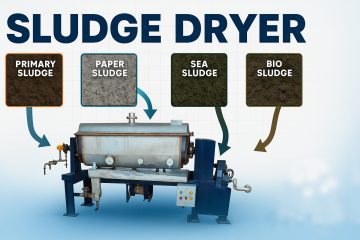
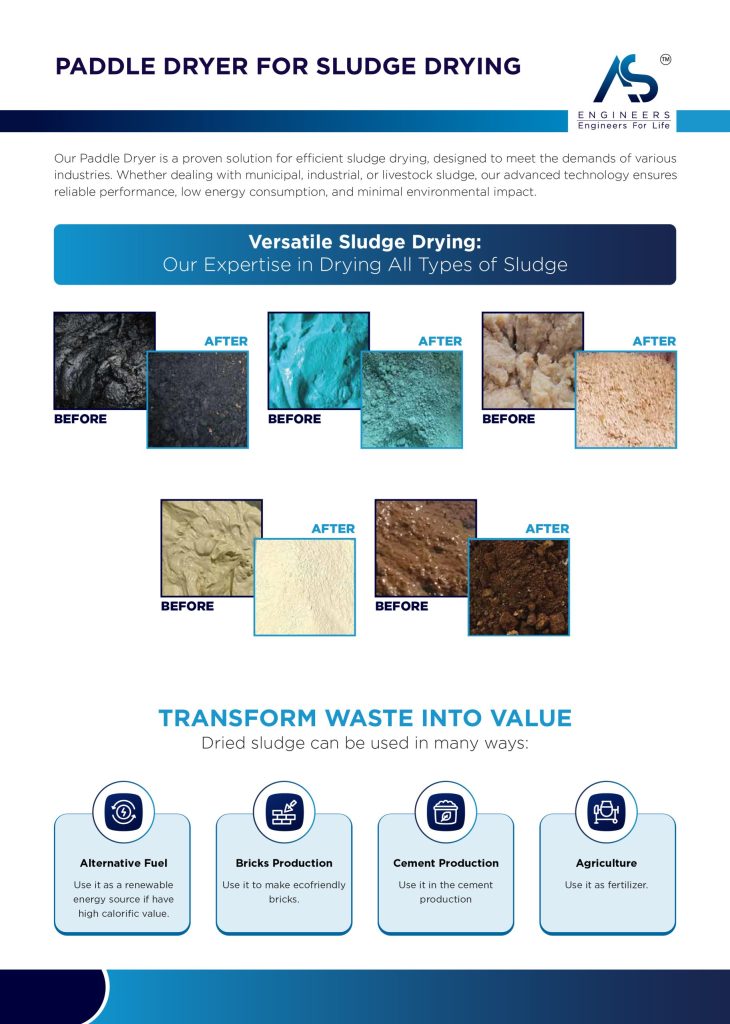
AS Engineers’ sludge drying systems are based on indirect heat transfer. In a paddle dryer, heat is transferred through hollow shafts, heated paddles, and the jacketed body while the sludge is mixed and conveyed. This helps plants dry wet cake without direct contact between flame and sludge.
For broader thermal drying context, refer to guide to sludge dryers and AS Engineers’ support page on thermal drying of sludge with paddle sludge dryers.
Why a paddle dryer is not a complete FSTP by itself
A paddle dryer is a sludge drying machine. It is not a full faecal sludge treatment plant by itself.
It does not replace:
- Septic tank regulation
- Desludging schedule
- Tanker licensing
- Screening and grit removal
- Liquid effluent treatment
- Laboratory testing
- Composting or co-processing approval
- SPCB/CPCB consent requirements
- Site-level odour and safety planning
This distinction matters. A dryer can improve the solid-sludge stage, but the overall FSM system must still handle liquid treatment, discharge compliance, worker safety, and final output approval.
When to consider a sludge dryer for FSTP solids
A sludge dryer becomes more relevant when the FSTP has one or more of these conditions.
| Plant condition | Why drying helps |
|---|---|
| Land is limited | Reduces dependence on large drying-bed area |
| Monsoon affects drying beds | Gives controlled drying independent of sunlight |
| Wet sludge transport is expensive | Lower moisture can reduce transport burden |
| Odour complaints are frequent | Enclosed drying can reduce open wet-sludge exposure |
| Co-processing is planned | Drier solids are easier to store, handle, and transport |
| Daily sludge output is steady | Continuous drying becomes easier to justify |
| Dried sludge must be bagged or stored | Product handling system can be planned after dryer outlet |
At AS Engineers, the dryer line can be planned with supporting equipment such as a feed system, heating system, scavenging system, pollution-control system, solvent/vapour handling, screw conveyor, bagging system, silo, bucket elevator, or truck-disposal arrangement depending on the plant layout.
When a sludge dryer may not be the right first choice
A sludge dryer should not be pushed into every FSTP.
It may not be the first choice when:
- The town has very low sludge volume
- Land is easily available and open drying beds work reliably
- There is no mechanical dewatering before drying
- Fuel or heating medium is not available
- The FSTP has no trained operator
- The final disposal route is not defined
- Lab testing and local approval are not planned
- The project only wants the lowest capital cost, not lifecycle reliability
In such cases, a drying bed, planted drying bed, co-composting route, or phased upgrade may be more practical.
Moisture reduction and output planning
The most important dryer sizing mistake is assuming that all faecal sludge behaves the same.
Actual dryer performance depends on:
- Incoming septage quality
- Solids concentration
- Prior settling or thickening
- Dewatering method
- Feed moisture to dryer
- Required final moisture
- Stickiness and organic content
- Heating medium
- Residence time
- Vapour handling
- Operation hours per day
For any serious FSTP dryer quotation, do not send only “KLD capacity.” KLD is the incoming septage volume, not the same as dryer feed load. A dryer needs the dewatered cake quantity and moisture level.
Regulatory and EHS points for FSTP operators
Faecal sludge has biological risk. Plant teams should treat it as a sanitation and public-health material, not as ordinary wet mud.
Before selecting any treatment or drying route, confirm:
- ULB sanitation plan
- State FSM/FSSM bylaws
- SPCB consent conditions
- CPCB discharge standards applicable to liquid effluent
- Final use rules for treated solids
- Compost or co-processing acceptance parameters
- Worker PPE and safe operating procedure
- Odour-control and neighbour-impact planning
- Leachate and filtrate treatment route
- Storage time and covered storage requirement
A sludge dryer can support safer handling, but it should never be presented as an automatic compliance guarantee. Compliance depends on the complete system and verified output quality.
Common mistakes in faecal sludge management projects
Treating FSM as only a civil construction project
FSM is not only about building an FSTP. It needs scheduled desludging, tanker control, trained operators, lab testing, O&M budget, and an end-use or disposal route.
Designing only from population, not sludge characteristics
Population helps estimate load, but sludge characteristics decide treatment behaviour. Septic tank size, desludging frequency, greywater entry, infiltration, and climate can change the design.
Sending raw septage directly to a dryer
Raw septage is usually too watery and inconsistent for efficient thermal drying. Screening, thickening, and dewatering should be evaluated before the dryer.
Ignoring monsoon operation
Open drying beds may perform differently during monsoon. For all-weather FSTP operation, the design must consider seasonal drying limits.
Not planning the dried output
A dryer reduces moisture, but the plant still needs a destination for dried solids. Options may include composting, co-processing, controlled disposal, or other approved routes after testing.
Asking for a quotation without feed data
“Give price for 50 KLD FSTP sludge dryer” is incomplete. The dryer supplier needs the dewatered cake load, feed moisture, final moisture target, heating medium, operation hours, and material test data.
RFQ checklist for faecal sludge dryer selection
Share these details before asking for a sludge dryer quotation:
| RFQ input | Why it matters |
|---|---|
| City/town and application | Helps understand operating context and service model |
| Incoming septage volume in KLD | Required for upstream FSTP design |
| Dewatering method | Decides dryer feed consistency |
| Dewatered cake quantity per day | Main sizing input for dryer |
| Feed moisture to dryer | Defines thermal load |
| Final moisture target | Defines residence time and heat duty |
| Operating hours per day | Affects dryer size and throughput |
| Heating medium | Steam, thermic fluid, hot water, or other source |
| Available fuel | Natural gas, LDO, coal, biomass, electricity, or site-specific option |
| Material of construction preference | Depends on corrosion, cleaning, and durability requirements |
| Vapour/off-gas handling | Needed for odour, moisture, and air-pollution planning |
| Pollution-control requirement | Cyclone, scrubber, bag filter, ID fan, chimney, or condenser as applicable |
| Output handling | Screw conveyor, bagging, storage, silo, truck loading |
| Final disposal or end-use route | Co-processing, composting, landfill, or approved reuse |
| Lab analysis | Moisture, ash, organic content, pathogens, heavy metals where needed |
For full sludge drying system selection, connect this article with sludge management with advanced sludge dryers.
Practical selection view from AS Engineers
For faecal sludge projects, I recommend treating the sludge dryer as part of the complete FSTP solids line, not as an isolated machine.
The better question is not “Which dryer is cheapest?” The better question is:
Can this dryer receive the dewatered sludge consistently, dry it to the required handling condition, manage vapour safely, discharge solids cleanly, and fit the actual O&M capacity of the FSTP?
At AS Engineers, the application review should include dewatering output, heating medium, feed behaviour, plant layout, vapour handling, pollution-control needs, and product-handling route before the dryer configuration is finalized.
FAQs
What is faecal sludge management?
Faecal sludge management is the complete service chain for collecting, transporting, treating, drying, reusing, or safely disposing sludge from septic tanks, pits, twin pits, and other onsite sanitation systems. It includes both engineering infrastructure and city-level operating control.
What is the difference between faecal sludge and septage?
Septage usually refers to the liquid and semi-solid contents pumped from septic tanks. Faecal sludge is a broader term that can include sludge from septic tanks, pit latrines, public toilets, community toilets, and other onsite sanitation systems.
Can a sludge dryer treat raw faecal sludge directly?
In most FSTP designs, the dryer should receive dewatered sludge cake, not raw watery septage. Raw faecal sludge should first pass through reception, screening, settling/thickening, and dewatering so the dryer receives a more stable feed.
Are drying beds still useful for faecal sludge treatment?
Yes, drying beds can be useful where land is available, climate supports drying, and labour/O&M are properly managed. For land-constrained or monsoon-sensitive FSTPs, mechanical dewatering and thermal drying may be evaluated.
Can dried faecal sludge be reused?
Reuse depends on treatment quality, lab results, local rules, and end-use approval. Dried sludge should not be assumed safe for agriculture or co-processing without testing and acceptance from the relevant authority or end user.
Conclusion
Faecal sludge management is not only a sanitation policy topic. It is an engineering, operation, public-health, and disposal-chain problem. A city may have toilets, septic tanks, and tankers, but if sludge is not treated and handled properly after emptying, the sanitation risk remains.
For FSTPs, sludge drying becomes important when land is limited, monsoon affects drying beds, wet sludge transport is costly, or consistent solid output is required. A paddle dryer can support the solid-sludge stage after dewatering, but it must be integrated with screening, liquid treatment, vapour handling, pollution control, output storage, and approved disposal or reuse.
For FSTPs, ULBs, EPC contractors, or consultants evaluating a sludge dryer, share the daily septage volume, dewatered cake quantity, feed moisture, final moisture target, operating hours, heating medium, and final disposal route. The AS Engineers team can review the application and suggest a practical sludge drying configuration based on the actual duty condition.