TSDF site standards are the siting, design, storage, treatment, transport, monitoring, documentation, emergency-response and closure requirements followed by Treatment, Storage and Disposal Facilities handling hazardous and other wastes. In India, TSDF planning and operation must align with Hazardous and Other Wastes rules, CPCB technical guidance and SPCB/PCC approvals. For industrial plants, the key question is not only “Where is the TSDF?” but also “Is our hazardous sludge correctly classified, packed, labelled, documented and accepted before dispatch?”
This guide explains TSDF site standards from a practical plant-side view, especially for ETP sludge, ZLD sludge, chemical sludge, pharmaceutical sludge, refinery sludge and other hazardous industrial residues.
This article is for technical awareness. Final classification, permission, disposal route and compliance decisions must be confirmed with the applicable SPCB/PCC, authorized TSDF operator and qualified regulatory consultant.
Quick answer: what are TSDF site standards?
TSDF site standards are the controls used to ensure that hazardous waste is received, stored, treated and disposed of without uncontrolled leakage, fire, mixing of incompatible waste, unsafe transport, groundwater contamination or recordkeeping failure.
A TSDF site normally needs controls for:
| Area | What must be controlled |
|---|---|
| Site selection | Distance from sensitive receptors, groundwater risk, flood risk, access and buffer planning |
| Authorization | SPCB/PCC authorization, design approval, consent conditions and environmental clearance where applicable |
| Waste acceptance | Waste category, compatibility, quantity, analysis, manifest and membership checks |
| Storage | Segregation, labelling, fire safety, spill control, covered storage and restricted access |
| Treatment | Stabilization, neutralization, incineration, secured landfill or other approved treatment route |
| Monitoring | Leachate, groundwater, air emissions, stack, safety, operations and records |
| Transport | Packaging, labelling, vehicle documentation, manifest system and emergency information |
| Closure | Safe closure and post-closure care where applicable |
CPCB lists hazardous waste rules, technical guidelines, inventories, SOPs and common TSDF references under its hazardous waste section, making it the first official source to verify before publishing compliance-heavy content.
Why TSDF standards matter for industrial sludge generators
Many industrial plants focus only on the final disposal invoice. That is risky. TSDF compliance begins before the truck leaves the factory.
For a hazardous sludge generator, TSDF readiness includes:
- Correct waste classification.
- Valid hazardous waste authorization.
- TSDF membership or acceptance arrangement.
- Proper packaging and labelling.
- Compatible temporary storage at the plant.
- Transport documents and manifest.
- Quantity and moisture data.
- Analysis reports where required.
- Emergency response details.
- Records and annual returns.
This is important for plants handling hazardous sludge, chemical sludge, petroleum sludge, pharma sludge, agrochemical residues, dye intermediates, heavy-metal-bearing sludge, solvent-contaminated sludge and concentrated ZLD reject sludge.

Regulatory base for TSDF in India
In India, hazardous and other wastes are managed under the Hazardous and Other Wastes framework, which covers safe handling, generation, processing, treatment, packaging, storage, transport, use, collection, destruction, conversion, recycling, recovery, pre-processing, co-processing, offering for sale, transfer and disposal. CPCB also notes duties for MoEFCC, CPCB, State/UT governments, SPCBs/PCCs, occupiers, recyclers, importers, exporters and TSDF operators.
The generator or occupier has a responsibility to follow a hierarchy that prioritizes prevention, minimization, reuse, recycling, recovery, utilization including co-processing, and safe disposal. The occupier must also provide the TSDF operator with required waste-specific information and ensure worker training and safety measures.
For TSDF operators, Rule 16 covers site identification, design and setup according to CPCB technical guidelines, design and layout approval by the State Pollution Control Board, monitoring of setup and operation, safe closure and post-closure obligations, records and annual returns.
TSDF site selection standards: what project teams check
A TSDF site cannot be selected only because land is available. Site selection usually considers environmental sensitivity, logistics, access and long-term risk.
Important checks include:
| Site selection factor | Why it matters |
|---|---|
| Groundwater condition | Reduces risk of contamination from leakage or landfill failure |
| Flood risk | Avoids waste escape during heavy rainfall or flooding |
| Nearby habitation | Reduces public exposure and complaint risk |
| Nearby water bodies | Protects rivers, ponds, lakes, wetlands and water supply sources |
| Soil and geology | Supports safe landfill and leachate control design |
| Road access | Enables controlled hazardous waste movement |
| Buffer zone | Creates separation from sensitive areas |
| Airport and highway proximity | Evaluated for safety and siting restrictions |
| Existing pollution load | Helps assess cumulative environmental risk |
CPCB’s TSDF audit guidance refers to site selection, design/layout and operational parameters such as waste storage, stabilization, landfilling, incineration, leachate management and groundwater monitoring as critical areas for verification.
TSDF infrastructure standards
A properly planned TSDF is not just a dumping ground. It is an engineered hazardous waste management facility with controlled systems.
Common infrastructure elements may include:
| Infrastructure | Practical purpose |
|---|---|
| Weighbridge | Measures incoming and outgoing waste quantity |
| Waste reception area | Checks documents, labelling, category and physical condition |
| Laboratory / testing support | Confirms waste characteristics where required |
| Covered storage | Prevents rainwater contact and uncontrolled runoff |
| Segregated storage | Prevents mixing of incompatible waste |
| Stabilization area | Treats selected waste before landfill where required |
| Secured landfill | Engineered disposal for landfill-suitable hazardous waste |
| Incinerator | For incinerable hazardous waste where approved |
| Leachate collection | Collects contaminated liquid from landfill/storage areas |
| Leachate treatment | Treats collected leachate before further handling |
| Stormwater drainage | Keeps clean rainwater separate from contaminated zones |
| Fire safety system | Reduces fire risk in storage and handling areas |
| Emergency response area | Supports spill, fire and accident control |
| Groundwater monitoring wells | Tracks potential contamination over time |
| Records and control room | Maintains manifests, returns, logs and monitoring reports |
CPCB guidance also recognizes common TSDFs as facilities for treatment, storage and disposal of hazardous waste, with references to common hazardous waste TSDFs, quarterly performance protocols and facility availability.
Operational standards inside a TSDF
Once hazardous waste reaches the TSDF, the facility must control every stage of handling. The most important operating controls are:
Waste acceptance control
The TSDF should verify:
- Waste generator details.
- Authorization and membership details.
- Waste category and quantity.
- Physical condition of waste.
- Compatibility with storage/treatment route.
- Manifest and transport documents.
- Labelling and packaging condition.
- Whether the waste is suitable for landfill, incineration, stabilization, recycling, co-processing or other authorized route.
If the sludge is too wet, poorly packed, leaking or not matching the declared waste category, it can create handling, storage, fire, odour, leachate or rejection risk.
Storage control
Hazardous waste storage must prevent uncontrolled mixing, leakage, rainwater contact, unsafe access and fire risk. Good practice includes:
- Covered storage for applicable waste.
- Proper labelling.
- Separate storage for incompatible waste streams.
- Spill collection arrangements.
- Restricted access.
- Fire-fighting readiness.
- Trained operators.
- Emergency response instructions.
- Regular inspection.
CPCB storage guidance emphasizes trained and authorized access, mock drills, hazard analysis and safety audit practices for hazardous waste storage.
Treatment and disposal control
Depending on waste category and TSDF authorization, treatment may include:
- Stabilization or solidification.
- Neutralization.
- Incineration.
- Secured landfill.
- Co-processing or utilization where approved.
- Leachate treatment.
- Air pollution control from incineration or handling areas.
For hazardous sludge generators, this is where pre-treatment becomes important. Wet sludge with high free moisture can increase weight, handling difficulty, transport frequency and leachate risk.
Generator-side TSDF checklist before dispatch
Industrial plants should prepare a TSDF dispatch checklist before moving hazardous sludge or waste.
| Checklist item | What to confirm |
|---|---|
| Waste category | Match the waste with authorization and applicable rules |
| Source process | ETP, STP, ZLD, scrubber, process residue, filtration, centrifuge, press cake |
| Quantity | Daily, weekly and monthly generation |
| Moisture content | Feed sludge moisture and expected variation |
| Physical form | Slurry, sticky cake, paste, powder, granule or semi-solid |
| Hazard properties | Toxicity, flammability, corrosivity, reactivity, heavy metals, solvents |
| Packaging | Bags, drums, containers, lined trucks or other approved mode |
| Labelling | Correct hazardous waste labels and emergency information |
| Storage | Covered, compatible, safe and within permitted conditions |
| Transporter | Authorized vehicle and trained transporter |
| Manifest | Correct manifest copies and route documentation |
| TSDF acceptance | Membership, booking, acceptance conditions and rejection criteria |
| Records | Internal log, analysis report, weighment slip, manifest, returns |
For broader disposal planning, also review the industrial sludge disposal guide and CPCB guidelines for hazardous waste disposal.
Where sludge drying fits before TSDF disposal
Sludge drying is not a replacement for hazardous waste authorization, TSDF membership or statutory compliance. It is a pre-treatment step that may help when the plant’s objective is to reduce free moisture, reduce transport load, improve handling and create a more stable material for the selected authorized route.
Drying may help when:
- Sludge has high moisture and high transport weight.
- The TSDF charges or logistics are strongly affected by wet quantity.
- Wet sludge creates leakage, odour or handling issues.
- The plant wants more predictable dispatch volume.
- The final TSDF route accepts dried sludge.
- Vapour, odour and condensate handling can be properly managed.
- Material chemistry is compatible with thermal drying.
Drying needs extra caution when:
- Sludge contains volatile solvents.
- Sludge has flammable or explosive risk.
- Sludge contains high chloride, sulphur or corrosive components.
- Toxic vapours may be released.
- Heavy metals may concentrate after drying.
- The final disposal route does not accept dried form.
- The plant does not have proper vapour treatment or pollution-control arrangement.
For this reason, any sludge drying review should start with the waste category, lab analysis, feed moisture, final moisture target, vapour handling, material of construction, heating medium and TSDF acceptance route.
AS Engineers works in paddle dryers, sludge dryers, centrifugal blowers and pollution-control support equipment. Its catalogue lists Paddle Dryer / Sludge Dryer, Centrifugal Blower, Pollution Control Equipment and Turnkey Solutions as core products, with ISO 9001:2015 certification and 25+ years of experience stated in company material.
Why moisture reduction matters before TSDF dispatch
Wet hazardous sludge creates direct and indirect costs:
- More transport weight.
- More vehicle trips.
- Higher storage area requirement.
- More leakage risk.
- Difficult manual handling.
- Poor bagging or container filling.
- Odour and hygiene problems.
- Higher disposal load.
- More uncertainty during TSDF acceptance.
For plants already facing rising disposal cost, review methods to reduce hazardous waste weight and the hidden cost of landfilling wet sludge.
TSDF standards vs plant-side sludge drying: clear boundary
| Topic | TSDF responsibility | Plant/generator responsibility | Sludge drying relevance |
|---|---|---|---|
| Waste acceptance | Accept only suitable and authorized waste | Declare waste correctly | Drying must not change declared classification without approval |
| Storage | Segregated, safe and monitored storage | Safe temporary storage before dispatch | Drier material may improve handling if accepted |
| Transport | Receive properly documented waste | Pack, label and send manifest correctly | Reduced moisture can reduce dispatch load |
| Treatment route | Stabilization, incineration, landfill or approved route | Confirm TSDF acceptance | Dryer output must match final route requirement |
| Compliance | Operate as per authorization | Maintain records and returns | Drying supports logistics, not legal exemption |
| Safety | Fire, leachate, emissions and emergency controls | Avoid unsafe storage and dispatch | Vapour and dust risks need engineering control |
Common mistakes plants make before sending sludge to TSDF
Treating TSDF as only a disposal vendor
A TSDF is a regulated hazardous waste facility. The generator should not treat it like a normal transport contractor. Waste category, authorization, manifest and acceptance conditions matter.
Sending sludge without moisture data
Moisture affects weight, handling, leakage, dryer sizing and disposal planning. Plants should measure feed moisture and variation before deciding on disposal or pre-treatment.
Assuming drying makes waste non-hazardous
Drying removes moisture. It does not automatically remove hazardous characteristics. Heavy metals, salts and many hazardous constituents may remain or become more concentrated by weight after drying.
Ignoring vapour handling
Thermal drying can release water vapour, odour or solvent vapour depending on sludge composition. Vapour handling, condensation, scrubbing, ID fan selection and pollution-control design must be reviewed before equipment selection.
Not confirming TSDF acceptance of dried sludge
Before investing in drying, ask the TSDF whether the dried material form, moisture level, packaging and disposal route are acceptable under your authorization and their facility conditions.
Buying equipment before waste testing
For hazardous sludge, equipment selection without sludge analysis is risky. The plant should check moisture, pH, chloride, oil, solvent, heavy metals, calorific value, volatile matter, ash, corrosive tendency and physical behaviour.
RFQ checklist for hazardous sludge drying before TSDF disposal
Share these details before asking for a sludge dryer recommendation:
| RFQ input | Why it is required |
|---|---|
| Industry and process source | Identifies sludge behaviour and risk profile |
| Waste category and authorization | Confirms regulatory boundary |
| Current TSDF route | Confirms accepted disposal path |
| Sludge quantity per day | Helps size system capacity |
| Feed moisture | Determines evaporation load |
| Final moisture target | Determines residence time and heating duty |
| Physical form | Slurry, paste, sticky cake, granule or powder affects feeding |
| Chemical analysis | Helps decide MOC, vapour handling and safety controls |
| Solvent/VOC presence | Critical for fire, explosion and condenser/scrubber planning |
| pH, chloride and salt load | Affects corrosion and material selection |
| Heating medium available | Steam, thermic fluid, hot water or other source |
| Available space | Affects layout and feeding/discharge design |
| Vapour treatment need | Scrubber, condenser, cyclone, bag filter or chimney route |
| Disposal packaging | Bags, drums, container, truck or silo discharge |
| Automation level | Manual, semi-automatic or continuous operation |
For equipment selection, also read the thermal sludge drying system guide and sludge paddle dryer selection guide.
Practical example: how TSDF planning and sludge drying connect
A chemical plant may generate wet ETP sludge after filtration. The sludge may be authorized for disposal through a common TSDF. If it is transported at high moisture, the plant may face higher dispatch quantity, difficult handling and leakage concerns.
A better planning sequence is:
- Confirm waste category and authorization.
- Confirm TSDF membership and acceptance route.
- Measure sludge quantity and feed moisture.
- Test sludge chemistry and physical behaviour.
- Check whether moisture reduction is allowed and useful.
- Review dryer feasibility, vapour handling and MOC.
- Confirm dried sludge acceptance with TSDF.
- Maintain manifest, records and returns after dispatch.
This sequence avoids the common mistake of buying a dryer first and checking disposal acceptance later.
When a paddle dryer may be suitable
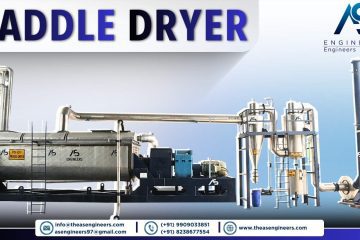
A paddle dryer may be considered when sludge is sticky, pasty, semi-solid or difficult to handle, and when indirect heat transfer is preferred. AS Engineers catalogue material describes paddle dryer operation using hollow shafts and jacket heating, with configuration options such as standard dryer, dual zone dryer and vacuum dryer, plus connected systems for feeding, heating, scavenging, pollution control, solvent management and product handling.
For hazardous sludge, suitability depends on the actual waste. A paddle dryer review should include:
- Feed moisture and final moisture target.
- Stickiness and phase change during drying.
- Solvent or odour release.
- Dusting tendency after drying.
- Heating medium.
- MOC requirement.
- Vapour route.
- Condensate route.
- TSDF acceptance condition.
- Plant operating hours.
- Cleaning and maintenance access.
AS Engineers also lists service support such as shaft, gearbox and bearing replacement, system repair and upgrades, retrofitment solutions and OEM spare parts in company material.
FAQs
What is a TSDF site?
A TSDF site is a Treatment, Storage and Disposal Facility used for hazardous and other wastes. It receives waste from authorized generators and handles it through approved storage, treatment, incineration, landfill, stabilization or other permitted disposal routes.
Which rules apply to TSDF facilities in India?
TSDF facilities in India are governed mainly through the Hazardous and Other Wastes framework, CPCB technical guidelines, SPCB/PCC authorization, consent conditions and environmental clearance requirements where applicable. Rule 16 specifically deals with common TSDF setup, operation, monitoring, closure, records and returns.
Does every hazardous sludge generator need TSDF membership?
Many hazardous waste generators need an arrangement with an authorized common TSDF if their approved disposal route requires it. The exact requirement depends on waste category, authorization conditions, location, quantity and available approved treatment or disposal route.
Can sludge drying remove the need for TSDF disposal?
No. Sludge drying does not automatically make hazardous sludge non-hazardous. Drying may reduce moisture and improve handling, but final classification and disposal route must be confirmed through waste analysis, authorization and TSDF/SPCB/PCC acceptance.
What should I check before installing a sludge dryer for TSDF-bound waste?
Check waste category, TSDF acceptance, feed moisture, final moisture target, daily sludge quantity, chemical analysis, solvent/VOC risk, pH, chloride, heavy metals, heating medium, vapour treatment, MOC, discharge form and packaging requirement.
Conclusion
TSDF site standards are essential for safe hazardous waste handling, but plant teams should not look at TSDF only at the final disposal stage. The right approach starts inside the factory, with waste classification, authorization, safe storage, packaging, labelling, manifest control, TSDF acceptance and proper records.
For hazardous sludge from ETP, ZLD, chemical, pharma, refinery, dye, agrochemical or other industrial processes, moisture reduction can be useful only when it is technically safe and accepted under the final disposal route. Share your sludge source, waste category, feed moisture, final moisture target, quantity, analysis report, heating medium and current TSDF route with the AS Engineers team for a practical review of sludge drying feasibility before final equipment selection.