An ETP sludge dryer manufacturer in India should not be selected only by machine price. For chemical, textile, pharmaceutical, food, paper, dye, petrochemical, and CETP applications, the correct sludge drying system depends on feed moisture, sludge stickiness, daily quantity, final moisture target, heating medium, vapour handling, pollution control, material of construction, and service support.
A sludge dryer is normally considered after dewatering equipment such as a filter press, centrifuge, belt press, or screw press. Dewatering removes free water, but the remaining sludge cake can still be heavy, wet, difficult to store, and costly to transport.
For many ETP sludge applications, a paddle-type sludge dryer is preferred because it uses indirect heat transfer, continuous mixing, and controlled discharge. This guide explains how to evaluate the technology and the manufacturer before sending an RFQ.
What an ETP Sludge Dryer Does
An ETP sludge dryer removes moisture from dewatered sludge generated by an effluent treatment plant. The main goal is not only “drying.” The real goal is to make sludge easier to handle, store, transport, and dispose of through an approved route.
A well-selected sludge dryer can help plant teams with:
| Plant problem | How sludge drying helps |
|---|---|
| Heavy wet sludge | Reduces water load before transport or disposal |
| High storage space demand | Makes sludge more compact and easier to store |
| Poor housekeeping | Converts messy sludge cake into a more manageable dried form |
| Odour and handling difficulty | Supports enclosed handling and cleaner discharge planning |
| Disposal uncertainty | Gives the plant more options, subject to testing and regulatory approval |
| High manual handling | Allows integration with conveyors, feeders, bagging, or truck loading |
Drying does not automatically make sludge safe for reuse. The dried material must still be evaluated for composition, calorific value, heavy metals, salts, organics, and local disposal or reuse rules.
When an ETP Plant Should Consider a Sludge Dryer
A sludge dryer becomes useful when wet sludge creates a recurring operational or commercial burden. This is common in plants where sludge generation is daily, disposal distance is high, storage area is limited, or wet sludge handling affects housekeeping and worker safety.
ETP plants should evaluate sludge drying when:
- Dewatered sludge cake still carries high moisture.
- Disposal cost is linked to weight or volume.
- The plant has limited sludge storage space.
- Wet sludge creates odour, leakage, or handling difficulty.
- The plant is exploring approved reuse, co-processing, fuel, brick, cement, or fertilizer routes.
- The ETP is part of a ZLD or waste-minimization plan.
- Current disposal practice depends heavily on manual handling.
Before choosing a dryer, review the complete sludge chain. A dryer cannot compensate for unstable upstream dewatering, irregular feed, poor sludge characterization, or unclear disposal planning.
Why Paddle-Type Sludge Dryers Fit Many ETP Sludge Applications
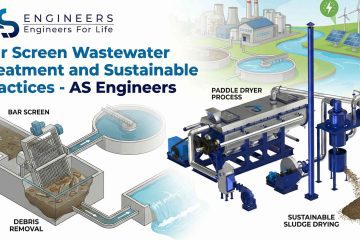
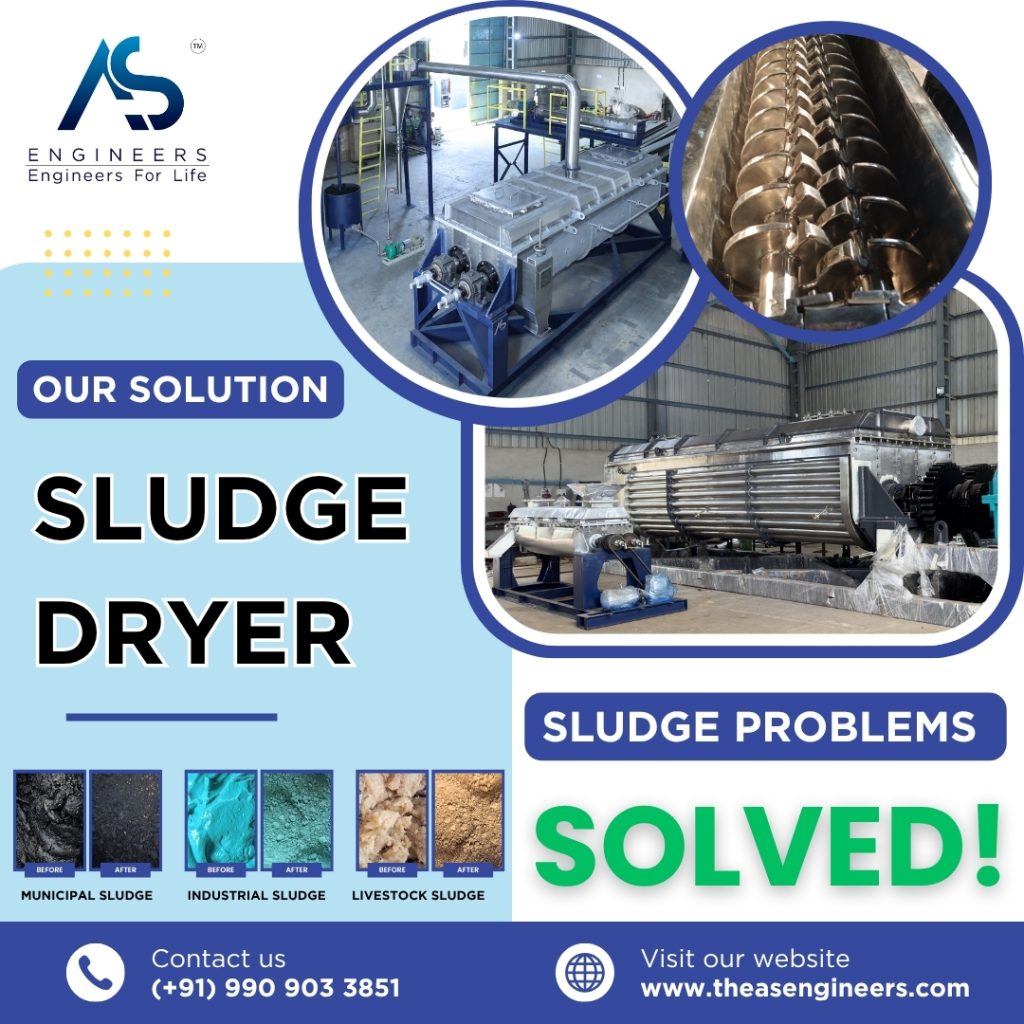
A paddle-type ETP sludge dryer works through indirect heat transfer. Heat is transferred through the dryer jacket, hollow shafts, and paddles while the sludge is continuously mixed and moved through the machine.
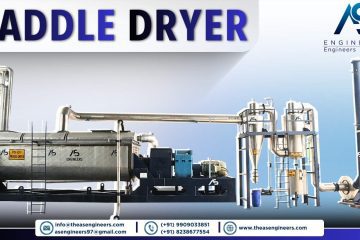
AS Engineers’ paddle dryer design uses hollow shafts, jacket heating, dual counter-rotating shafts, and wedge-shaped self-cleaning paddles. These design elements help improve heat contact and reduce material buildup inside the dryer.
For ETP sludge, this matters because sludge is rarely uniform. It may be sticky, pasty, salty, abrasive, corrosive, biological, chemical, or mixed. A dryer must be selected based on actual sludge behaviour, not only daily tonnage.
What a Complete ETP Sludge Drying System Includes
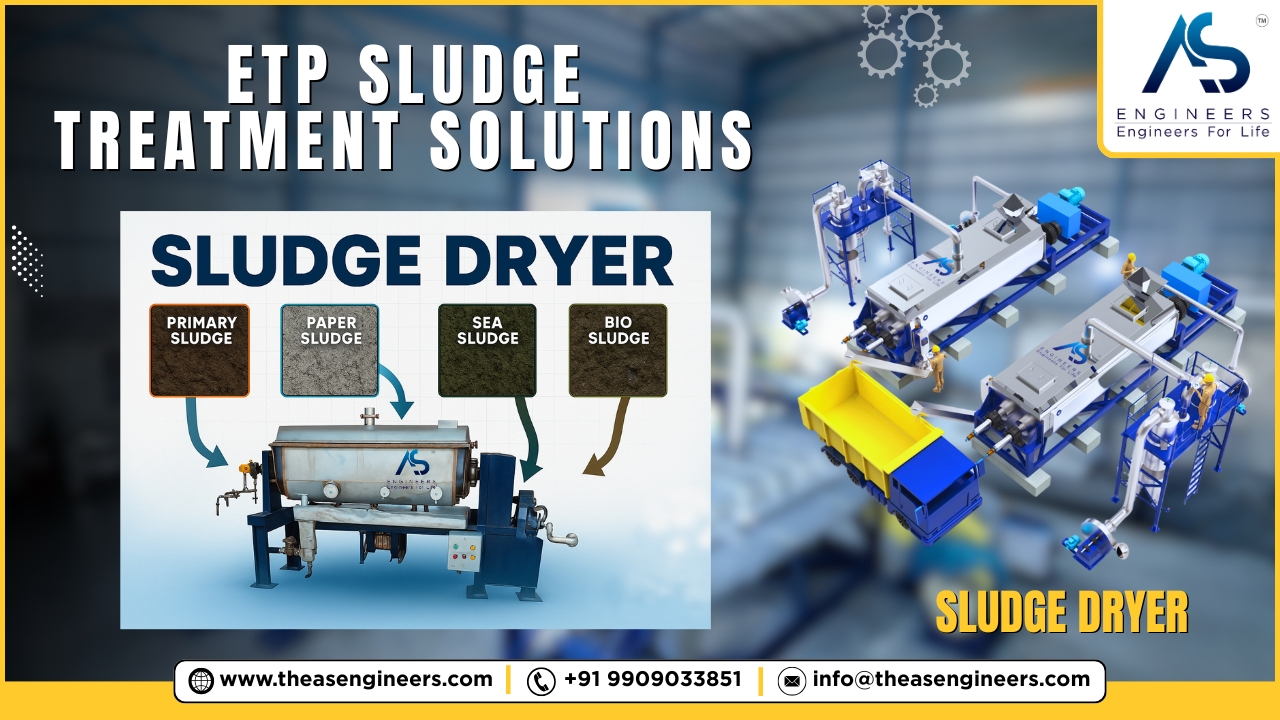
A buyer should not evaluate only the dryer shell. A reliable ETP sludge drying system includes feeding, heating, drying, vapour handling, pollution control, and discharge handling.
| System area | What to check |
|---|---|
| Feed system | Wet sludge silo, screw feeder, belt conveyor, sludge pump, feed consistency |
| Heating system | Steam boiler, thermic fluid heater, hot water generator, available site fuel |
| Dryer body | Paddle design, shaft design, jacket heating, residence time, torque, access for cleaning |
| Vapour handling | Vapour line sizing, condensation risk, odour control, solvent or water vapour handling |
| Pollution control | Cyclone, scrubber, bag filter, ID fan, chimney, as per site duty |
| Product discharge | Screw conveyor, bagging, silo, bucket elevator, truck disposal system |
| Controls | Temperature, motor load, feed rate, discharge moisture checks, interlocks |
| Service access | Shaft, gearbox, bearing, paddles, seals, inspection covers, alignment access |
For many buyers, the wrong decision happens when the dryer is purchased as a standalone machine. The system around the dryer decides whether the plant runs smoothly after commissioning.
Manufacturer Evaluation Checklist
Use this checklist before selecting an ETP sludge dryer manufacturer in India.
| Evaluation point | Good buying question |
|---|---|
| Sludge testing | Can the manufacturer test actual sludge before final sizing? |
| Dryer technology | Is the dryer indirect, direct, paddle, belt, disc, solar, or another type? |
| Feed behaviour | Has stickiness, salt, fibre, oil, organics, and lump formation been reviewed? |
| Heating medium | Is steam, thermic fluid, hot water, electricity, or another heat source available? |
| MOC | Is CS, SS304, SS316, duplex, or alloy construction required? |
| Final moisture | Is the target realistic for this sludge and disposal route? |
| Vapour handling | Is water vapour, odour, solvent, or hazardous vapour expected? |
| Pollution control | Is cyclone, scrubber, bag filter, condenser, or chimney needed? |
| Utilities | Are steam, fuel, power, air, cooling water, and floor space available? |
| Layout | Can the system fit with the current filter press, conveyor, and sludge storage? |
| Maintenance | Are bearings, gearbox, paddles, seals, and spares accessible? |
| Service | Does the manufacturer support installation, commissioning, OEM spares, and retrofitment? |
| Documentation | Can the supplier provide drawings, load data, utility data, and O&M guidance? |
A low-priced dryer can become expensive if it chokes, under-dries, corrodes, overloads the vapour system, or requires frequent manual cleaning.
Paddle Dryer vs Other Sludge Drying Options
Different sludge drying technologies serve different conditions. The best choice depends on site layout, sludge behaviour, fuel availability, moisture target, and disposal route.
| Drying option | Where it can fit | Main caution |
|---|---|---|
| Paddle sludge dryer | Sticky, pasty, wet, mixed industrial sludge requiring indirect heating | Requires proper feed control, vapour handling, MOC, and trial-based sizing |
| Belt sludge dryer | Larger drying area and lower-temperature drying requirements | Needs space, feed spreadability, and air handling control |
| Solar drying bed | Low-energy drying where land, climate, and time are available | Weather dependent, slow, large land requirement, not ideal for many industrial sites |
| Disc dryer | Continuous drying where disc heat-transfer design fits material behaviour | Must be checked for sludge buildup and maintenance access |
| Thin film or ATFD route | Certain high-solids or concentrated streams | Not a default replacement for all ETP sludge, application-specific |
For AS Engineers’ sludge drying scope, the strongest fit is paddle-type sludge drying where indirect heating, agitation, and controlled product discharge are required.
RFQ Data to Share Before Asking for Price
Do not ask only for “sludge dryer machine price.” For meaningful sizing, share process data first.
| RFQ input | Why it matters |
|---|---|
| Sludge source | Textile, chemical, pharma, food, paper, dye, CETP, STP, ZLD, refinery, etc. |
| Daily sludge quantity | Defines capacity, operating hours, and dryer size |
| Feed moisture | Determines water evaporation load |
| Final moisture target | Affects residence time, heat load, and discharge behaviour |
| Sludge form | Cake, slurry, paste, sticky mass, granules, lumps, fibrous sludge |
| Chemical composition | Helps decide MOC, corrosion risk, odour, vapour, and disposal route |
| Heating medium | Steam, thermic fluid, gas, coal, wood, LDO, electricity, briquette |
| Available utilities | Power, steam pressure, fuel, air, cooling water, space |
| Upstream equipment | Filter press, screw press, belt press, centrifuge, thickener |
| Downstream plan | Bagging, storage, truck loading, incineration, TSDF, co-processing, reuse |
| Compliance requirement | SPCB/CPCB authorization, TSDF norms, plant consent conditions |
| Site layout | Floor space, height, access, foundation, crane, material movement |
A complete RFQ helps the manufacturer recommend the right dryer configuration instead of giving a generic quotation.
Operating Cost and Fuel Checks
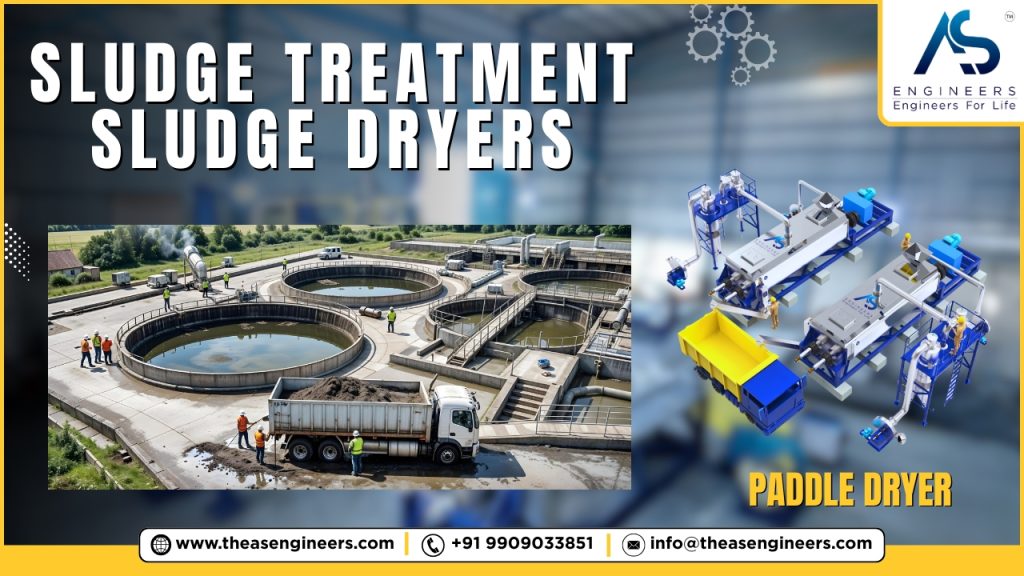
Fuel selection affects operating cost. AS Engineers’ official sludge drying benchmark states that, for sludge drying from 80% initial moisture to 20% final moisture, approximate fuel consumption can be compared as:
| Fuel | Benchmark |
|---|---|
| 1 kg wood | 5 kg sludge |
| 1 kg coal | 8.25 kg sludge |
| 1 Nm³ gas | 22.5 kg sludge |
| 1 kg LDO | 21 kg sludge |
Use these figures only for early comparison. Actual cost depends on sludge composition, moisture, plant layout, dryer size, heat losses, operating hours, fuel quality, and final moisture requirement.
The right question is not “Which dryer is cheapest?” The better question is “Which dryer gives stable drying with acceptable fuel cost, manageable maintenance, and compliant discharge handling for this sludge?”
Compliance, Reuse, and Disposal Caution
ETP sludge should be handled carefully because industrial sludge composition varies widely. Chemical, dye, textile, pharma, fertilizer, pesticide, refinery, and metal-processing sludge may contain salts, organics, metals, solvents, oil, or other contaminants.
Drying reduces moisture. It does not automatically remove hazardous characteristics.
Dried sludge may be considered for alternative fuel, cement production, bricks, fertilizer, co-processing, incineration support, or TSDF disposal only after testing and approval from the relevant authority. For some waste categories, CPCB/SPCB authorization and industry-specific standard operating procedures may apply.
Before planning reuse, check:
- Hazardous or non-hazardous classification.
- Heavy metal levels.
- Calorific value.
- Chloride, sulphur, halogen, ash, oil, and organic content.
- Moisture target required by the end user.
- SPCB consent and authorization conditions.
- Storage, handling, transport, and documentation requirements.
This is where the dryer supplier, ETP consultant, EHS team, and authorized disposal or reuse partner should work together.
Common Buyer Mistakes While Choosing a Sludge Dryer Manufacturer
Buying only on price
A cheaper dryer may not remain cheaper if it needs frequent cleaning, consumes more fuel, damages paddles, corrodes early, or fails to reach the required discharge condition.
Ignoring sludge testing
ETP sludge behaviour changes by industry and chemistry. A pilot trial helps identify stickiness, odour, lump formation, feedability, drying curve, and discharge behaviour.
Not checking vapour handling
The vapour line, cyclone, scrubber, condenser, bag filter, ID fan, and chimney arrangement should be designed as part of the system. Vapour handling is not an afterthought.
Assuming one final moisture target for every sludge
Some sludge can be dried to a low moisture target more easily than others. Some materials become sticky in an intermediate phase. Some become powdery and create dust handling issues.
Ignoring MOC
Carbon steel may be suitable in some duties, while SS304, SS316, duplex, or other alloys may be needed for corrosive or chemically aggressive sludge.
No downstream handling plan
After drying, the plant still needs discharge conveying, storage, bagging, bulk loading, reuse approval, or disposal route planning.
Why AS Engineers Fits ETP Sludge Dryer Projects
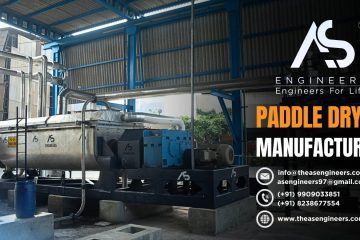
AS Engineers manufactures paddle dryer and sludge dryer systems from Ahmedabad, India. The company’s sludge dryer approach is built around indirect heat transfer, hollow shafts, jacket heating, self-cleaning paddle design, and system integration around feeding, heating, vapour handling, pollution control, and product discharge.
For industrial buyers, AS Engineers can support:
- Paddle dryer and sludge dryer manufacturing.
- Standard, dual-zone, and vacuum dryer configurations where applicable.
- Heating options based on site utilities.
- Pilot trial support using a 50 kg/hr pilot trial machine.
- Feeding, conveying, bagging, and product handling integration.
- Cyclone, scrubber, bag filter, and blower support through the AS Engineers ecosystem.
- OEM spare parts, shaft, gearbox, bearing support, repair, upgrades, and retrofitment.
AS Engineers’ approved company material identifies the company as ISO 9001:2015 certified, with 25+ years of industry experience, 500+ clients, and 1500+ projects. Use these facts as credibility signals, but final project selection should still depend on actual sludge data and site conditions.
FAQs
What is an ETP sludge dryer?
An ETP sludge dryer is industrial drying equipment used to reduce moisture from sludge generated by an effluent treatment plant. It is usually installed after dewatering equipment such as a filter press, centrifuge, belt press, or screw press.
Which dryer is suitable for sticky ETP sludge?
A paddle-type sludge dryer can be suitable for many sticky and pasty ETP sludge applications because it uses indirect heating, agitation, and self-cleaning paddle action. Final selection should be confirmed through sludge testing or pilot trials.
What data is needed to size an ETP sludge dryer?
The main inputs are sludge quantity, feed moisture, final moisture target, sludge source, sludge composition, heating medium, operating hours, MOC requirement, vapour handling need, and downstream disposal or reuse route.
Can dried ETP sludge be reused?
Sometimes, but not automatically. Dried sludge may be considered for fuel, cement, bricks, fertilizer, co-processing, or other uses only after composition testing and required regulatory approval.
Does a sludge dryer guarantee compliance?
No. A sludge dryer can support better handling, moisture reduction, storage, and disposal planning, but compliance depends on sludge classification, testing, authorization, transport, storage, emission control, documentation, and site-specific rules.
Conclusion
Choosing an ETP sludge dryer manufacturer in India should begin with sludge behaviour, not only dryer price. A reliable project needs correct feed data, heating medium selection, MOC review, vapour handling, pollution control, discharge planning, service access, and disposal or reuse clarity.
For ETP, CETP, ZLD, chemical, textile, pharma, dye, food, paper, and industrial wastewater plants, AS Engineers can review the sludge drying requirement based on actual feed moisture, daily quantity, final moisture target, heating medium, layout, and handling route. Share these details before final quotation so the sludge dryer can be selected for real plant conditions.